Monday, November 20, 2017

THE IMMORTAL RAJPUT'S - A RACE OF ROYAL WARRIORS


FOR THOUSANDS OF YEARS, A RACE OF WARRIORS RULED OVER A VAST PART OF THE INDIAN TERRITORY: THESE WHERE THE RAJPUT, WHOSE COURAGE CONTINUES TO INSPIRE US.


Some say that men are naturally made to fight in war: although the conditions of our world have changed so much that modern warfare is more an exchange between machines than it is of men, the past is full of stories of courage overcoming fear and societies that grew and flourished according to these values.


A fairly unknown example of the latter is that of the Rajput (or Rashput), a martial caste from north-eastern India, which retained a unique autonomy for over a thousand years, perhaps one that is only comparable to that of the Spartans from the Greek Hellas.


Rajputana (Modern Rajasthan) is named after these warriors, and according to Sanskrit etymologists Rajput comes from rasha-putra, which means son of the king. Despite the fact that their first historical mention dates back to the sixth centuries, they are described as ‘worthy of being feared’ in classical Indian literature, like the Mahabharata, the Puranas and the Vedas.

In addition to war, the main occupation of the Rajput was agriculture: like the cult to Mars among Romans, the gods of war are also those of peace, since this tradition believed that the gods would only favour a just war thus establishing peace must always be the ultimate goal.


More than a caste, the Rajput where a group of clans that governed an ample region of India. Their code of honour has been compared to that elaborated by Medieval European Knights, since they describe an honour that, like Japanese warriors, led them to commit suicide before an imminent defeat.


Nonetheless, while a samurai refuses surrender by slashing his stomach open, the Rajput took more radical measures in the face of defeat: in the jauhar, the men would dress in red and surrender to a certain death at the hand of their enemy’s army, which undoubtedly surpassed them in number (most of Mongolian origin), while their women and children entered a funeral pyre to surrender to the element, which according to their traditional literature, had burgeoned them.


It was until the twentieth century that their full decay took place, when Indira Gandhi abolished their titles, stipends and property rights. Some of the higher ranking hierarchs were able to keep a certain status by transforming their cities into hotels for tourists and by adopting the customs of the English colonizers; but the legend of the fire warriors will forever remain an example of courage facing all odds and, as an element that brings light to darkness, they teach us that honour knows no adjective when it is brandished by a family of warriors that defeats history and death itself.


INDIA'S HINDU SAMURAI: 
THE BRITISH EMPIRE'S LOVE AFFAIR WITH THE RAJPUTS


Providence could not have endowed a more difficult setting for India’s greatest romance. Along the periphery of the Thar Desert, beyond the undulating dunes and thorny brush, are the Rajput nations. From Gujarat in the west until Delhi and the foothills of Kashmir, there existed since time immemorial glittering kingdoms ruled by fighting men. Yet it was in the Indian subcontinent’s arid north, the realm of the harrier and desert fox, where Rajputana came to be. It was a land where rugged noblemen hunted game, built magnificent strongholds, and repelled the tides of conquest.

They are the ‘sons of kings’, divided among clans whose ancestry dates so far beyond recorded time that descendants claim divine origins. Among the Rajput clans, some trace their descent from the Sun, others the Moon, and still others believed their lineage came from fire.


Until modern times, the prevailing consensus as to the Rajputs’ point of origin was an Aryan descent from India’s mythical age. This unsubstantiated belief in a shared heritage with white Europeans later provided ample justification for the British Empire’s designs on the subcontinent. Furthermore, no single source gives a complete index of the Rajput families. The English soldier and adventurer Lt Col James Tod’s Annals and Antiquities of Rajasthan is the seminal volume about these soldier-aristocrats and remains the best introduction to the subject.

Divided among three dozen clans and even more sub-clans, many notable surnames stand distinguished in the historical record. Consider the Chauhan clan, who once ruled Delhi before the Afghan conqueror Muhammad Guri vanquished them in the 12th Century. It is the Guhilot clan, however, who would conceive of India’s greatest fortress: Chittorgarh. Seized from its former masters whose fortunes ebbed with the decline of an ancient empire – of which many are found across India – the Guhilots held Chittorgarh for several centuries and grew wealthy from its country, the kingdom of Mewar.


But why did Will Durant, in his The Story of Civilization: Our Oriental Heritage, compare the Rajputs to Samurai? Perhaps it was their preoccupation with honour, a trait manifested in another well-known clan, the Sisodyas, who in the early 14th Century replaced the Guhilots as overlords of Mewar. 


Like the Samurai, the Rajputs had their own code of conduct. Theirs was detailed in no less than the Mahabharata, Hindu civilisation’s epic poem. In it, the Hindu Kshatriya, or warrior caste, were beseeched to always fight fair and observe correctness in their doings. No conquest should be followed by plunder, no victory accompanied by the dishonour of one’s foes. Importantly, combat was a rite where cool heads prevailed. 


“A Man should fight righteously without yielding to wrath or intending to slay,” 

the Mahabharata read.


On the other hand, it was Tod the chronicler of Rajasthan who found parallels between the Rajputs and European knights, a comparison that no doubt resonated with his fellow Englishmen raised on Walter Scott and Cervantes, for whom the echoes of medieval pageantry rang with sweet nostalgia. Meanwhile, another historian, Mountstuart Elphinstone, agreed with Tod’s portrayal yet drew a different assessment of the Rajputs. 

“They had not the high-strained sentiments and artificial refinements of our knights,”

Elphinstone concluded, while lauding their fighting spirit.


THE WARRIOR CASTE DEFINED


One of the first serious writers on India, James Mill, philosopher John Stuart Mill’s father, produced The History of British India, a groundbreaking work that sought to explain the nuances of the Hindu world.

Mill claimed that once land ownership supplanted pastoral society, it was imperative for a religious class, or the priestly Brahmin, to coexist with fighting men who would protect them: the fabled Kshatriya. “To bear arms is the peculiar duty of the Cshatriya [sic] caste,” he wrote. “And their maintenance is derived from the provision made by the sovereign for his soldiers.”

Below these exalted social strata, according to Mill, were two lower castes of common labourers and even less reputable, and not mentioned, are the untouchables.


The provisions Mill referred to, in the case of the Rajput, were more than adequate. The quintessential Rajput warrior, middle-aged and seasoned by at least several campaigns, was a swarthy gentleman fond of the hunt and the pleasant diversions befitting a nobleman.

His face adorned by a flowing moustache, head wrapped in a turban dyed the colours of his clan, the Rajput was a dapper fellow. Come war time, a steel helmet crowned his head and astride his mount the warrior sallied forth with a lance and a round shield – the latter perfect for single combat.


When it came to the preferred mode of fighting, cavalry raids were a perennial favourite and very effective against their Turkic adversaries. Once mounted on either a Kathiawari or Marwari horse, Rajput formations wrought havoc on enemy formations.


Always prepared to meet his end, the Rajput fought in a shirt of mail and tied around his waist was a bright coloured sash that held two sheathed talwars (curved swords akin to the Arabian scimitar), and the fearsome katar dagger for dealing mortal blows at close quarters. Other warriors preferred the heavier khanda, a lengthy single-edged blade similar to a cutlass that was ideal for slicing through armour.


In later centuries the Rajputs would embrace the firearm. When the matchlock arrived in India via the Mughals, it was widely adopted and used until the late 19th Century. Despite this seeming prowess, Mill, for some inexplicable reason, was quick to dismiss the fighting prowess of Hindus. “Yet has India given way to every conqueror,” he observed.


This conclusion betrays a lapse in Mill’s scholarship. Apparently, he failed to acknowledge how numerous Rajput clans repelled invasions from the time of Alexander the Great to the Persian Nadir Shah in the 18th Century. But deriding the Hindu was a distasteful consequence of British imperialism. The irony is during the British Raj in the latter 19th Century, it was fashionable to commend so-called “warrior” or “martial” races within Indian society.

A dated but superb example is The Martial Races of India by Lieutenant General George MacMunn, written and published after the Great War. Another similar text is The Sepoy by Edmund Candler published around the very same period.

Both Candler and MacMunn were in agreement as to the valour and toughness of the Rajputs.


CONSTANT INVASION


These clans formed a prosperous civilisation, until the 18th Century when enterprising warlords across Central Asia saw India as a source of loot for their armies. The geography of the Rajput kingdoms, including Mewar, meant the Kshatriyas had no choice but to thwart these onslaughts or be dispossessed.

While Rajput cavalry could best the seasoned Turks, Afghans, and Mongols, many catastrophic defeats were also dealt by the would-be conquerors. Of ruinous portent was the arrival of Zahiruddin Babur (14 February 1483 – 26 December 1530), who sought to expand his tenuous control over Kabul by annexing Delhi and its surroundings. Babur might have perished at an early age, but he left a son, Humayun (6 March 1508 – January 1556), to finish what he started. The rise of the Mughals signalled the greatest tribulation forced on Rajputana’s kingdoms.

It was during the reign of Akbar (5 October 1542 – 12 October 1605), considered the most accomplished Muslim ruler in his era, when Mewar’s ruling Sisodya clan was humbled and their country almost ruined.

Having failed in compelling a union with his growing empire, the cosmopolitan Akbar sought to annex the kingdom of Mewar. It was sheer luck that the current Sisodya Maharana Udai Singh II was a weakling and once the siege commenced on October 1567, he quickly abandoned the fortress.

Rajput Hazar Mikhi Chain Armour

Akbar used the enormous wealth at his disposal to raise an army equipped with cannon and musket. The five-month struggle of Chittorgarh, where fighters from several clans held fast, was brutal. Despite having mined a portion of its impregnable walls and inflicted horrific casualties on the defenders, the Rajputs were unbowed. It was only their ideal of honour that doomed them to suicide at the last moment. The men died fighting while their families committed Jauhar, grisly ritual suicide by self-immolation.

Akbar’s victory was the third and last time Chittorgarh fell. Further disgrace followed in the Battle of Haldighati, where Mughal arms prevailed once again.
Their forces scattered, it was the renegade Sisodya Maharana Pratap Singh (9 May 1540 – 29 January 1597) who carried the red banner of Mewar. Maharana Pratap, as he is known today, was such an ardent rebel and tactician he became a folk hero.


Maharana Pratap’s struggle continued after his death until Akbar’s son Jahangir (30 August 1569 – 7 November 1627) grew weary of fighting the Rajputs. Sparing the sword, he signed a treaty with Maharana Pratap’s son and from then on lavished gifts upon the Sisodyas. The bewildering sums of these bribes are described with detail in Jahangir’s memoirs.

In a rare gesture of magnanimity, Jahangir even returned the regal Chittorgarh fortress to its former owners. But could the Rajputs survive the oppression of European colonialism?

They did, and it led to a new age of prosperity for these landed Kshatriyas. Once again, 

 A striking instance of unyielding sense of military honour amongst the Rajputs noted by Col. James Skinner. 


British troops were marching from Anupshahar, UP to further into UP and found a half ruined mud fort and wanted to occupy it because the half ruined fort offered no molestation, but was occupied by 13 Rajputs with their rusted matchlocks and old swords.


James Skinner approached them alone at first and they agreed to empty the fort provided they could take their arms with them, they moved out to the place where the British troops were halting. The people there scouted the notion that a dozen "miserable wretches" should not think of terms at all and were told to go without their arms. 


This was unacceptable to the Rajputs, the Rajput honor code made it impossible for them to leave their arms, They declared that they would rather die than abandon their arms, they could never return to their families with this dishonour. They pleaded and begged to the commander but to no avail.  

Eventually James Skinner stepped forward, -"No," he said; 

“ these people have ...have come in on the faith of my pledge, and you have no right to dishonour me. If you don't like the terms, put them where they were-send them back to their fort, and make better if you can."


"Well, then," 

said the thoughtless young men, 

“do so; let them go back, ..back, and see if they will gain by it—what can they do?” 

“You will soon see that," 

replied Skinner ; 

“there will be blood before long." 

The commander permitted them to return; and the Rajputs, their faces instantly brightening up, went back to the fort, ..exclaiming contemptuously, when they entered it, said- 

"Khoob toomhara lushker lao!” 

Translation:-
“It is well! now bring on your army!" 


The brave Rajput men then fought for the last time in their lives, and they fought like lions, they made not a movement until the party was close to the wall, when every one taking deliberate aim brought down just as many men killed or wounded as they themselves numbered—and amongst the rest lay the young officer. The party, thus disabled, retreated; and, being reinforced, advanced again. 

Again the Rajputs gave their fire with equal effect, and then, throwing down their matchlocks and drawing their swords, quietly awaited the assault. They neither barricaded the gateway, nor attempted to defend it; eventually all of the Rajputs were slain. The commander, alarmed or curious, now brought up more troops, who, on entering, found the inside of the little fort thickly strewed with their own people, among whom lay the thirteen Rajputs.

The Rajputs before dying had killed three to four times the number of Britsh troops as compared to their own numbers.


These 13 Rajputs instead to leaving the fort abandoning their weapons, chose to fight and killed 3-4 times their own numbers before eventually dying.

It is Tod’s Annals that explains why the Rajputs, having likewise suffered from the constant battles after the decline of the Mughals, sought help from the British Empire.

As early as 1775, in fact, a battalion of Rajput riflemen were levied by the East India Company, whose grip on the subcontinent was now uncontested after besting the French during the Seven Year’s War. By 1817 this core unit became the Rajputana Rifles, the foremost senior regiment in the Indian armed forces.


FROM ONE EMPIRE TO ANOTHER


It wasn’t until the 19th Century when Rajputana’s leading clans sought to federate with British India. A deal was brokered by the Maharanas and Charles Theophilus Metcalfe, a special aid to the acting British Governor-General in Delhi.

The reason was entirely practical, since by 1818 Rajputana had been economically ruined by the collapse of Mughal power, repeated invasions from Persia, as well as the resurgent Marathas who wished to carve out their own piece of empire.

Once the British controlled the whole of India, the Rajputs proved willing partners in governing the small kingdoms throughout this vast colonial possession. Their usefulness quadrupled as soldiers and allies, while the habits of the Rajput nobility also mixed well with their British counterparts.

The attraction, by any account, was mutual – this sentiment is found in the aforementioned The Martial Races of India by MacMunn. MacMunn believed the Rajputs were the Aryans of Central Asia and belonged to the same racial stock as modern Europeans. “They are the descendants of the warriors who carried forward the Aryan exodus and influx,” MacMunn concludes, before distinguishing the Rajputs from the Huns, the Tartars, and Mongols.

MacMunn also found the Rajputs to be a fair race, admiring their features that had the 

“Aryan beauty and physiognomy of the Greek.”

In MacMunn’s view, at least, these favoured Kshatriya were white men too.


INTO THE WORLD WARS AND BEYOND


Despite the understated contempt among the British for Hindus in general, the British Indian Army was a force to be reckoned with. 

8th Rajputs on the march near Shuster, Mesopotamia, Nov 1916


In World War I alone, 1.3 million Indians fought in every theatre and the Rajputana Rifles distinguished themselves in France, Palestine, and Mesopotamia (now Iraq).

Indian infantrymen of the 7th Rajput Regiment about to go on patrol on the Arakan front in Burma, 1944. WW2


Come World War II, it was in East Africa where the Rajputana Rifles rose to the occasion despite the brutality of modern warfare.

Come independence and bloody partition, the Rajputana Rifles fought every major war with Muslim Pakistan and were even deployed on counter-insurgency operations in Sri Lanka and Jammu-Kashmir.

The warrior kings of Akbar’s reign and James Tod’s book are long gone. Their weapons remain unused, their martial valour unneeded, as the noble Rajputs gently surrendered to the modern age. Nonetheless, In the first year of World War I, British General O’Moore Creagh summed up their character with exquisite praise: 

“They are, and ever have been, honourable, brave, and true.” 

His words fit the Rajputs to a tee.


Saturday, November 18, 2017

Brave Hindu Goddess Mother Padmini

नयन मूँदकर चुप न रहो,
गत–व्याधि, समाधि लगे न कहीं।
सती - कहानी कहने की,
अन्तर से चाह भगे न कहीं॥
आकुल कुल प्रश्नों को सुनकर
मुकुलित नयनों को खोला।
वीर – करुण – रस - सिंचित स्वर से
सती – तीर्थ - यात्री बोला॥
क्या न पद्मिनी – जौहर व्याख्यान सुना प्राचीनों से?
क्या न पढ़ा इतिहास सती का
विद्या – निरत नवीनों से?
यदि न सुना तो सुनो कहानी
सती – पद्मिनी – रानी की।
पर झुक झुककर करो वन्दना,
पहले पहल भवानी की।
 *जौहर प्रस्तुति श्री श्यामनारायण पांडेय*


"रावल रतनसिंह व रानी पद्मिनी" की अमरगाथा

१३०२ ई.

* रावल रतनसिंह - ये रावल समरसिंह के पुत्र थे

* रानी पद्मिनी/रानी पद्मावती - १५४० ई. में लिखे गए पद्मावत ग्रन्थ के अनुसार ये सिंहल द्वीप के राजा गंधर्व सेन व रानी चम्पावती की पुत्री थीं, जिनका विवाह मेवाड़ के रावल रतनसिंह से हुआ

(रानी पद्मिनी के सही इतिहास को कुछ कवि लोगों ने तोड़-मरोड़कर कई खयाली किस्से लिखकर राजपूताना की तवारीख को खराब किया | इनमें से सबसे गलत किस्सा अलाउद्दीन का रानी के प्रतिबिम्ब को देखना है | पं. गौरीशंकर ओझा, कविराज श्यामलदास जैसे इतिहासकार भी इन खयाली किस्सों को गलत बताते हैं)

सही हाल कुछ इस तरह है -

* रानी पद्मिनी के पीहर का एक मुलाज़िम चित्तौड़ आया

ये बहुत बड़ा जादूगर था | इसकी कला से रावल रतनसिंह बड़े खुश हुए, पर एक दिन रावल रतनसिंह इससे नाराज़ हुए और इसे अपनी सेवा से ख़ारिज किया |

ये मुलाज़िम दिल्ली में सुल्तान अलाउद्दीन खिलजी के दरबार में गया और वहां अपनी जादूगरी दिखाकर सुल्तान को खुश किया | इस जादूगर ने एक दिन रावल रतनसिंह से बदला लेने के लिए दरबार में सुल्तान के सामने रानी पद्मिनी के रुप की तारीफ की |

* सुल्तान अलाउद्दीन ने रावल रतनसिंह को खत लिखकर रानी पद्मिनी को दिल्ली भेजने की बात कही | इस बात से आग-बबूला होकर रावल रतनसिंह ने एक खत कुछ इस तरह लिखा, कि सुल्तान को अगले ही दिन अपनी बड़ी फौज के साथ चित्तौड़ के लिए कूच करना पड़ा |

अलाउद्दीन के चित्तौड़ दुर्ग में आने की सही वजह कुछ इस तरह है -

* जब अलाउद्दीन बादशाही फौज के साथ चित्तौड़ के करीब आया, तो रावल रतनसिंह की फौजी टुकड़ियों ने महलों से बाहर निकलकर कई छोटी-बड़ी लड़ाईयाँ लड़ी

आखिरकार थक-हारकर अलाउद्दीन ने रावल रतनसिंह को खत लिखा कि "हमें हमारे कुछ आदमियों समेत किले में आने देवें, जिससे हमारी बात रह जावे, फिर हम चले जायेंगे"

रावत रतनसिंह ने ये प्रस्ताव स्वीकार कर अलाउद्दीन को १००-२०० आदमियों समेत दुर्ग में आने दिया

अलाउद्दीन ने अपनी नाराज़गी छिपाकर रावल रतनसिंह से दोस्ताना बर्ताव किया

जब रुखसत का समय हुआ, तो रावल रतनसिंह सुल्तान अलाउद्दीन को दुर्ग से बाहर पहुंचाने गए

इस समय अलाउद्दीन रावल रतनसिंह का हाथ पकड़कर दोस्ती की बातें करता हुआ दुर्ग से बाहर चलने लगा और मौका देखकर अपनी छुपी हुई फौज को बाहर निकालकर रावल का अपहरण कर अपने डेरों में ले गया

१३०३ ई.

* किले वालों ने अलाउद्दीन के डेरों पर जाकर कई बार बातचीत कर रावल रतनसिंह को छुड़ाने की कोशिश की, पर हर बार अलाउद्दीन ने रानी पद्मिनी के बदले रावल को छोड़ने की बात कही

* इतिहास में कुछ एेसे योद्धा भी हुए, जिनके नाम हमेशा साथ-साथ ही लिए जाते हैं, जैसे :- जयमल-पत्ता, जैता-कूम्पा, सातल-सोम

इसी तरह रानी पद्मिनी के समय गोरा-बादल नाम के योद्धा थे

* गोरा-बादल ने चित्तौड़ के सभी सर्दारों से सलाह-मशवरा किया कि किस तरह रावल रतनसिंह को छुड़ाया जावे

आखिरकार गोरा-बादल ने एक योजना बनाई

* अलाउद्दीन को एक खत लिखा गया कि, रानी पद्मिनी एक बार रावल रतनसिंह से मिलना चाहती हैं, इसलिए वह अपनी सैकड़ों दासियों के साथ आयेंगी

अलाउद्दीन इस प्रस्ताव से बड़ा खुश हुआ

* कुल ८०० डोलियाँ तैयार की गईं और इनमें से हर एक के लिए १६-१६ राजपूत कहारों के भेष में मुकर्रर किए

(बड़ी डोलियों के लिए ४ की बजाय १६ कहारों की जरुरत पड़ती थी)

इस तरह हजारों राजपूतों ने डोलियों में हथियार वगैरह भरकर अलाउद्दीन के डेरों की तरफ प्रस्थान किया, गोरा-बादल भी इनके साथ हो लिए

(कवि लोग खयाली बातें लिखते हैं कि इन डोलियों में सच में दासियाँ और रानी पद्मिनी थीं, तो कुछ कवि लोगों के मुताबिक रानी पद्मिनी की जगह उनकी कोई सहेली थी..... हालांकि ये बातें समझ से परे हैं)

* गोरा-बादल कई राजपूतों समेत सबसे पहले रावल रतनसिंह के पास पहुंचे

जनाना बन्दोबस्त देखकर शाही मुलाज़िम पीछे हट गए

* गोरा-बादल ने फौरन रावल रतनसिंह को घोड़े पर बिठाकर दुर्ग के लिए रवाना किया

* अलाउद्दीन ने हमले का अादेश दिया

सुल्तान के हजारों लोग कत्ल हुए

गोरा-बादल भी कईं राजपूतों के साथ वीरगति को प्राप्त हुए

फरवरी, 1303 ई.

* अलाउद्दीन खिलजी ने अपनी फौज को तन्दुरुस्त कर चित्तौड़ के किले पर हमला किया

इस समय अमीर खुसरो भी अलाउद्दीन के साथ था

* रानी पद्मिनी के नेतृत्व में चित्तौड़ के इतिहास का पहला जौहर हुआ | अपने सतीत्व की रक्षा के लिए १६०० क्षत्राणियों ने जौहर किया |

१८ अगस्त, १३०३ ई.

* ६ महीने व ७ दिन की लड़ाई के बाद रावल रतनसिंह वीरगति को प्राप्त हुए और अलाउद्दीन खिलजी ने चित्तौड़ दुर्ग फतह कर कत्लेआम का हुक्म दिया, जिससे मेवाड़ के हजारों नागरिकों को अपने प्राण गंवाने पड़े

* सुल्तान अलाउद्दीन खिलजी ने चित्तौड़ दुर्ग अपने बेटे खिज्र खां को सौंप दिया व चित्तौड़ का नाम खिज्राबाद रखा

* रावल रतनसिंह ने पहले ही अपने भाई-बेटों को ये कहकर दुर्ग से बाहर निकाल दिया था कि यदि हम लोग मारे जावें, तो आप सब फिर से किले पर अधिकार कर लें


जौहर, केसरिया व शाका का अर्थ :-

* जौहर :- जब कोई दुर्ग शत्रु सेना द्वारा घेर लिया जाता व पराजय प्रतीत होती तो शत्रुओं से अपने शील व गौरव को बचाने के लिए राजपूतानियों द्वारा अग्नि या जल में प्रवेश कर अपने प्राणों का बलिदान दिया जाता था।

* केसरिया :- जौहर होने के पश्चात राजपूत पुरुष योद्धा केसरिया धारण करते। इसका अर्थ था कि युद्धभूमि में विजय हो या वीरगति, परंतु पराजित होकर लौटना नहीं। अर्थात केसरिया तभी किया जाता, जब विजय की संभावना न के बराबर हो। केसरिया की स्थिति में राजपूतों द्वारा शत्रु सेना का भारी विनाश किया जाता था व इनका उद्देश्य अपने रक्त की अंतिम बूंद तक लड़ना होता था।

(पहले जौहर, फिर केसरिया किया जाता था)

शाका :- जौहर व केसरिया को सम्मिलित रूप से शाका कहा जाता है।


दोहराता हूँ सुनो रक्त से लिखी हुई क़ुरबानी
जिसके कारन मिट्टी भी चन्दन है राजस्थानी

 रावल रत्न सिंह को छल से कैद किया खिलजी ने
काल गई मित्रों से मिलकर दाग किया खिलजी ने
खिलजी का चित्तोड़ दुर्ग में एक संदेशा आया
जिसको सुनकर शक्ति शौर्य पर फिर अँधियारा छाया

 दस दिन के भीतर न पद्मिनी का डोला यदि आया
यदि ना रूप की रानी को तुमने दिल्ली पहुँचाया
तो फिर राणा रत्न सिंह का शीश कटा पाओगे
शाही शर्त ना मानी तो पीछे पछताओगे

 दारुन संवाद लहर सा दौड़ गया रण भर में
यह बिजली की तरक छितर से फैल गया अम्बर में
महारानी हिल गयीं शक्ति का सिंघासन डोला था
था सतीत्व मजबूर जुल्म विजयी स्वर में बोला था

 रुष्ट हुए बैठे थे सेनापति गोरा रणधीर
जिनसे रण में भय कहती थी खिलजी की शमशीर
अन्य अनेको मेवाड़ी योद्धा रण छोड़ गए थे
रत्न सिंह के संध नीद से नाता तोड़ गए थे

 पर रानी ने प्रथम वीर गोरा को खोज निकाला
वन वन भटक रहा था मन में तिरस्कार की ज्वाला
गोरा से पद्मिनी ने खिलजी का पैगाम सुनाया
मगर वीरता का अपमानित ज्वार नही मिट पाया

 बोला मैं तो बोहोत तुक्ष हू राजनीती क्या जानू
निर्वासित हूँ राज मुकुट की हठ कैसे पहचानू
बोली पद्मिनी समय नही है वीर क्रोध करने का
अगर धरा की आन मिट गयी घाव नही भरने का

 दिल्ली गयी पद्मिनी तो पीछे पछताओगे
जीतेजी राजपूती कुल को दाग लगा जाओगे
राणा ने को कहा किया वो माफ़ करो सेनानी

 यह कह कर गोरा के क़दमों पर झुकी पद्मिनी रानी
यह क्या करती हो गोरा पीछे हट बोला
और राजपूती गरिमा का फिर धधक उठा था शोला
महारानी हो तुम सिसोदिया कुल की जगदम्बा हो
प्राण प्रतिष्ठा एक लिंग की ज्योति अग्निगंधा हो

 जब तक गोरा के कंधे पर दुर्जय शीश रहेगा
महाकाल से भी राणा का मस्तक नहीँ कटेगा
तुम निश्चिन्त रहो महलो में देखो समर भवानी
और खिलजी देखेगा केसरिया तलवारो का पानी

 राणा के शकुशल आने तक गोरा नहीँ मरेगा
एक पहर तक सर काटने पर धड़ युद्ध करेगा
एक लिंग की शपथ महाराणा वापस आएंगे
महा प्रलय के घोर प्रबन्जन भी न रोक पाएंगे

 शब्द शब्द मेवाड़ी सेनापति का था तूफानी
शंकर के डमरू में जैसे जाएगी वीर भवानी
जिसके कारन मिट्टी भी चन्दन है राजस्थानी
दोहराता हूँ सुनो रक्त से लिखी हुई क़ुरबानी


खिलजी मचला था पानी में आग लगा देने को
पर पानी प्यास बैठा था ज्वाला पी लेने को
गोरा का आदेश हुआ सज गए सात सौ डोले
और बाँकुरे बदल से गोरा सेनापति बोले

 खबर भेज दो खिलजी पर पद्मिनी स्वयं आती है
अन्य सात सौ सखियाँ भी वो साथ लिए आती है

स्वयं पद्मिनी ने बादल का कुमकुम तिलक किया था
दिल पर पत्थर रख कर भीगी आँखों से विदा किया था

 और सात सौ सैनिक जो यम से भी भीड़ सकते थे
हर सैनिक सेनापति था लाखो से लड़ सकते थे
एक एक कर बैठ गए सज गयी डोलियां पल में
मर मिटने की होड़ लग गयी थी मेवाड़ी दल में

 हर डोली में एक वीर था चार उठाने वाले
पांचो ही शंकर के गण की तरह समर मतवाले

बज कूच शंख सैनिकों ने जयकार लगाई
हर हर महादेव की ध्वनि से दशो दिशा लहराई

 गोरा बादल के अंतस में जगी जोत की रेखा
मातृ भूमि चित्तोड़ दुर्ग को फिर जी भरकर देखा
कर प्रणाम चढ़े घोड़ो पर सुभग अभिमानी
देश भक्ति की निकल पड़े लिखने वो अमर कहानी

 जिसके कारन मिट्टी भी चन्दन है राजस्थानी
दोहराता हूँ सुनो रक्त से लिखी हुई क़ुरबानी

गोरा की चातुरी चली राणा के बंधन काटे
छांट छांट कर शाही पहरेदारो के सर काटे
लिपट गए गोरा से राणा गलती पर पछताए
सेना पति की नमक खलाली देख नयन भर आये

 पर खिलजी का सेनापति पहले से ही शंकित था
वह मेवाड़ी चट्टानी वीरो से आतंकित था
जब उसने लिया समझ पद्मिनी नहीँ आयी है
मेवाड़ी सेना खिलजी की मौत साथ लायी है
पहले से तैयार सैन्य दल को उसने ललकारा
निकल पड़ा तिधि दल का बजने लगा नगाड़ा
दृष्टि फिरि गोरा की राणा को समझाया

 रण मतवाले को रोका जबरन चित्तोड़ पठाया

राणा चले तभी शाही सेना लहरा कर आयी
खिलजी की लाखो नंगी तलवारें पड़ी दिखाई
खिलजी ललकारा दुश्मन को भाग न जाने देना
रत्न सिंह का शीश काट कर ही वीरों दम लेना

 टूट पदों मेवाड़ी शेरों बादल सिंह ललकारा
हर हर महादेव का गरजा नभ भेदी जयकारा
निकल डोलियों से मेवाड़ी बिजली लगी चमकने
काली का खप्पर भरने तलवारें लगी खटकने

 राणा के पथ पर शाही सेना तनिक बढ़ा था
पर उसपर तो गोरा हिमगिरि सा अड़ा खड़ा था
कहा ज़फर से एक कदम भी आगे बढ़ न सकोगे
यदि आदेश न माना तो कुत्ते की मौत मरोगे
रत्न सिंह तो दूर ना उनकी छाया तुहे मिलेगी
दिल्ली की भीषण सेना की होली अभी जलेगी


यह कह के महाकाल बन गोरा रण में हुंकारा
लगा काटने शीश बही समर में रक्त की धारा
खिलजी की असंख्य सेना से गोरा घिरे हुए थे
लेकिन मानो वे रण में मृत्युंजय बने हुए थे
पुण्य प्रकाशित होता है जैसे अग्रित पापों से
फूल खिला रहता असंख्य काटों के संतापों से

 वो मेवाड़ी शेर अकेला लाखों से लड़ता था
बढ़ा जिस तरफ वीर उधर ही विजय मंत्र बढ़ता था
इस भीषण रण से दहली थी दिल्ली की दीवारें
गोरा से टकरा कर टूटी खिलजी की तलवारें

मगर क़यामत देख अंत में छल से काम लिया था
गोरा की जंघा पर अरि ने छिप कर वार किया था

 वहीँ गिरे वीर वर गोरा जफ़र सामने आया
शीश उतार दिया धोखा देकर मन में हर्षाया
मगर वाह रे मेवाड़ी गोरा का धड़ भी दौड़ा
किया जफ़र पर वार की जैसे सर पर गिरा हतोड़ा
एक बार में ही शाही सेना पति चीर दिया था
जफ़र मोहम्मद को केवल धड़ ने निर्जीव किया था

 ज्यों ही जफ़र कटा शाही सेना का साहस लरज़ा
काका का धड़ लख बादल सिंह महारुद्र सा गरजा
अरे कायरो नीच बाँगड़ों छल में रण करते हो
किस बुते पर जवान मर्द बनने का दम भरते हो
यह कह कर बादल उस छन बिजली बन करके टुटा था
मनो धरती पर अम्बर से अग्नि शिरा छुटा था

 ज्वाला मुखी फहत हो जैसे दरिया हो तूफानी
सदियों दोहराएंगी बादल की रण रंग कहानी
अरि का भाला लगा पेट में आंते निकल पड़ी थीं
जख्मी बादल पर लाखो तलवारें खिंची खड़ी थी
कसकर बाँध लिया आँतों को केशरिया पगड़ी से
रण चक डिगा न वो प्रलयंकर सम्मुख मृत्यु खड़ी से

 अब बादल तूफ़ान बन गया शक्ति बनी फौलादी
मानो खप्पर लेकर रण में लड़ती हो आजादी

उधर वीरवर गोरा का धड़ आर्दाल काट रहा था
और इधर बादल लाशों से भूदल पात रहा था
आगे पीछे दाएं बाएं जैम कर लड़ी लड़ाई
उस दिन समर भूमि में लाखों बादल पड़े दिखाई

 मगर हुआ परिणाम वही की जो होना था
उनको तो कण कण अरियों के सोन तामे धोना था
अपने सीमा में बादल शकुशल पहुच गए थे
गारो बादल तिल तिल कर रण में खेत गए थे
एक एक कर मिटे सभी मेवाड़ी वीर सिपाही
रत्न सिंह पर लेकिन रंचक आँच न आने पायी

 गोरा बादल के शव पर भारत माता रोई थी
उसने अपनी दो प्यारी ज्वलंत मनियां खोयी थी
धन्य धरा मेवाड़ धन्य गोरा बादल अभिमानी
जिनके बल से रहा पद्मिनी का सतीत्व अभिमानी
जिसके कारन मिट्टी भी चन्दन है राजस्थानी
दोहराता हूँ सुनो रक्त से लिखी हुई क़ुरबानी


हमारे शास्त्रों के अनुसार रूप सौन्दर्य,विचार, व्यवहार आदि गुणों के आधार पर स्त्रियों को चार श्रेणियों में बांटा गया है- पद्मिनी,चित्रणी,हस्तिनी व संखिणी, पद्मिनी चरित्र चौपाई नामक पुस्तक में लेखक ने इन चारों श्रेणियों की महिलाओं के अलग अलग गुणों आदि परइस तरह प्रकाश डाला है-

पद्मिनी पद्म गन्धा च पुष्प गन्धा च चित्रणी|
हस्तिनी मच्छ गन्धा च दुर्गन्धा भावेत्संखणी||

पद्मिनी स्वामिभक्त च पुत्रभक्त च चित्रणी|
हस्तिनी मातृभक्त च आत्मभक्त च संखिणी ||

पद्मिनी करलकेशा च लम्बकेशा च चित्रणी |
हस्तिनी उर्द्धकेशा च लठरकेशा च संखिणी ||

पद्मिनी चन्द्रवदना च सूर्यवदना च चित्रणी |
हस्तिनी पद्मवदना च शुकरवदना च संखिणी ||

पद्मिनी हंसवाणी च कोकिलावाणी च चित्रणी |
हस्तिनी काकवाणी च गर्दभवाणी च संखिणी ||

पद्मिनी पावाहारा च द्विपावाहारा च चित्रणी |
त्रिपदा हारा हस्तिनी ज्ञेया परं हारा च संखिणी ||

चतु वर्षे प्रसूति पद्मन्या त्रय वर्षाश्च चित्रणी |
द्वि वर्षा हस्तिनी प्रसूतं प्रति वर्ष च संखिणी ||

पद्मिनी श्वेत श्रृंगारा, रक्त श्रृंगारा चित्रणी |
हस्तिनी नील श्रृंगारा, कृष्ण श्रृंगारा च संखिणी ||

पद्मिनी पान राचन्ति, वित्त राचन्ति चित्रणी |
हस्तिनी दान राचन्ति, कलह राचन्ति संखिणी ||

पद्मिनी प्रहन निंद्रा च, द्वि प्रहर निंद्रा च चित्रणी |
हस्तिनी प्रहर निंद्रा च, अघोर निंद्रा च संखिणी ||

चक्रस्थन्यो च पद्मिन्या, समस्थनी च चित्रणी |
उद्धस्थनी च हस्तिन्या दीघस्थानी संखिणी ||

पद्मिनी हारदंता च, समदंता च चित्रणी |
हस्तिनी दिर्घदंता च, वक्रदंता च संखिणी ||

पद्मिनी मुख सौरभ्यं, उर सौरभ्यं चित्रणी |
हस्तिनी कटि सौरभ्यं, नास्ति गंधा च संखिणी ||

पद्मिनी पान राचन्ति, फल राचन्ति चित्रणी |
हस्तिनी मिष्ट राचन्ति, अन्न राचन्ति संखिणी ||

पद्मिनी प्रेम वांछन्ति, मान वांछन्ति चित्रणी |
हस्तिनी दान वांछन्ति, कलह वांछन्ति संखिणी ||

महापुण्येन पद्मिन्या, मध्यम पुण्येन चित्रणी |
हस्तिनी च क्रियालोपे, अघोर पापेन संखिणी ||

पद्मिनी सिंघलद्वीपे च, दक्षिण देशे च चित्रणी |
हस्तिनी मध्यदेशे च, मरुधराया च संखिणी ||


ancient city of Padmavati of Bhavabhuti
Note pyriform lute/Veena and haarp.


कथित सेकुलर इतिहासकार, पत्रकार भंसाली के पक्ष में रानी पद्मिनी के इतिहास को काल्पनिक बताने के लिए भले कितनेही चिल्लाये पर पर यह नग्नसत्य है कि अलाउद्दीन खिलजी ने चित्तौड़ कर आक्रमण किया था|

चित्तौड़ लेने की उसकी मंशा बेशक आर्थिक, राजनैतिक, कुटनीतिक थी| पर राघव चेतन द्वारा भड़काये जाने पर खिलजी की राजनैतिक महत्वाकांक्षा के साथ पाशविक पिपासा का पुट भी लग गया था, ऐसा इतिहास पढने पर आभास होता है| खिजली की चित्तौड़ आक्रमण के लिए सजी धजी सेना के साथ एक ऐसा व्यक्ति भी था, जो इस घटना का प्रत्यक्षदर्शी था| इस व्यक्ति ने अपनी लेखनी के माध्यम से इतिहासकारों को कतिपय ऐतिहासिक सूत्र उपलब्ध कराएँ है, वो बात अलग है कि अलाउद्दीन खिलजी के डर से वह सब कुछ सीधा सीधा व सचनहीं लिख पाया और कथित सेकुलर गैंग उसकी इसी कमी को दरकिनार कर, उसके द्वारा इशारा किये तथ्यों को नजरअंदाज कर, रानी की कहानी को काल्पनिक प्रचारित करने का कुकृत्य कर रहे है|

जी हाँ ! हम बात कर रहे है खिलजी की सेना के साथ रहे प्रसिद्ध कवि व इतिहासकार अमीर खुसरो की| डा. गोपीनाथ शर्मा अपनी पुस्तक “राजस्थान का इतिहास” में इलियट, हिस्ट्री ऑफ़ इंडिया, भाग-3, पृ-76-77 का हवाला देते हुए लिखते है- “उसकी विद्यमानता में हमें आक्रमण की घटना के कतिपय सूत्र उपलब्ध होते है|

वह लिखता है कि सुलतान ने गंभीरी और बेडच नदी के मध्य अपने शिविर की स्थापना की| इसके पश्चात् सेनाके दाएं और बाएं पार्श्व से किले को दोनों ओर से घेर लिया| ऐसा करने से तलहटी की बस्ती भी घिर गई| स्वयं सुलतान ने अपना ध्वज चितौड़ नामकएक छोटी पहाड़ी पर गाड़ दिया और वहीं वह अपना दरबार लगता और घेरे के सम्बन्ध में दैनिक निर्देश देता था|

”डा. शर्मा अपनी शोध के बाद आगे लिखते है- “घेरा लम्बी अवधि तक चला| राजपूतों ने किले के फाटक बंद कर लिए और परकोटों से मोर्चा बनाकर शत्रु-दल का मुकाबला करते रहे| सुलतान की सेना ने मजनिकों से किले की चट्टानों को तोड़ने का आठ माह तक प्रयास किया| जब चारों ओर से सर्वनाश के चिन्ह दिखाई दे रहे थे, शत्रुओं से बचने का कोई उपाय नहीं दिखाई दे रहा था और किसी कीमत पर दुर्ग को बचाया नहीं जा सकता था|”हार की स्थिति में स्त्रियों के साथ भीषण व्याभिचार होना तय था| तब स्त्रियों व बच्चों को जौहर की धधकती अग्नि में अर्पण कर दिया गया| इस कार्य के बाद किले के फाटक खोल दिए गए और बचे हुए वीर शत्रु की सेना पर टूट पड़े और वीर गति को प्राप्त हुए|

डा. गोपीनाथ शर्मा की शोध पुस्तक में रानी पद्मिनी व खिलजी के आक्रमण पर जुटाए ऐतिहासिक तथ्य इरफ़ान हबीब जैसे इतिहासकारों के मुंह पर तमाचा है|

पर इन बेशर्मों का एक ध्येय है किसी तरह भारतीय संस्कृति व स्वाभिमान पर चोट के लिए इतिहास का बिगाड़ा करो| रानी पद्मावती पर भंसाली का फिल्म निर्माण भी धन कमाने के साथ इसी वामपंथी एजेन्डे को आगे बढ़ाना है| यही कारण है कि देश का तथाकथित प्रगतिशील लेखक समुदाय,पत्रकार इस मुद्दे पर भंसाली के साथ खड़े है|


BRAVE HINDU WARRIORS
RAJPUTANA
JAY EKLINGNATH JI

Friday, November 10, 2017

MAHARANA UDAI SINGH - UDAIPUR - IMMORTAL RAJPUTS


History of Udaipur

Significance  of Founding of Udaipur,

An assessment of the global scenario of the sixteenth century reveals that founding of Udaipur was a logical decision of a wise monarch. It was an event that greatly influenced the history of the Indian sub-continent in general and that of Mewar and the still - surviving Sisodia dynasty in particular. Over the centuries, Udaipur has achieved international distinction for its scenic beauty; history; architecture" mineral resources, etc.

Udaipur was founded by Maharana Udai Singh (II) of Mewar in AD 1559 and is named after him. Chittorgarh, the capital of his kingdom, though well fortified, was indeed a vulnerable plateau in the wake of the changing military developments of 16th century:

Use of gunpowder for the military purpose shifted the war tactics from long sieges of forts to open battles in which the infantry and cavalry arms were augmented by a more effective artillery punch. Invention of the spirally grooved rifle barrel ( 1520) , the portable gun (harquebus, 1525) and that of the pistol (1540) added new weapons for the combat. Around the wond, the use of firearms resulted in the creation and expansion of empires in which more powerful rulers emerged. The Ottoman Empire stretched into three continents (Suleiman the Magnificent) , Mughal Empire was well established on the Indian subcontinent (Akbar the Great), and Ivan-IV (the Terrible or the Awe-lnspiring) had become the first tsar of Russia (1547). The martial Japanese, however, considered the muskets and other firearms as " weapons of cowards ", but some of the samurai realized its potential, especially Samurai Oda Nobunaga who captured Kyoto (1568) in an effort to reunite the warring Japan. Kings who were shy of making military use of gunpowder were losing their hold and authority. The MING dynasty was decaying in China, so were most of the sovereigns of Asian kingdoms who were highly reluctant to use firearms.

In Europe, power of the traditionalist Holy Roman Empire was declining and new power equiliprium was emerging. .Germany and France were restless and were trying to compete with the power of Portugal and Spain. French replaced Latin as the official Language of France (1547). England was emerging as a trading nation under the reign of Queen Elizabeth -I ( 1553-1603) ; she also repealed the Catholic legislation and set up a moderate Protestant Church. Not only was Christianity divided into Roman Catholic and Protestants, but Islam too was divided into Sunnis and Shiites resulting in wars between the newly established Safavid Shahs of Persia and the Qanunis of the Ottoman Empire. In India, Sikhism founded by Guru Nanak Dev (1519) was gradually spreading on the Indian sub-continent .

Likewise in the sixteenth century, the great age of world exploration had also begun: the Portuguese had already prepared maps of the sea routes for trading. Portuguese followed by Spanish missionaries were moving out into Asia (notably St. Francis to Japan, 1549; Matteo Ricci to China, 1582) .Spanish Empire was spreading to the New World. The first African slaves were introduced into the Americas {1502) .Francis Drake claimed California for Britain (1565). The first baby; Virginia Dare, was born in America to English parents (1587).

Japanese style woodblock prints by Charles W. Bartlett (1860-1940)

In the scientific field also, great advancements were taking place, De Re Metallica, one of the first books on mining & mineralogy, was published in Germany (1556) and dredge was invented (1561) .Andreas Vesalius published some of the first accurate descriptions of human anatomy (1543), Nicolas Copernicus propounded the theory of solar system (1543) which was at that time considered "anti-church and against the common sense", Enamel was invented and platinum discovered (1557). A new writing tool, graphite pencil, was developed (1565) , Wrench, screwdriver (1550) , screw-cutting machine and ornamental turning lathe were added (1569) to the developing machinery of the period, Galileo recognized the significance of pendulum motion (1581) which had several practical applications, most useful of which was in the improvement of time machines. The Gregorian calendar (1582} replaced the Julian calendar. New foods were discovered and their cultivation spread worldwide notably that of potatoes, tomatoes, capsicum, sunflower, pineapple, banana, tobacco and cocoa beans. On the other hand, sugar cane plantation spread in Americas and the Mughal Emperor Baber introduced grapes and melons to India.
    
All these examples demonstrate that many of the spheres of human activity, major as well as minor, were witnessing changes; the modern version of violin was also developed during this period and new dresses were designed to cater to the taste of the affluent society that was developing then. Founding of Udaipur should, therefore, be viewed in light of the.changing milieu of that period. Maharana Udai Singh had made up his mind to shift the capital of his state from the then vulnerable Chittorgarh in view of the expansionist designs of the more powerful Mughal might, which had successfully utilized artillery for establishing the Mughal rule in India. Many of the events of the sixteenth century described above may not have been known to the Maharana and his advisers but they definitely knew that Lord Krishna shifted his capital from (vulnerable) Mathura to (safe) Dwarka to negate the persistent attacks from his enemy. They also took into consideration the fate of his kingdom during the First SAKA of Chittorgarh (Alla-O-Din Khilji, AD 1303) in which in succes- sion eleven sons of the Maharana and finally the Maharana himself along with thousands of his countrymen perished for the honor of their motherland. Ajay Singh, the second and the only surviving son of the Maharana was earlier persuaded to leave the vulnerable capital and II ...was in security at Kelwara, a town situated in the Aravalli mountains, the western boundary of Mewar, to which its princes had indebted for twelve centuries of domination" (Col. James Todd, 1829, p 216).

Having been brought up in the Aravalli hills, Maharana Udai Singh had firsthand knowledge of appropriateness of this region. Furthermore, equally important was the drastic change, which came about in the local situation.Mewar had witnessed a glorious period under the reign of Maharana Sanga (Reign: 1509-1527). The fortunes of Mewar declined after the defeat of Maharana Sanga in the Battle of Khanwa. His death by poisoning (1527) resulted in a power struggle and intrigues in Chittorgarh, followed by the failed attempt on the life of infant prince Udai Singh (the third son of Maharana Sanga) , and his incognito upbringing away from the seat of, power. Maharana Udal Singh ascended the GADDI (throne) of Mewar after Chittorgarh had witnessed a decade (1527-1537) of one of the worst periods of chaotic management in the glorious history of Mewar (Pofa bai ro raj) , The tragic memories of the Second SAKA, JOHAR, and massacre of 1533 were still fresh in the mind of the young Maharana. In the words of Col, James Todd: "(Baaz) Bahadoor must have been appalled at the horrid sight of viewing his conquest: the mangled bodies of the slain To use the emphatic words of annalist 'the last day of Cheetore had arrived'. Every clan had lost its chief, and the choicest of their retainers: during the siege and in the storm thirty thousand Rajpoots were slain. This is the Second SAKA of Cheetore"(p250).


Maharana Udai Singh realized that the changed situation therefore called for the adoption of a rational policy: It was under these circumstances that he wisely changed the age-old tradition of: "PERISH BUT DO NOT SURRENDER" TO "NEITHER PERISH NOR SURRENDER" It should be realized that this strategy was essential to ensure the survival of his race and protection of the Indian culture. The Maharana was proved right when Chittorgarh suffered the (Third) SAKA, JOHAR, and massacre that followed the capture of Chittorgarh by the Mughal emperor Akbar ( 1568) .With the fall of Chittorgarh in the hands of Akbar, Maharana Udai Singh immediately moved from Rajpipla to Udaipur and proclaimed the new town the capital of Mewar ( 1568) and vowed to continue the struggle against the Mughal occupation of his state from the new capital. The Third JOHAR, SAKA, and slaughter could have been averted had the capital been moved earlier, but the martial traditions of the period resulted in what had happened at that time in Chittorgarh and the lesson was learnt at a great cost. The slaughter that Akbar had ordered following his capture of Chittorgarh was indeed brutal and inhuman. Instead of counting the dead he got the cordons (sacred thread worn across the torso by a Hindu) collected and weighed -a repugnant ritual of the period to assess loss of the Kafirs ("Enemies of Islam") ! It should be realized that founding of Udaipur ensured that such a tragedy would not be repeated in the future. It is indeed surprising that it took us more than four centuries to realize the foresight of Mahara:na Udai Singh in understanding the importance of relocating the capital from where he and later on his more valiant and renowned son Maharana Pratap challenged the Mughal might through a new war tactics, involving terrain advantage, that in later years came to be known as guerrilla warfare. This was the region from where Maharana Pratap, one of the greatest leaders of the men born on this sub-continent, motivated and led his people, for twenty five long years, to fight a principled struggle against the Mughal occupation of his territory:

This was the region that had assisted Pratap's indomitable spirit to live in independent discomfort. when most of his contemporary maharajas had chosen a life of subjugation and apostasy. In due course of time Maharana Pratap liberated most of the territory from the Mughal occupation. A great deal of credit for the success of Maharana Pratap should go to his father for wisely effecting the shift in policy as well as the capital.


Maharana Udai Singh realized the strategic importance of Girwa valley located at the eastern margin of the thickly forested and the inhospitable Aravalli range. The area he selected had a fairly flat basin surrounded on all sides by hills. This was the region from where the Maharana's founding ancestor Bappa Rawal had moved to a more strategic region of his times, during the 8th century, to Chitrakoot or Chittorgarh to establish the still surviving Sisodia dynasty of Mewar. This valley had also supported a thriving civilization nearly 4000 years BP (Before Present) ; the Ahar Valley Civilization is considered by archaeologists to be contemporary of Indus Valley Civilization.

The proposed site of Udaipur had all the favorable aspects of an ideal location as a new capital of Mewar. It had a small lake by the name of Pichola and the river Ahar supported the fertile valley northeast of the lake. To augment its water resources, Maharana Udai Singh constructed a dam across the river Bedach (Udai Sagar, 1559), inside the eastern fringe of the ring of hills surrounding the proposed new capital. The Girwa valley had good water and agricultural potential besides being strategically located to continue the fight against the Mughal occupation of his state. To its west lay the inhospitable Aravalli range? The area was well supported by much needed forest and mineral resources. It also lay on the trade route connecting north India and Gujarat. It should be realized that founding of Udaipur in 1559 and its proclamation as capital of Mewar in 1568 were the crucial and rational decisions of a far-sighted Maharana under the fast changing scenario of the sixteenth century world.

Founding of Udaipur had far reaching impact on the course of politics, history, culture, religion of the Indian sub-continent. Mughal Emperor Akbar also founded a capital of his empire at Fatehpur Sikri in 1580, but owing to faulty selection of the site the capital had to be abandoned after his death in 1605. Akbarabad -the name that Emperor Akbar had given to Chittorgarh following his victory -never gained acceptance and the name was soon forgotten. Mewar, Chittorgarh and the Sisodia dynasty not only survived but also thrived and earned increased reverence following the founding of Udaipur.

Saturday, November 4, 2017

KALANJAR ADHIPATI MAHARAJADHIRAJA DHANGA DEVA CHANDELLA - IMMORTAL RAJPUTS

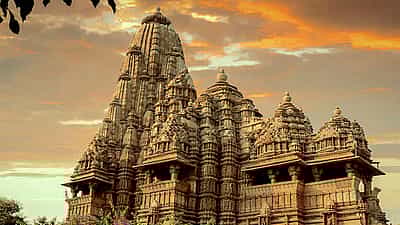
Remember Dhanga’s Pious Service to Sanatana Dharma the Next Time you Visit Khajuraho
The incalculable service of the Chandela Emperor, Dhanga towards protecting and propagating Sanatana Dharma is a little-known story. A great Bhakta of Shiva, his pious end is quite an extraordinary saga.


FOR AT LEAST HALF A CENTURY, KHAJURAHO was renowned for its infamy as a great representative of “erotic temple sculptures.” Needless, the decadent and value-denuded West gave it this infamy. Indeed, nothing pains the Hindu more than witnessing the ugly bazaar in this otherwise nondescript town hawking a vast array of expensively produced coffee table books and DVDs reducing divinity to pornography. The pain intensifies when we also consider how the locals, for the longest time, have been forced to play to this western perversion, belittling their Devatas, transforming them into performers of sexual acrobatics. All for earning a livelihood.

At its peak, the same Khajuraho had earned envious glory as one of the great cities of Bharatavarsha known for the valour of its kings, the wealth they created and above all, the unsullied piety they exuded. In its original avatar, Kharjūravāhaka had done signal service to the cause of the protection and propagation of Sanatana Dharma helmed by the intrepid Candrātrēya (Chandela) dynasty for nearly half a millennium (831 — 1315). Needless, its most glorious expression that has survived till this day is undoubtedly the fabled Khajuraho Cluster of Temples.

Inscriptional evidence traces the origins of the Candrātrēya lineage to the great Maharshi Atri, from whose eye Candra (Moon) was born. Candra’s son was Candrātrēya, the progenitor of the Chandela dynasty. Such stories of divine origins are invariably associated with every Hindu royal dynasty big and small, holding a lesson in itself. The immediate response to such stories from the contemporary Hindu mind conditioned by the West is one of disbelief, ridicule and even derision. The lion-like Swami Vivekananda’s sucker-punch to such deracinated minds remains the most effective till date:

In Europe there is my Lord the Cardinal, who is struggling hard and spending thousands of pounds to prove the nobility of his ancestors, and he will not be satisfied until he has traced his ancestry to some dreadful tyrant who lived on a hill and watched the people passing by, and whenever he had the opportunity, sprang out on them and robbed them. That was the business of these nobility-bestowing ancestors, and my Lord Cardinal is not satisfied until he can trace his ancestry to one of these. In India, on the other hand, the greatest princes seek to trace their descent to some ancient sage who dressed in a bit of loin cloth, lived in a forest, eating roots and studying the Vedas. It is there that the Indian prince goes to trace his ancestry. Our ideal is the Brahmin Devtas of spiritual culture and renunciation. By the Brahmin ideal what do I mean? I mean the ideal Brahmin-ness in which worldliness is altogether absent and true wisdom is abundantly present. That is the ideal of the Hindu Royal Race.

DHANGADEVA OR DHANGA WAS the seventh Rajput monarch in the Candrātrēya lineage. He was the son of Yashovarman, who is credited with formally establishing the suzerainty of the Chandela Empire, although he nominally acknowledged the vassalage of the Gurjara-Pratiharas. Yashovarman was a prolific temple-builder, commissioning the beautiful Lakshmana Temple, still resplendently standing in the Khajuraho Temple Complex. He also acquired a highly artistic Murti of Vaikuṇṭha-Viṣṇu, originally hailing from Bhota or Tibet, and built a magnificent Vishnu Temple modelled after his divine abode, Vaikuṇṭha. Sadly the temple has not survived.

In fact, Yashovarman heralded the grand era of Chandela art and architecture, which constitute some of the earliest and finest specimens of the Nāgara style.

Dhanga not only followed his illustrious father’s path but embellished it. Under him, the Chandela Empire stretched from Kalanjara (or Kalinjara), Bhilsa (Vidisha), Kalindi, Chedi, and Gōpādri (Gwalior). He also conducted prolific military expeditions against a rather impressive swathe of territory including Vidarbha, Kuntala, Andhra, Kanchi, Anga, and Radha. Perhaps his noblest service in the defence of Sanatana Dharma was sending his military force to assist Jayapaladeva, the last frontier Hindu hero, in his battle against Mahmud of Ghazni.


If Yashovarman built a Vaikuṇṭha-Viṣṇu Temple in Kharjūravāhaka, his son, an extraordinary Bhakta of Shiva, built the grand Visvanatha temple in the same temple complex. The story of how this temple was built is fortunately engraved in an inscription on its wall (now called Khajuraho Inscription No. IV).

Its summary is as follows.
Dhanga erected a magnificent temple for the Great God, Śambhu with two lingas. One was made of emerald and the other, of stone. The emerald linga is eponymously known as Marakatēśvara.

In the true spirit of Hindu kings, Dhanga extended his patronage and piety to the Jaina Sampradaya as well. Having abiding reverence for a Jaina Muni named Pahilla, he granted extensive lands to build a beautiful garden around a temple erected for Jinanatha.

Dhanga’s brilliant regime lasted for a year less than a half century (950—999) and was largely distinguished by peace, prosperity and Dharma. However, his final years were exceptional in a profound sense.

He embarked on a series of Yatras to different Tirtha-Kshetras including Varanasi before stationing himself at Tīrtha-cakravarti, Prayaga. It was at Prayaga that he transformed himself into a royal Sanyasi. As his renunciation matured and ripened, he entered the sacred waters at the Trivēṇi-saṅgama and closing his eyes, fixing his thoughts on Rudra, Dhanga abandoned his mortal body.

Kalachuri Gangeyadeva Attains Mukti at Akṣayavaṭavr̥kṣa

Artist's impression of Dhangadeva, king of the Chandela dynasty By Margaret Dovaston. https://t.co/AMb58v7Yiz

APART FROM DHANGA, we have the extraordinary
Gangeyadeva of the Kalachuri dynasty, ruling from Tripuri from 1015 — 1041. He wrested control of Varanasi and Prayaga from the Pala (Doda) Emperor's rule and successfully repulsed the invasions of the Ghaznavid governor of Punjab, Ahmad Niyaltigin around 1033-34. In the last years of his life, Gangeyadeva resided in Prayaga and was “fond of residing at the foot of the Akṣayavaṭavr̥kṣa.” It was under this Indestructible Banyan Tree that he attained Mukti, which western researchers call “religious suicide.” The Jabalpur Copperplate Inscription dated 1122 CE in Sanskrit describes the whole pious event with great emotion.

Gangeyadeva’s son, Lakshmikarna, the most distinguished Kalachuri ruler, was so moved by his father’s devotion that he honoured the deed by building the Karna-Tirtha ghat in Prayaga and the Karna-Meru Temple in Kashi.

Our Tirtha-Kshetras such as Prayaga hold such vital keys that unlock the true history of Bharatavarsha, heartlessly omitted from what passes off as history textbooks.


Thursday, November 2, 2017

Is Distortion Of Great Indian History Right


'यस्य पूज्यंते नार्यस्तु तत्र रमन्ते देवता


फिल्मकार को इसमें नहीं होना चाहिये। ये दुनिया में कहीं नहीं होता। परीक्षार्थी अपना प्रश्नपत्र स्वयं कैसे तैय्यार कर सकता है?

 दुनिया में फिल्म प्रमाणन प्रक्रिया में फिल्मकार बिल्कुल ही नहीं शामिल होते। ये अजूबा केवल भारत में होता है। 

 शिक्षाविद, समाजशास्त्री, बाल मनोवैज्ञानिक, व अभिभावक प्रतिनिधियों को फिल्म प्रमाणन प्रक्रिया में रखते हैं। फिल्मकार फटकते भी नहीं अास पास।

 फिल्म की प्रमाणन प्रक्रिया का फिल्म की गुणवत्ता से कोई लेना देना नहीं। इसीलिये उसमें फिल्मकारों को रखने का कोई अौचित्य नहीं।

 फिल्म प्रमाणन बोर्ड के मानदंड हैं। क्या पद्मावती उन मानदंडों पर खरी उतरती है? प्रथम द्रष्टया नहीं। ये रहे वो मानदंड। https://t.co/p9qaDkb4G2

 इन मानदंडों के Section 2 - xiii, xviii, अौर xix के अनुसार पद्मावती का प्रमाणन प्रथम द्रष्टया एक गलत निर्णय होगा। 
https://t.co/p9qaDkb4G2

पढ़िये सोचिये ,बिचारिये ,फिर आगेबढ़िये

बालीवुड‬ और टीवी सीरियल के नजरिए से ‪हिन्दू‬ को कैसे देखा जाता है एक झलक:---

-*ब्राह्मण* - ढोंगी पंडित, लुटेरा,
*‪राजपूत* - अक्खड़, मुच्छड़, क्रूर, बलात्कारी
*वैश्य या साहूकार* - लोभी, कंजूस,
*गरीब हिन्दू दलित* - कुछ पैसो या शराब की लालच में बेटी को बेच देने वाला चाचा या झूठी गवाही देने वाला
*सिक्ख*- जोकर आदि बनाकर मजाक उड़ाना
*जाट* खाप पंचायत का अड़ियल बेटी और बेटे के प्यार का विरोध करने वाला और महिलाओ पर अत्याचार करने वाला

जबकि दूसरी तरफवही दूसरी और

*मुस्लिम* - अल्लाह का नेक बन्दा, नमाजी, साहसी, वचनबद्ध, हीरो-हीरोइन की मदद करने वाला टिपिकल रहीम चाचा या पठान।

*ईसाई* - जीसस जैसा प्रेम, अपनत्व, हर बात पर क्रॉस बना कर प्रार्थना करते रहना।

ये बॉलीवुड इंडस्ट्री, सिर्फ हमारे धर्म, समाज और संस्कृति पर घात करने का सुनियोजित षड्यंत्र है और वह भी हमारे ही धन से ।*हम हिन्दू और सिक्ख अव्वल दर्जे के CARTOON बन चुके हैं।*क्योकि ये कभी वीर हिन्दू पुत्रों महाराणा प्रताप ,गुरु गोविन्द सिंह गुरु तेग बहादुरचन्द्रगुप्त मौर्य ,अशोक,विक्रमादित्य, वीर शिवाजी संभाजी राणा साँगा, पृथ्वीराज की कहानी नही बता सकते।कभी गहराई से विचार कीजियेगा…!!


अगर यही बॉलीवुड देश की संस्कृति सभ्यता दिखाए ..तो सत्य मानिये हमारी युवा पीढ़ी अपने रास्ते से कभी नही भटकेगी...समझिये ..जानिए और आगे बढिए...ये संदेश उन हिन्दू छोकरों के लिए हैजो फिल्म देखने के बादगले में क्रोस मुल्ले जैसी छोटी सी दाड़ी रख करखुद को मॉडर्न समझते हैंहिन्दू नौजवानौं के रगो में धीमा जहर भरा जा रहा है

फिल्म जेहाद*************सलीम - जावेद की जोड़ी की लिखी हुई फिल्मो को देखे, तो उसमे आपको अक्सर बहुत ही चालाकी से हिन्दू धर्म का मजाक तथा मुस्लिम / इसाई / साईं बाबा को महान दिखाया जाता मिलेगा. इनकी लगभग हर फिल्म में एक महान मुस्लिम चरित्र अवश्य होता है और हिन्दू मंदिर का मजाक तथा संत के रूप में पाखंडी ठग देखने को मिलते है.फिल्म "शोले" में धर्मेन्द्र भगवान् शिव की आड़ लेकर "हेमामालिनी" को प्रेमजाल में फंसाना चाहता है जो यह साबित करता है कि - मंदिर में लोग लडकियां छेड़ने जाते है. इसी फिल्म में ए. के. हंगल इतना पक्का नमाजी है कि - बेटे की लाश को छोड़कर, यह कहकर नमाज पढने चल देता है.कि- उसे और बेटे क्यों नहीं दिए कुर्बान होने के लिए."दीवार" का अमिताभ बच्चन नास्तिक है और वो भगवान् का प्रसाद तक नहीं खाना चाहता है, लेकिन 786 लिखे हुए बिल्ले को हमेशा अपनी जेब में रखता है और वो बिल्ला भी बार बार अमिताभ बच्चन की जान बचाता है. "जंजीर" में भी अमिताभ नास्तिक है और जया भगवान से नाराज होकर गाना गाती है लेकिन शेरखान एक सच्चा इंसान है.

फिल्म 'शान" में अमिताभ बच्चन और शशिकपूर साधू के वेश में जनता को ठगते है लेकिन इसी फिल्म में "अब्दुल" जैसा सच्चा इंसान है जो सच्चाई के लिए जान दे देता है. फिल्म "क्रान्ति" में माता का भजन करने वाला राजा (प्रदीप कुमार) गद्दार है और करीमखान (शत्रुघ्न सिन्हा) एक महान देशभक्त, जो देश के लिए अपनी जान दे देता है.अमर-अकबर-अन्थोनी में तीनो बच्चो का बाप किशनलाल एक खूनी स्मग्लर है लेकिन उनके बच्चों अकबर और अन्थोनी को पालने वाले मुस्लिम और ईसाई महान इंसान है. साईं बाबा का महिमामंडन भी इसी फिल्म के बाद शुरूहुआ था. फिल्म "हाथ की सफाई" में चोरी - ठगी को महिमामंडित करने वाली प्रार्थना भी आपको याद ही होगी.कुल मिलाकर आपको इनकी फिल्म में हिन्दू नास्तिक मिलेगा या धर्म का उपहास करता हुआ कोई कारनामा दिखेगा और इसके साथ साथ आपको शेरखान पठान, DSP डिसूजा, अब्दुल, पादरी, माइकल, डेबिड, आदि जैसे आदर्श चरित्र देखने को मिलेंगे. हो सकता है आपने पहले कभी इस पर ध्यान न दिया हो लेकिन अबकी बार ज़रा ध्यान से देखना.केवल सलीम / जावेद की ही नहीं बल्कि कादर खान, कैफ़ी आजमी, महेश भट्ट, आदि की फिल्मो का भी यही हाल है. फिल्म इंडस्ट्री पर दाउद जैसों का नियंत्रण रहा है. इसमें अक्सर अपराधियों का महिमामंडन किया जाता है और पंडित को धूर्त, ठाकुर को जालिम, बनिए को सूदखोर, सरदार को मूर्ख कामेडियन, आदि ही दिखाया जाता है."फरहान अख्तर" की फिल्म "भाग मिल्खा भाग" में "हवन करेंगे" का आखिर क्या मतलब था ? pk में भगवान् का रोंग नंबर बताने वाले आमिर खान क्या कभी अल्ला के रोंग नंबर 786 पर भी कोई फिल्म बनायेंगे ? मेरा मानना है कि - यह सब महज इत्तेफाक नहीं है बल्कि सोची समझी साजिश है एक चाल है ।


चितौड़ की रानी पद्मिनी जिसे रानी पद्मावती के नाम से भी जाता है, अपनी बहादुरी, त्याग, बलिदान व अप्रितम सौन्दर्य के लिए इतिहास में विश्व विख्यात है,रानी पद्मावतीके जौहर की कहानी बिना राजस्थान का इतिहास भी अधुरा लगता है| राजस्थान सहित भारतवर्ष के इतिहासकारों, लेखकों, साहित्यकारों ने रानी पद्मिनी के जौहर पर बहुत कुछ लिखकर इतिहास व साहित्य की पुस्तकों के ढेरों पन्ने भरे है|

ज्यादातर लेखकों, इतिहासकारों, कवियों ने अपनी अपनी रचनाओं में रानी पद्मिनी द्वारा रावत रतन सिंह को अल्लाउदीन खिलजी की कैद से छुडाने के लिए किये गए कमांडो कार्यवाही व उसके बाद जौहर की चर्चाएँ तो खूब की पर रानी पद्मिनी का जन्म कहाँ हुआ, उसके पिता का नाम क्या था ? वह किस राज्य की राजकुमारी थी ? उसका जन्म से नाम पद्मिनी ही था या फिर उसके रूप सौन्दर्य, बुद्धिमता व वीरता के चलते उसे हमारे शास्त्रों में वर्णित महिलाओं की चार श्रेणियों में सबसे श्रेष्ठ श्रेणी पद्मिनी श्रेणी में शामिल कर पद्मिनी नाम दिया गया| इस पर किसी भी लेखक ने प्रकाश नहीं डाला|

गोरा बादल कवित्त, गोरा बादल चौपाई, गोरा बादल पद्मिनी चौपाई, पद्मिनी चरित्र चौपाई, खोमन या खुमान रासो आदि के लेखकों जायसी, हेमरतन, जटमल नाहर, दौलत विजय आदि लेखकों, साहित्यकारों ने हमारी राष्ट्रीय नायिका रानी पद्मिनी को सिंघलदीप या सिलोन की राजकुमारी माना है|जायसी के अनुसार रानी पद्मिनी सिलोन के राजा गंधर्वसेन की पुत्री थी जिसे पाने के लिए चित्तौड़ के रावत रतन सिंह को आठ वर्षों तक संघर्ष करना पड़ा था उसके बाद वे रानी पद्मिनी को विवाह कर चितौड़ लाये| जबकि उस काल सिलोन का राजा पराक्रम बाहू चतुर्थ था, साथ ही उस काल की सामरिक परिस्थितियों में रावत रतन सिंह के पास इतना समय ही नहीं था कि वे एक शादी के लिए आठ वर्षों तक संघर्ष कर सके| अत: सिलोन में रानी पद्मिनी के जन्म की बात सिर्फ साहित्यिक उपज लगती है|

साहित्यकारों ने अपने साहित्य में रानी पद्मिनी का जन्म सिंघलदीप बताना भी साहित्यिक दिमाग की ही उपज लगता है हो सकता पद्मिनी चरित्र चौपाई में पद्मिनी श्रेणी की महिलाओं के मिलने का स्थान सिंघलदीप लिखा है अत: हो सकता है उसी को ध्यान में रख साहित्यकारों ने चित्तौड़ की रानी पद्मिनी को सिंघलदीप की राजकुमारी बताया हो|मुस्लिम लेखकों अबुल फजल व हाजी उद दाविर आदि ने अपने लेखन में चित्तौड़ की रानी का नाम पद्मिनी उल्लेखित करने के बजाय सिर्फ एक अति सुन्दर रानी का ही उल्लेख किया है|कर्नल जेम्स टॉड ने अपनी पुस्तक एनल्स एंड एंटीक्यूटी ऑफ़ राजस्थान में हमारी राष्ट्रीय ऐतिहासिक नायिका रानी पद्मिनी को राजा हमीर संक (हमीर सिंह चौहान) की पुत्री माना है| 

कर्नल टॉड लिखता है- रानी का मूल नाम दूसरा हो सकता है और हो सकता है उसकी विशेष सुंदरता व गुणोंके चलते उसे पद्मिनी नाम बाद में दिया गया हो|यूँ तो राजस्थान में बीकानेर के पास एक पूंगल नामक स्थान है जो पद्मिनियों के लिए विख्यात है, राजस्थान की प्रसिद्ध प्रेम कहानी “ढोला मारू” की नायिका मारुवणी इसी पूंगल की राजकुमारी थी| आज भी राजस्थान के गांवों में किसी सुंदर महिला को पद्मिनी की उपमा देते हुए कह दिया जाता है- ये तो पूंगल की पद्मिनी है, या अति सुन्दर पत्नी की कामना रखने वाले किसी लड़के से मजाक में कह दिया जाता है –इसको तो पूंगल की पद्मिनी चाहिये|राजस्थान के सुप्रसिद्ध इतिहासकार ओझा जी के अनुसार हमारी इस ऐतिहासिक राष्ट्र नायिका रानी पद्मिनी का जन्म स्थान चित्तौड़ से चालीस मील दूर सिंगोली नामक गांव है, अमर काव्य वंशावली में भी रानी पद्मिनी का जन्म स्थान सिंगोली गाँव ही उल्लेखित है|

मुझे ओझा जी का मत ज्यादा सटीक लगता है क्योंकि रानी पद्मिनी चित्तौड़ के ही आस पास की किसी छोटी रियासत की राजकुमारी रही होगी| गोरा बादल पर साहित्य व इतिहास में जो थोड़ी बहुत जानकारी मिलती है उसके अनुसार भी यही लगता है कि वे चित्तौड़ के पास सिंगोली की ही राजकुंवरी थी| गोरा बादल चौहान राजपूत थे, उनकी चित्तौड़ के किले में हवेली भी थी जो आज भी खंडित अवस्था में मौजूद है, गोरा रानी पद्मिनी के ककोसा (चाचा) थे तो बादल रानी का चचेरा (कजिन) भाई था जिसके पिता का नाम गजानन था| गोरा बादल की वीरता पर तो साहित्यकारों, इतिहासकारों, कवियों ने खूब लिखा पर उनके परिचय के बारे में इससे ज्यादा जानकारी नहीं मिलती|“रानी पद्मिनी दी हिरोइन ऑफ़ चित्तौड़” नामक अंग्रेजी पुस्तक के लेखक बी.के. करकरा भी इसी तरह विश्लेषण करते हुए लिखते है यह सत्य है कि रानी पद्मिनी हमारी गौरवपूर्ण राष्ट्रीय नायिका है जो सिंघलदीप या सिलोन की नहीं चित्तौड़ के ही पास के किसी स्थान के शासक की राजकुमारी थी|ओझा जी का मत सटीक लगने के बावजूद मैं मानता हूँ कि रानी के जन्म स्थान के बारे में और शोध की आवश्यकता है| आपके पास यदि इस संबंध में कोई जानकारी हो तो कृपया संझा करे|हमारे शास्त्रों के अनुसार रूप सौन्दर्य,विचार, व्यवहार आदि गुणों के आधार पर स्त्रियों को चार श्रेणियों में बांटा गया है- पद्मिनी,चित्रणी,हस्तिनी व संखिणी, पद्मिनी चरित्र चौपाई नामक पुस्तक में लेखक ने इन चारों श्रेणियों की महिलाओं के अलग अलग गुणों आदि परइस तरह प्रकाश डाला है-


पद्मिनी पद्म गन्धा च पुष्प गन्धा च चित्रणी|
हस्तिनी मच्छ गन्धा च दुर्गन्धा भावेत्संखणी||

पद्मिनी स्वामिभक्त च पुत्रभक्त च चित्रणी|
हस्तिनी मातृभक्त च आत्मभक्त च संखिणी ||

पद्मिनी करलकेशा च लम्बकेशा च चित्रणी |
हस्तिनी उर्द्धकेशा च लठरकेशा च संखिणी ||

पद्मिनी चन्द्रवदना च सूर्यवदना च चित्रणी |
हस्तिनी पद्मवदना च शुकरवदना च संखिणी ||

पद्मिनी हंसवाणी च कोकिलावाणी च चित्रणी |
हस्तिनी काकवाणी च गर्दभवाणी च संखिणी ||

पद्मिनी पावाहारा च द्विपावाहारा च चित्रणी |
त्रिपदा हारा हस्तिनी ज्ञेया परं हारा च संखिणी ||

चतु वर्षे प्रसूति पद्मन्या त्रय वर्षाश्च चित्रणी |
द्वि वर्षा हस्तिनी प्रसूतं प्रति वर्ष च संखिणी ||

पद्मिनी श्वेत श्रृंगारा, रक्त श्रृंगारा चित्रणी |
हस्तिनी नील श्रृंगारा, कृष्ण श्रृंगारा च संखिणी ||

पद्मिनी पान राचन्ति, वित्त राचन्ति चित्रणी |
हस्तिनी दान राचन्ति, कलह राचन्ति संखिणी ||

पद्मिनी प्रहन निंद्रा च, द्वि प्रहर निंद्रा च चित्रणी |
हस्तिनी प्रहर निंद्रा च, अघोर निंद्रा च संखिणी ||

चक्रस्थन्यो च पद्मिन्या, समस्थनी च चित्रणी |
उद्धस्थनी च हस्तिन्या दीघस्थानी संखिणी ||

पद्मिनी हारदंता च, समदंता च चित्रणी |
हस्तिनी दिर्घदंता च, वक्रदंता च संखिणी ||

पद्मिनी मुख सौरभ्यं, उर सौरभ्यं चित्रणी |
हस्तिनी कटि सौरभ्यं, नास्ति गंधा च संखिणी ||

पद्मिनी पान राचन्ति, फल राचन्ति चित्रणी |
हस्तिनी मिष्ट राचन्ति, अन्न राचन्ति संखिणी ||

पद्मिनी प्रेम वांछन्ति, मान वांछन्ति चित्रणी |
हस्तिनी दान वांछन्ति, कलह वांछन्ति संखिणी ||

महापुण्येन पद्मिन्या, मध्यम पुण्येन चित्रणी |
हस्तिनी च क्रियालोपे, अघोर पापेन संखिणी ||

पद्मिनी सिंघलद्वीपे च, दक्षिण देशे च चित्रणी |
हस्तिनी मध्यदेशे च, मरुधराया च संखिणी ||