Rajputana (Rajasthan), though synonymous with the Thar desert, springs this surprise with the ‘city of lakes’ whose micro-history of water resources is as significant and unique as its built architecture.

“It’s a unique example of water conservation and management anywhere in the world,”
The micro-history of water resource management in Mewar is filled with fascinating dots, which are waiting to be joined together which reveals deeper insights into watershed management, river diversion and river linkage in the region of Mewar over the last 700 years. “Udaipur the ‘city of lakes’ is actually a network of eight man-made lakes which have given the city its character and sustainability,”
Dr Rathore explains in his paper on ‘Water Resource Management:

A study of the world’s first man-made river links, river diversion and micro watershed of Udaipur basin’ lists the eight linkages:
Goverdhan Sagar to Lake Pichola;
Lake Pichola is linked to Doodh Talai,
Amarkund and Kumharia Talab with channels;
Kumharia Talab is linked to Rang Sagar;
Rang Sagar, in turn, has link channels to Amar Kund and Swaroop Sagar;
it is Swaroop Sagar that overflows into the Fateh Sagar through the eighth link channel.
The story begins with Maharana Lakha who, in today’s terminology, was instrumental in watershed area planning. Between 1382-1385, Lake Pichola was constructed across the Kotra or Sisarma river. It has a total water body area of almost 7 sq. km.
“It is the creation of a natural asset,”

“the city of Udaipur gets defined by Lake Pichola and successive generations of Maharanas of Mewar provide more lakes, in fact more lifelines for the city from the 14th to 20th centuries.”
The expertise demonstrated in the construction of Lake Pichola as a water body in the 14th CE is in sync with scientific and technological developments at the zinc mines of Zawar, as detailed in Dr Paul T Craddock’s report titled ‘The production of lead, silver and zinc in ancient India’. A good working knowledge of hydrology, pneumatics, hydrostatics, geology and competence in mathematics would have been essential for these achievements.
Following the example of Maharana Lakha, the network of lakes was constructed which, as Dr Rathore said, can best be understood as micro watershed units.

Geography has played an important role in these micro-historical feats in Udaipur and the region of Mewar. Udaipur basin is located on the ‘great India water divide line’ at the confluence of four rivers, i.e., Ahar, Morwani, Amarjok and Kotra (Sisarma) that flow through the well-defined Girwa region along eastern slopes of south-central Aravallis, one of the oldest mountain ranges in the world.
Girwa means ‘girdle of hills’ and the Udaipur basin is saucer-shaped in the form of a valley, surrounded by Aravalli hill ranges.
“Metamorphic rocks of the region ensure that there is no underground leakage or seepage of water from these lakes,”
Ahar is the only major river that flows through this region, originating from the hills of Gogunda, flowing for 30 kms and joining Udai Sagar lake in the east.
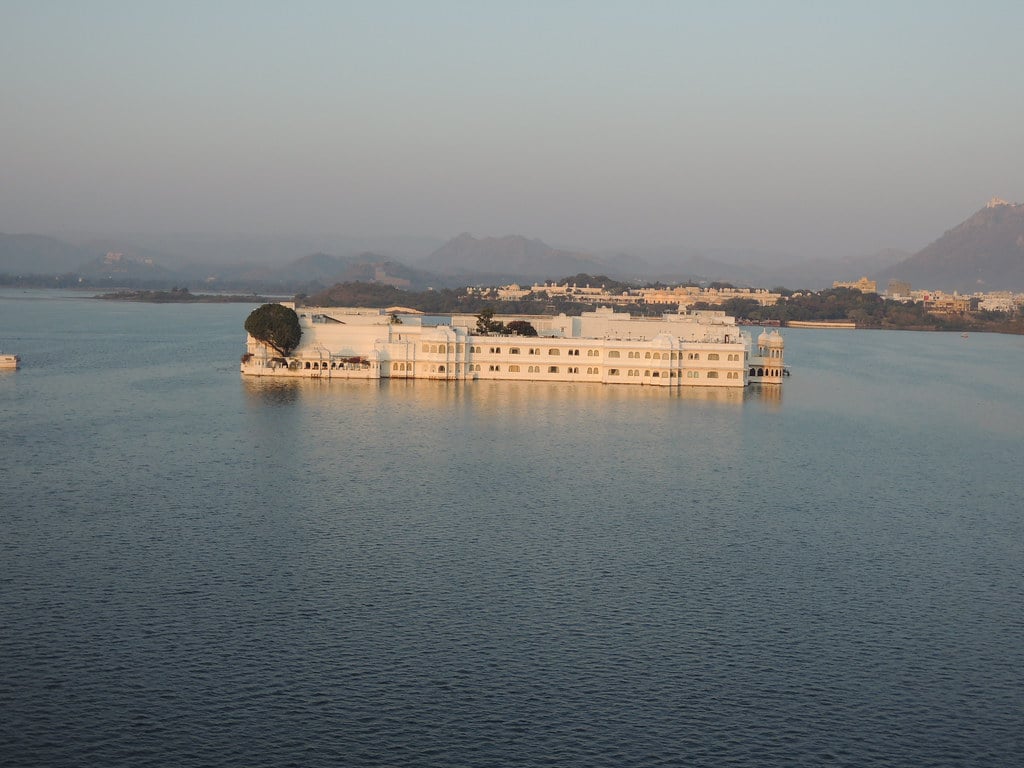
Lake Pichola is an artificial lake located in theUdaipur city center of the state of Rajasthan. Lake Pichola is one of the largest and oldest lakes in the Udaipur city. Lake Pichola or pichola lake attracts millions of tourists visiting here due to its peace and beauty.

Surrounded by lofty hills, heritage buildings and bathing ghats, this place is a haven for peace and nature lovers. If going for a walk, then the trip to this lake is incomplete without a boat ride here.

Boating here during the evening can prove to be very special because at this time it seems as if the whole place is immersed in golden color.
A breathtaking view here will take you to a different world and make you romantic. Apart from your family, you can also travel with your friends in this beautiful place.
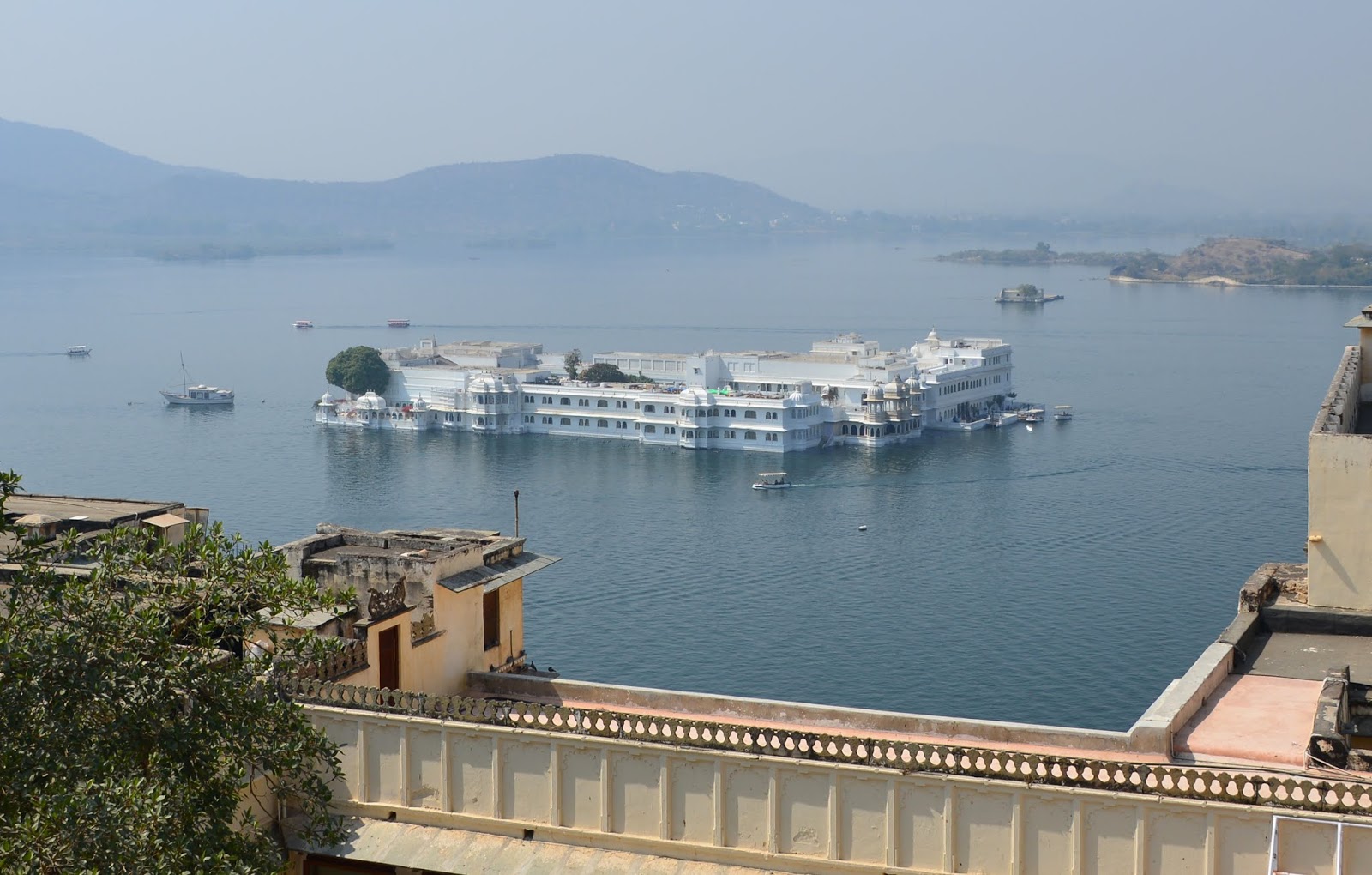
The word Pichola means ‘backyard’ and the lake was named after a nearby village ‘Picholi’. Pichola Lake was built in 1362 AD by Picchu Banjara during the reign of Maharana Lakha, which is 3 miles in length, width 2 miles, and depth 30 feet. Maharana Udai Singh was fascinated by the beauty of this lake, so he built the city of Udaipur on the banks of Lake Pichola. Later, being fascinated by the attraction of this lake, Maharana Udai Singh enlarged this lake and also built a dam on its banks.

The surroundings of the lake include palaces, marble temples, Havelis, platforms or bathing ghats that were built many centuries ago. Some of the famous palaces near this lake are Jag Niwas, Mohan Mandir, and Jag Mandir Mahal.
Jag Niwas has now been converted into a heritage hotel, which is situated on the Jagadweep. The Mohan Temple is located to the north-east of the lake, which was built between 1628 and 1652 by Jagat Singh. There is also an Arshevilleas island which was built by the Maharaja of Udaipur to enjoy the sunset. The lake also has a sanctuary for birds.
Lake Palace Udaipur
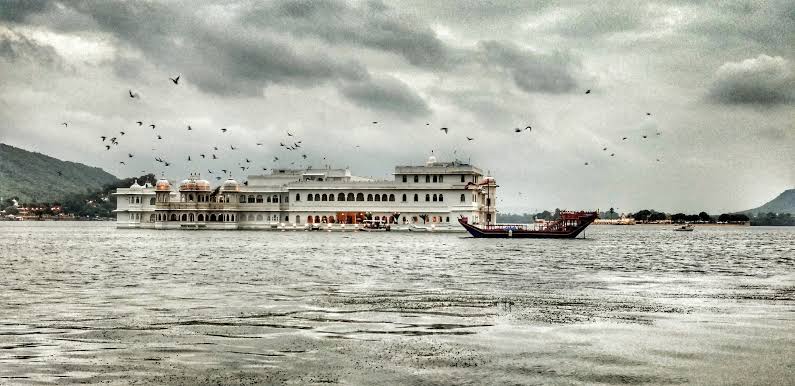
Lake Palace Udaipur was built between1743 AD to 1746AD under the leadership of 62nd Maharana Jagat Singh II of Udaipur. It was earlier called Jag Niwas after the name of its founder Jagat Singh. It was first constructed as a royal summer residence.
This palace was built in the east due to the worship of the Hindu god Suryadev by the residents of here.Located in the Udaipur district of Rajasthan state, Lake Palace is one of the important tourist destinations of Udaipur. This is also known as Jag Niwas.
Lake Palace is a grand hotel built on the Jag Niwas island of Pichola Lake. The Lake Palace has 83 rooms and suites made of white marble walls. Speed boats are used to transport guests to the Lake Palace Hotel. Lake Palace is counted among the most romantic hotels in India and the world.
History of Lake Palace Udaipur Rajasthan
The rooms above are curved, which is 21feet in diameter. Its floor is made of black and white marble and the walls are adorned with adorned studded stones.
In the revolution of 1857, many European families fled Neemuch and came here, which was given shelter by the then Maharana Swaroop Singh. To save his guests, all the boats coming to this palace were destroyed so that the rebel could not reach this island.
An additional pavilion, Chandra Prakash was built here in Maharana Bhupal Singh’s Shashaan, the rest of the Jag Niwas was never changed. Bhagwant Singh decided to make Jag Niwas Jag Niwas the first luxury hotel in Udaipur.
An American artist designed this hotel. In1971, the Taj Group took over the management of this hotel and got 75rooms built. In 2000, it was repaired a second time.
Lake Palace was used for the filming of many films. In which The film The Tiger of Eschnapur and The Indian Tomb was shot in 1959. In 1983, an excerpt from James Bond’s film Octopussy was filmed at the Jal Mahal. In 1984 the British TV series The Jewel in the Crown was filmed as the guest house of the Nawab of Mirat. In 2001, for the first time in Jal Mahal, the Bollywood film Subhash Ghai-directed “Yade” was shot in which Hrithik Roshan and Kareena Kapoor were the main actors. Also Shooting the film The Fall in 2006. In 2013, excerpts from the movie “Yeh Jawani Hai Deewani” were screened.
Jaisamand Lake
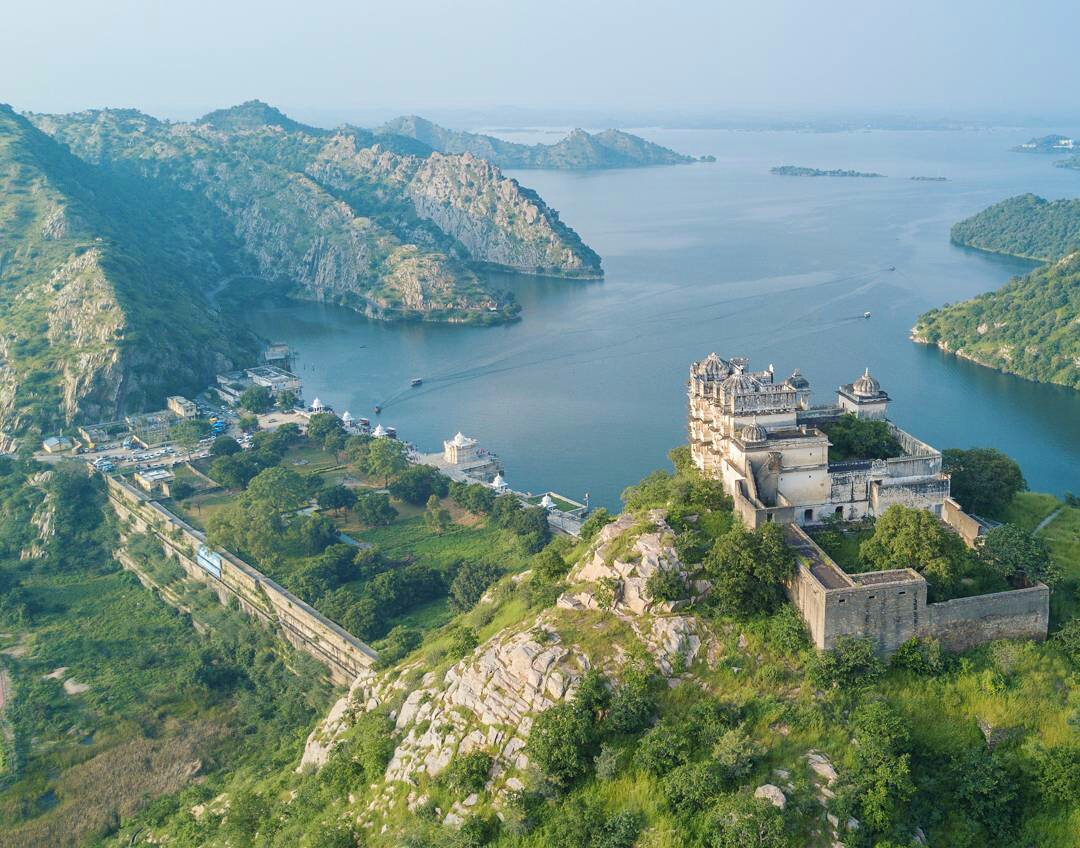
Jaisamand Lake or Dhebar Lake is a huge reservoir located in Udaipur in the southeast of the Aravali range of Rajasthan state of India. It is located on the Udaipur-Salumbar road, south-east, 51 km away from Udaipur District headquarters.
With its natural surroundings and the beauty of the dam’s architecture, this lake has become an important tourist attraction for years. The best time to visit here is at the time of monsoon.
The houses made with Ken on the road along the lake offer a very panoramic view. This is the most beautiful view of the lake.
“Jaisamand Lake is one of the main tourist destinations of Rajasthan and this lake have the distinction of being Asia’s largest artificial lake.”
The construction of the Jaisamand Lake was done by the Maharana of Udaipur for a picnic in 1687-1691. They also built an island in the middle of this lake.

This artificial Lake, which was constructed between 1687 and 1691 AD by the then Maharana Jayasingh of Udaipur 14 thousand 400 meters in length and 9,500 meters wide, is considered as the largest freshwater lake in Asia.
In between the two hills, Dhebar Pass was given the form of an artificial lake and after the name of Maharana Jayasingh, it was called ‘Jaysamand’.
It is said that some years ago, there were nine rivers and more than half a dozen streams of water coming in this lake, but now only the Gomti river and its tributaries and some streams of water do reach.
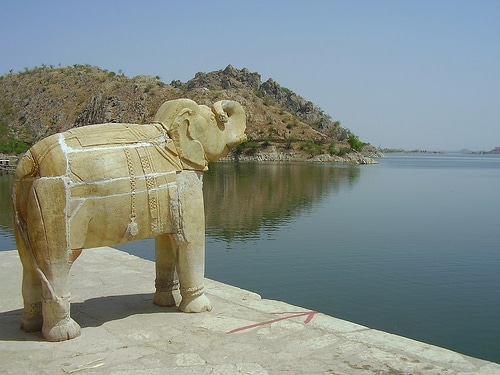
Architecture of Jaisamand Lake Udaipur
The sight of architecture The Jaisamand Lake is a major center of attraction in itself. Six beautiful umbrellas built at some distance on the banks of the lake attract visitors. In front of these umbrellas, three Bediyo were made in front of them.
The statue of the stone has been made in the vertical posture of the six elephants, on top of the Bediyo. Here, the artistic temple of ‘Narmandhatar Mahadev’, which is dedicated to Lord Shiva by Maharana Jai Singh has also been built at the highest point of the dam.
At the northern end of Asia’s largest artificial Lake dam is the palace built by Maharana Fateh Singh, which has now been transformed into a rest house. The palaces built on the southern end were called “the palaces of Maharaj Kumar”.
The palace built by Maharana Jai Singh on the hill of the south end was restored at the time of Maharana Sajjan Singh. He built the ‘Jaynagar’ behind this lake and constructed some buildings and Baudi, which could not be inhabited. Today there are only some remains of construction.
According to historical documents, Maharana Jay Singh constructed 375 meters long and 35-meter high dam on Gomti river that brought water to the lake. The task of building it, two Purabi Chauhan Rajput wakhta and Galaling were given to.
The width of the wall in the Lake is 20 meters and the breadth above five meters. Construction of the dam was constructed from the white stones of the quarries of Baroda village located in Salumbankar, from the mine to the lake, the stones were used for lanes. The dual wall was constructed in terms of the strength of the lake.
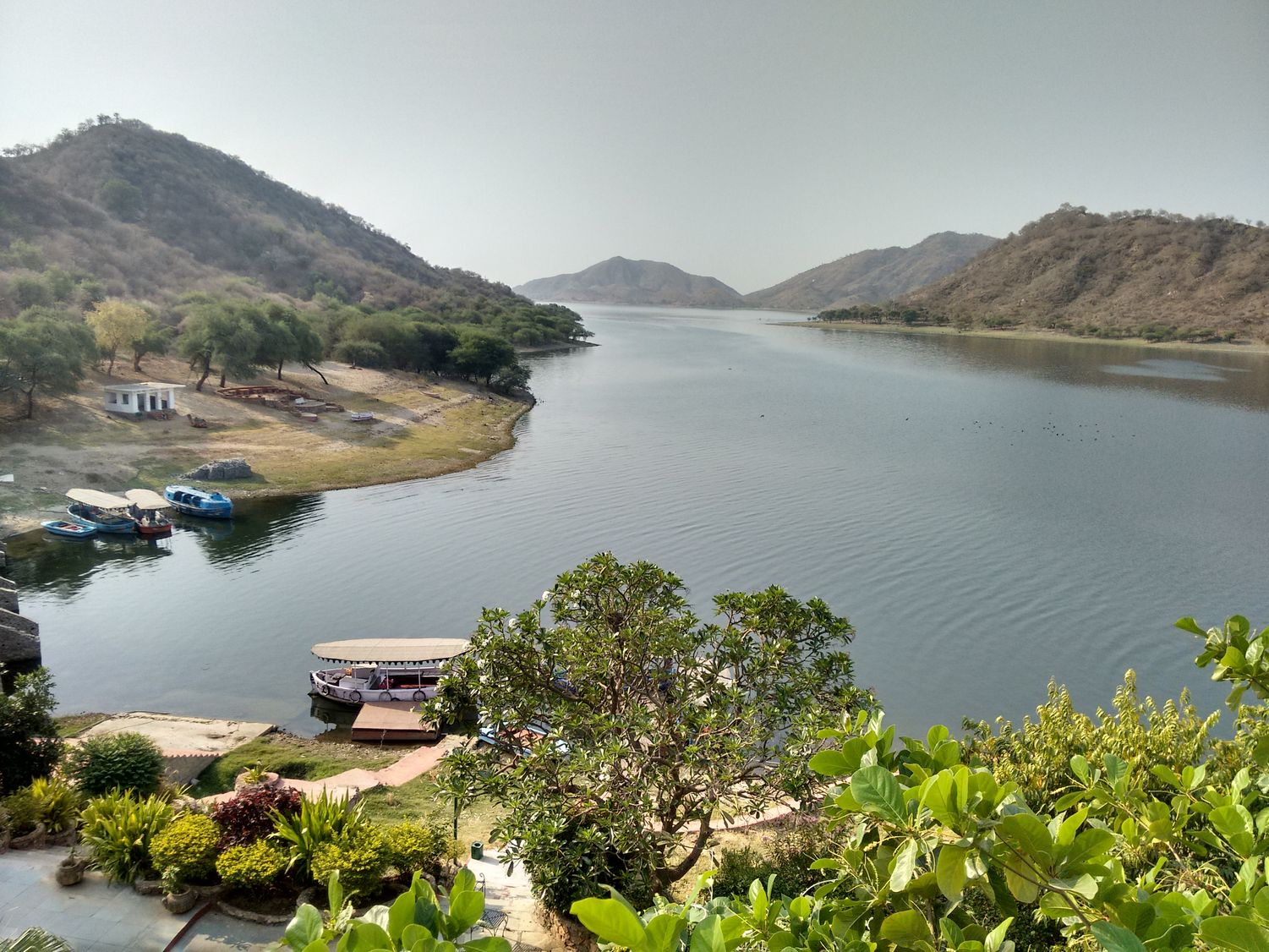
From the point of view of safety, 396 meters long and a further The 36-meter high dam was constructed at a distance of about 100 feet from the dam. In the time of Maharana Sajjan Singh and Fahsinh, the portion between these two dams were filled and plantation was done on flat land.
Fateh Sagar Lake
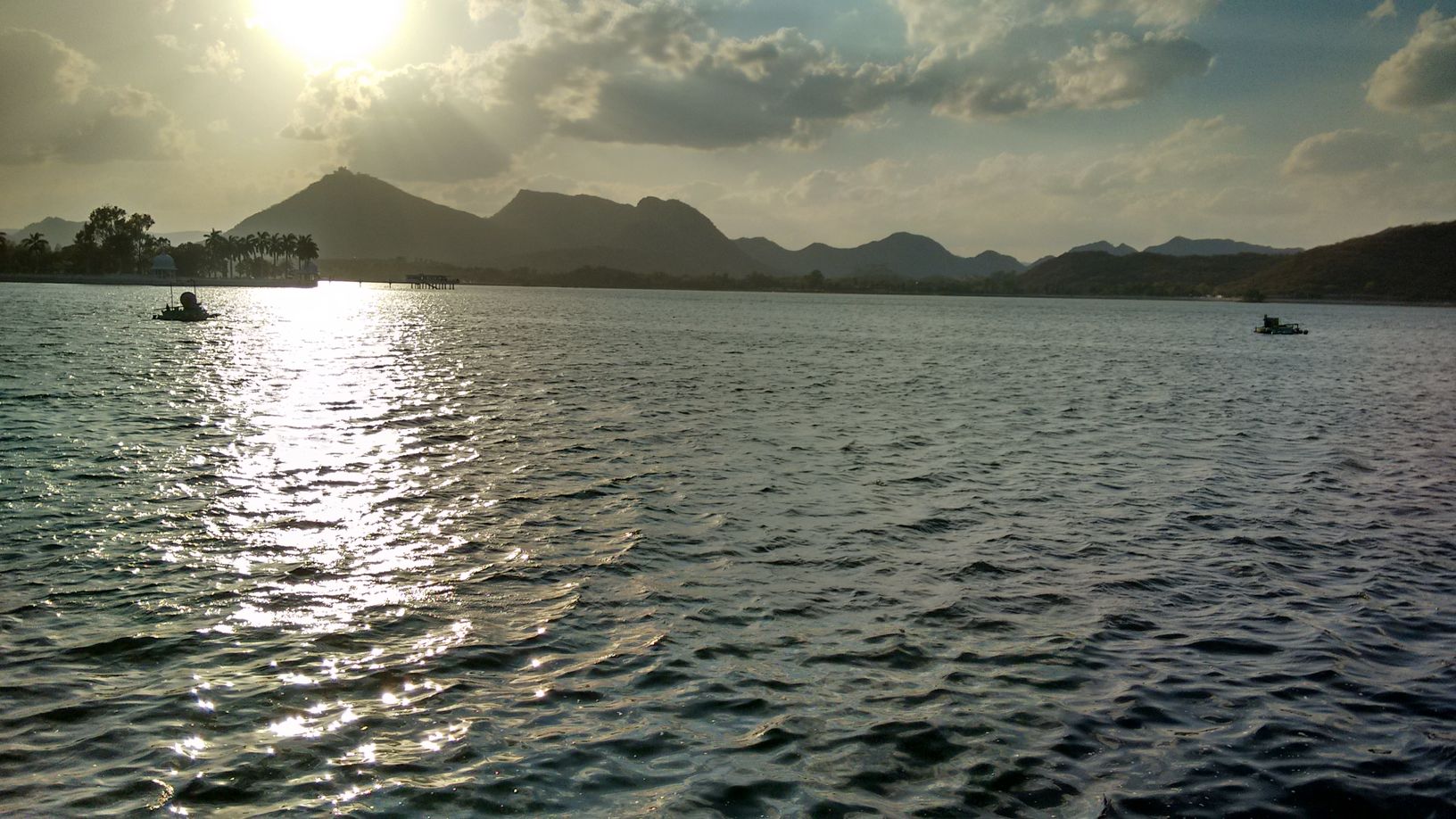
Fateh Sagar Lake, located to the northwest of Udaipur in Rajasthan, is an important tourist destination of Udaipur. It is the second-largest man-made lake in Udaipur surrounded by the Aravalli hills. This lake is known for its grand beauty, the tranquil atmosphere of Fateh Sagar Lake makes tourists feel wonderful peace.
Fateh Sagar Lake is one of the major lakes of the city due to a large number of tourists visiting it. People come to this place to enjoy boating in the blue water and see the natural beauty of the place. The natural beauty and charm of Lake Fateh Sagar have made it a special tourist destination.

The Lake Fateh Sagar was built in 1687by Maharana Jai Singh. But almost 200years later, this lake was destroyed in the floods in 1888, which was rebuilt by Maharana Fateh Singh in 1889 to shape the present lake by building Connaught Dam.
Because of which the lake was named Lake Fateh Sagar after Maharana Fateh Singh. Fateh-Sagar Lake is divided into three different islands. The largest island of which is called Nehru Park. A boat-shaped restaurant and a small zoo for children are also located at this place which is quite popular as a picnic spot.
The second island of this lake has a public park with water-jet fountains. Udaipur Solar Observatory is located on the third island. Fateh Sagar is famous for boating in the lake.
MONSOON PALACE | SAJJANGARH PALACE
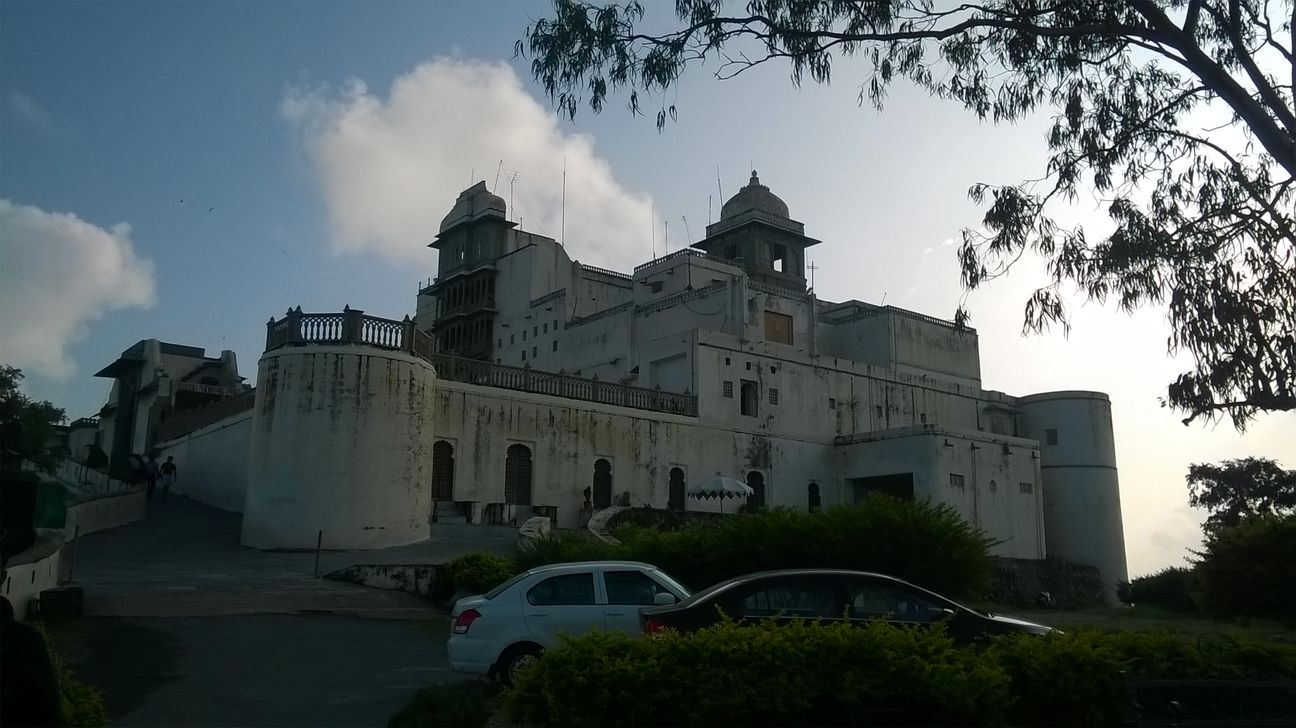
Monsoon Palace located in the Udaipur district of Rajasthan state which is also known as Sajjangarh Palace or Sajjangarh Fort. The monsoon palace is situated on the Bansadara peak of the Aravalli hill, about 5 kilometers from Udaipur. Which is 3100 feet above sea level. And Udaipur city does not have any building higher than palace Monsoon.
The construction of the Palace Monsoon was started by Raja Sajjan Singh of Mewar in 1884. But with the untimely death of Sajjan Singh, the construction of the palace stopped. After which his successor Maharana Fateh Singh completed the construction of the palace.

Maharana Sajjan Singh, the builder of the Monsoon Palace, was the 72nd ruler of the Mewar dynasty. Who ruled Udaipur for about 10 years. Maharaja Sajjan Singh was installed on the throne at a very young age.
The purpose of the construction of this palace was specially built to see the monsoon clouds and estimate the rain and to employ local people. And it was also an important palace in terms of security. And from the very beginning, this palace has been popular as the best place for hunting in the royal family of Mewar.

This beautiful palace is built of white marble. From the Palace Monsoon, one can see Pichola Lake, Fatehsagar Lake in the heart of the city and the surrounding village areas and the Aravalli hills.
Several feet high pillars built in the palace are designed with floral motifs and leaves. And on its domes are Mewari paintings, this nine-story building served as an astronomical center. It is a wonderful palatial building of Udaipur.
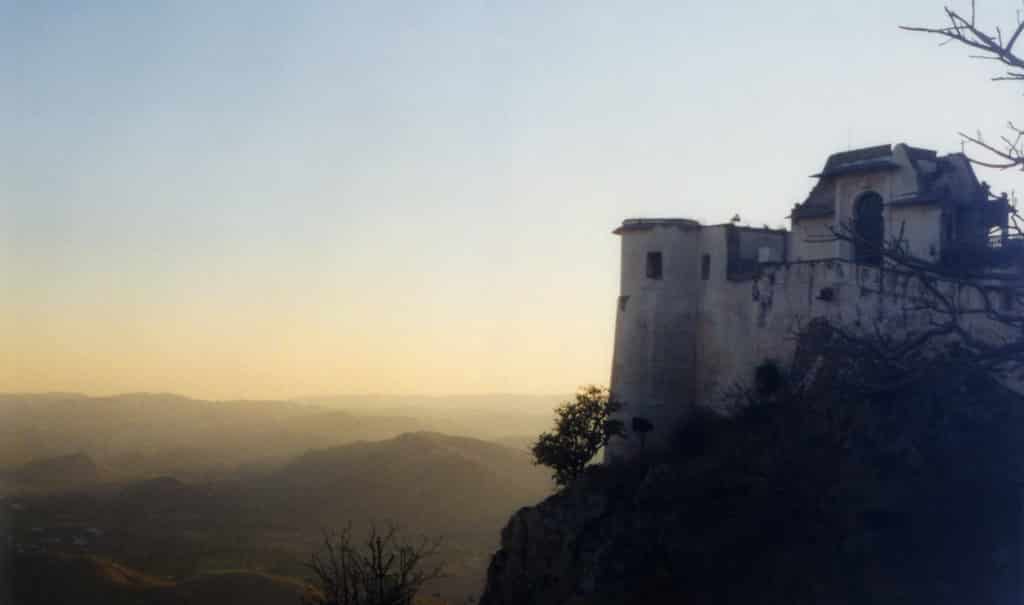
The palace also has a water pool for the same period. Designed to collect every single drop of rain, which was designed to collect rainwater, the rainwater collection system is a wonderful example of the craftsmanship of ancient building artisans.
The rainwater falling in the open part of the fort is collected from the roof over the roof in the double pit by a pipe, which is used in the works of the fort throughout the year.The Palace Monsoon in Udaipur is built at the highest altitude. Due to which the first drops of rainfall on the monsoon palace itself. In such a situation, the royal family used to visit the Monsoon Palace to enjoy the monsoon.
The construction of Connaught Dam in 1890 assumes significance when known how highly erratic and uncertain is the rainfall every year.
“Explosive population growth, encroachment of lake-beds and rapid urbanisation have compounded the problems that a heritage city like Udaipur faces, year after year,”
Measures to save lakes need to be taken through water conservation techniques and construction of new link channels. In short, lessons from our past have to be learnt, saluting leadvers whose names are linked to water bodies that have sustained cities, lives and livelihoods for centuries.
So residents-tourists to the heritage city, lakes filled to the brim are thrilling sights to remember.
 |
| City Palace Udaipur |
Udaipur, earlier the capital of the Mewar Kingdom, is today one of the world's beautiful cities. Known as 'City of Lakes', this pristine & elegant city has many lakes that offer visitors panoramic views of waters against a glorious setting sun.

The construction of City Palace started under the reign of Maharana Udai Singh II (SisodiaRajput) and was enhanced subsequently by his successors over a period of 400 years.
The kingdom of Mewar was situated in what is now Rajasthan in Northern India. It was bestowed on Bappa Rawal in 734 A.D. by the great devotee of Lord Shiva (Shri Eklingji), Sage Harit Rashi of the Lakulish Cult.

As the armies of the Mughal emperor Akbar moved to occupy Mewar in 1568, the then ruler, Maharana Udai Singh, father of Rana Pratap Singh, retired to safety at Udaipur, in the foothills of the Aravalli Range. It was at Udaipur that Pratap supplanted his father as head of the Sesodia clan. Rana Pratap's son Amar Singh was resident at the time of his father's death in exile. Udaipur remained the capital of the state until it acceded unto the Union of India in 1947.
Immediately after Rana Pratap's death, the Sisodias became vassals of the Mughals, and served them faithfully for nearly two centuries. When the Mughal empire went into terminal decline in the 18th century, the Sisodias ventured a measure of autonomy, but were subdued by the Marathas, who exacted crippling tributes from them annually. To add to the woes of the land, the Sisodia rulers of this period dissipated much energy and resources in petty quarrels with their neighbours. As the relentless turmoil drained both the country and its ruling family; in the early decades of the 19th century, the Sisodia rulers repeatedly petitioned the British Raj for protection from their neighbours and from the Marathas. Finally, in 1818, Mewar entered into subsidiary alliance with the British and became a Princely state in the Rajputana Agency. This arrangement continued until the independence of India in 1947, when Mewar acceded unto the Union of India; it was later integrated into the Indian state of Rajasthan.

In the heraldry of Mewar the sun plays a major role as the emblem of the empire, the emblem of the kingdom and the emblem of the Maharana. In the 19th century the faced sun came to refer to the Hindu sun-god Surya from which the Royal House of Mewar, belonging to the Rajput Suryavanshi lineage, claimed its descent.
The picture in the head of this section shows the national emblem of the Mughal Empire consisting of a sun surrounded by twenty-four stars. This emblem was granted to the main vassals of the Empire. Such a screen is part of the royal insignia in the 12th century Sangrahani Sutra manuscript. It is depicted on a miniature showing the Maharajas of Jodhpur and Jaipur and the Maharana of Mewar received by Emperor Shah Alam in 1708. It is carried on a pole by the ensigns of these rulers.

Soon there were embellished versions of this emblem as we may see on this detail of “Maharana Sangram Singh on his Royal Mount, Jambudvipa” (1725 ca.). On this miniature we can see that the screen consisted of black ostrich-feathers.
In the beginning of the 19th century this emblem evoluated by adding a face to the sun and by leaving out the stars. On a picture of 1851 an umbrella is added. A modern version shows the sun flamboyant.


The screen in 1802, 1851 and today
The Sun
Once the faced sun was introduced, it became the emblem of the Maharana. Its design evolutaed from a sun radiant or flamboyant charged with a simple head, to a sun charged with the head of the sun god Surya from which the Royal House traced its descent. As such, this head or face is symbolizing each ruler of Mewar. It also distiguishes the Mewar sun from for example the sun of Jaipur and some other Indian Princely states.


Evolution of the Sun radiant of Mewar, 1860 - ’90 ca.
The Fans and Banners
The faced sun was placed on the fans and standards. Of these two sets have been preserved. The oldest set consists of a sun-banner, a moon-banner and a fan.


Generally speaking the banners are the symbols of the ruler and of the state, the moon without the face implying that the ruler was not the head of state, and thus, that the government of Mewar was an autonomous body. This would be the case whenever the ruler was not able to govern and the state affairs were looked after by a regency. This would also be the case in a constitutional monarchy.
Another set consists of two fans and a sun-banner:


This set was still used in the interbellum.
The Royal Achievement
A quasi-achievement was in the audience hall (Mor Chowk or Peacock Hall) of the palace of Udaipur, itself built by Rana Karan Singhji (1620-’28). It showed the imperial emblem of the sun radiant, supported by female servants bearing a tray with offerings.
After Mewar had resigned from the Mughal Empire in 1818, this emblem was defaced by painting the sun-disc black. This, at least, can be seen on this picture of Bhim Singh receiving Charles Metcalfe in the Mor Chowk in 1826.
Somewhat later, maybe by Sajjan Singh, the emblem was repainted. It shows a sun radiant now, charged with the head of the sun god Surya in full color. This version can be seen on a picture of Fateh Singh receiving a British diplomat in 1890. It seems to have been the model after which the achievement of 1877 was designed by Robert Taylor. For the occasion the female servants were replaced by a Bhil and a Rajput warrior.
When the Durbar Hall was begun and decorated in 1909 the sun and servants were redesigned again. The number of servants was augmented to four and the trays in their hands were replaced by morchals and chaoris. The rays of the sun were made of mirrors and the head of Surya was made of gold. Above the head there is an umbrella and two hovering angels.

Bhim Singh receiving Charles Metcalfe, 1826 (detail).

Fateh Singh receiving a diplomat, 1890 (detail)
Sajjan Singh
1874-1884
Maharana Sajjan Singh was granted an achievement western style in 1877:

Arms: Gules, a sun in splendour Or charged with a kings-head proper.
Crest: On a helmet guardant, lambrequined Gules and Or, a sword erect.
Supporters: A Bhil and a Rajput warrior attired for forlorn hope proper.
Motto: JO DRDH RAKHE DHARMA KAU TIHI RAKHE KUTAR.
Bhils are a tribal group in Central India. In feudal and colonial times, many Bhils were employed by the ruling Rajputs in various capacities, e.g. as Shikaris because of their knowledge of the terrain. Many had even become warriors in armies. They were in the Mewar army of Rana Pratap Singh (1572-’96) at the battle of Haldighati (1576), and were experts in guerilla warfare which the Mughals had so much trouble handling. Today, there is a Mewar Bhil Corps.
The Rajput warriors enjoyed a reputation as valuable soldiers for centuries. From them several lineages sprang up which played a major role in Rajputana. The Rajput warrior in this achievement has the sun radiant as a crest on his helmet, referring to the Suryavanshi lineage, claiming descent from Surya, the solar deity. The House of Mewar belonged to this lineage.
Fateh Singh
1884-1929
Soon after its adoption in 1877 the achievement was changed to fit better Hindu culture:

Arms: Or, a sun in splendour Or, charged with a kings head proper.
Crest: A linga and yoni and a sword erect proper.
Supporters: A Bhil and a Rajput warrior attired for forlorn hope proper.
Compartment: A grassy ground.
Motto: JO DRDH RAKHE DHARMA KAU TIHI RAKHE KUTAR.
The Linga and Yoni is one of the most common objects of worship in Hinduism, wether in the temple or in the household cult. It consists of the erect male organ Linga, rising from the female counterpart Yoni, as the base.
The National Achievement
The national achievement dates from the reign of Maharana Shambhu Singhji (1861-‘74).

Arms: A landscape showing fort Chittorgarh, proper.
Crest: The sun radiant charged with the head of Surja proper.
Supporters: A Bhil and a Rajput warrior attired for forlorn hope proper.
Motto: JO DRDH RAKHE DHARMA KAU TIHI RAKHE KUTAR. (The Almighty protects those who stand steadfast in upholding righteousness)


The national achievement above the entrance of the Durbar Hall in Udaipur and a goldcoin of Udaipur (1928) showing the seal of Mewar.


National Flag and Royal Ensign as displayed nowadays in the Durbar Hall of Udaipur
Mewar Armed Force

The “Procession to Eklinghi” miniature (detail)
Relatively much is known about the heraldry of the Mewar Armed Force.
The armed force of Mewar is said to trace its origin back to 1303.
A picture of “Maharana Bhim Singh of Mewar in Procession to Eklingji” dated 1802 shows some ensigns of this armed force.
In the first place there is the war ensign consisting of a red rectangular triangular cloth (not shown on the detail).
The ensigns of the infantry and of the cavalry are triangular, the first red, charged with a yellow kutar, the second of three piles orange, red and orange, the red pile also charged with a yellow kutar.
Two infantry units have rectangular ensigns, the first red, charged with a golden sword per fess, a sun radiant, a crescent-and-star and two stars, within a green bordure, the second orange with the same charges and bordure.
Behind these infantry ensigns a banner is displayed, consisting of a white forked triangular flag charged with a red Hanuman, a crescent-and-star and a sun radiant. This may be the Royal banner.
This picture is the more interesting as it shows the intricate and precious headdresses of the Mewar generals. Also, the uniforms of the Mewar army are visible.
After Mewar had entered into alliance with the British new ensigns were designed for the infantry and the cavalry. They do not differ very much from the examples given on the picture of 1802.


These modern reconstructions of the ensigns show an orange triangular flag charged with a faced sun and a kutar. This flag is called the “royal standard”.
And a red triangular flag charged with a kutar between a sun and a crescent. This flag is called the standard of Mewar State.
Indeed, the faced sun should be the royal emblem and the sun and the crescent the symbols of the Mewar kingdom and the state. This would mean, taking the flags on the Procession to Eklingi picture into account, that, in the time of the protectorate, the cavalry was his majesty’s own armed force and that the infantry was the army of the kingdom, paid by the government.
The ensigns of the two infantry units from this time remain to be discovered.

Also, it is said, the royal banners introduced in 1874 were red with a faced sun, the first on a forked flag the second on a flag of two triangles. These we can compare with the war ensign and the royal standard on the Procession to Eklingi picture. It implies that the kingdom and its institutions all had become royal as had been the case in Great Britain itself for many centuries.
These flags are the predecessors of the flags in the preceding section.
Modern Times

Emblem of the Mewar Army, Udaipur.
In modern times the kutar as a symbol of the armed force was replaced by two swords in saltire in combination with the royal emblem. This probably was borrowed from the British army which had, after long deliberations, adopted two swords in saltire and the royal crest as its emblem in 1938.

Arms of the Supreme Commander of Mewar:
Gules, a sun radiant charged with two swords in saltire and the head of Surya, Or.
In the Mewar Armed Force we meet again the two infantry- and the single cavalry units.
In the interbellum (1939) the Udaipur (Mewar) State Forces consisted of one squadron of Lancers and two battalions of Infantry. They were the:
Mewar Lancers
Mewar Bhupal Infantry (named after Bhupal Singh (1930-’55))
Mewar Sajjan Infantry (named after Sajjan Singh (1874-’84))
Mewar Bhupal Training Company and were all stationed in Udaipur.
The 1st Mewar Infantry, tracing its origin to 1303, was first affiliated to the Rajputana Rifles and came over to the Grenadiers in 1953 as the 9th Battalion (Mewar).


The arms of the Mewar Supreme Commander on the grill of his Rolls Royce
and ensigns of Mewar armed units hanging in Durbar Hall, Udaipur.
Other ensigns in the Durbar Hall of Udaipur show the Armed Force emblem on a red cloth. Still others have the outlines of the national achievement on a red background.

The first royal structure that was built in the City palace Udaipur complex was 'Rai Angan', the royal courtyard. After the death of Maharana Udai Singh II, his son Maharana Pratap took over Udaipur. Built in granite and marble, City Palace complex is worth admiring for its perfect blend of medieval, European and Chinese architecture. The several palaces in the complex stand magnificently behind t.
Located at an elevation of 1,962 ft, the City Palace complex was built by the 22 generations of Sisodia Rajputs over an extensive period of time starting from the year of 1559.

Fateh Prakash Palace located in the Udaipur district of Rajasthan is one of the important tourist places of Udaipur. The palace was formerly the residence of the Udaipur Raj family, which is currently converted into a heritage hotel. Fateh Prakash Palace is located on the eastern shore of Lake Pichola.
History of Fateh prakesh palace Udaipur Rajasthan

Palace Fateh Prakash was built by Maharaja Fateh Singh in his reign from1884 to 1930. In 1909, Viceroy of India Lord Minto laid the foundation stone of Fateh Prakash Palace.
Fateh Prakash Palace is one of the major buildings of Udaipur. Fateh Prakash Palace is a beautiful and two-storied palace, in which its Durbar Hall is a major attraction of this palace. It is said that Maharaja Fateh Singh built this palace keeping Rajasthani style and art in mind.

There is one turret at each of the four corners of the palace, which is equipped with domed umbrellas. The main features of the palace are its corridors and pillars which offer a wonderful example of Rajasthani art and culture.

Palace Fateh Prakash is decorated with interior miniature paintings, paintings, royal artifacts and an arsenal of the Mewar dynasty. Its crystal gallery is rare and has the most expensive collection of crystals, including items made of crystals such as tables and bedding.
The rich history, stunning paintings, and carvings of the Palace Fateh Prakash, the royal court of the nobles of Mewar of Fateh Prakash Mahal, take you back to historical times on view.
:max_bytes(150000):strip_icc():format(webp)/GettyImages-186667847-5c6c8e88c9e77c0001f24ee2.jpg)
The City Palace Museum is the jewel in the crown of the Udaipur City Palace Complex. It is here that you can immerse yourself in the history of the Maharanas of Mewar, and really get a feel for their culture and how royalty lived. The sprawling museum is actually a series of palaces, including the Mardana Mahal (palace for the royal men) and Zenana Mahal (palace for the royal women).
Construction on the City Palace started in 1559, making it the oldest part of the City Palace Complex. The various rulers continued the work over four and a half centuries, in a number of phases, giving rise to the Mughal and British influences in the palace architecture.

In 1969, the City Palace was opened to the public as the City Palace Museum. This was done out of necessity, in order to generate income and maintain the building after India became a democracy, and royal rulers had to give up their states and fend for themselves. The Museum is now overseen by the Maharana of Mewar Charitable Foundation. The annual World Living Heritage Festival, which takes place at the City Place, is also an initiative of this foundation to preserve Indian heritage and culture.
The current custodian of the House of Mewar, Shriji Arvind Singh Mewar, hasn't merely been content with restoring the City Palace to its former glory. Ongoing projects are underway to develop it into a world class museum.
Once such project is the exhibition of priceless royal family photographs. The interior of the Museum is also adorned with priceless artwork, which documents royal history before Udaipur got its first camera in 1857. A collection of personal portraits of Shriji Arvind Singh Mewar is on display as well. Recently, the world's first silver museum and gallery of royal musical instruments were added.

Being the largest part of the Udaipur City Palace Complex, the City Palace Museum stretches 33 meters high, 333 meters long, and 90 meters wide. Exploring the museum is like negotiating your way through a maze. There's a good reason for this. It was designed to hinder enemy attack.
Museum Opening Times and Tickets
The Udaipur City Palace Museum is open daily from 9.30 a.m. to 5.30 p.m, except on the day of the Holi festival. Tickets cost 300 rupees for adults and 100 rupees for children. The price is the same for both foreigners and Indians. Audio guides can be hired for 200 rupees. Ticket counters are situated at the two City Palace entrance gates, at Badi Pol and Shitla Mata. Ticket sales close at 4.45 p.m.
It's important to note that the museum gets super crowded during festivals (particularly Diwali), public holidays, weekends, and peak tourist season (from October to March). The lines are often very long and many visitors complain of claustrophobia inside some of the smaller rooms.
Visitors should also keep in mind that there are many stairs and narrow stairwells inside the museum. Those with limited mobility may not be able to access all areas.
Take this visual tour of the Udaipur City Palace Museum to discover some of its highlights.
Entrance and Torans
:max_bytes(150000):strip_icc():format(webp)/GettyImages-126553658-57ebc7345f9b586c350e64db.jpg)
The main entrance to the Udaipur City Palace Complex is known as Badi Pol. After passing through the entrance, you'll find yourself in a courtyard. On the east wall, there are eight stone ornamental arches.
Known as "torans", these arches were constructed by Rana Jagat Singh I, during the period 1628 to 1652. They mark the spot where, on special occasions such as visits to holy places, the rulers were weighted against gold or silver. The equivalent value was distributed to the needy.
Head through Tripoliya, the triple arched gate made of marble, and you'll reach Manek Chowk.
Toran Pol
:max_bytes(150000):strip_icc():format(webp)/_DSC0666_Fotor-57ebd8c95f9b586c351d04ce.jpg)
As you exit the Udaipur City Palace Museum you'll pass though Toran Pol, a gateway which leads from Moti Chowk (where the main entrance to the Zenana Mahal is located) into Manek Chowk. It was constructed by Maharana Karan Singhji.
The structure hanging in front of the Toran Pol is traditionally touched by the royal bridegroom with his sword, before entering the bride's house on his wedding evening.
Manek Chowk
:max_bytes(150000):strip_icc():format(webp)/GettyImages-847648482-5c0ce3af46e0fb000175fd1f.jpg)
Manek Chowk is perhaps the most recognizable feature of the Udaipur City Palace Museum. This huge grassy courtyard fronts the main entrance to the Mardana Mahal, Palace of Kings.
Constructed by Rana Karan Singhji from 1620 to 1628, Manek Chowk was used for public meetings, ceremonial processions, horse cavalry, elephant parades, and other festivals. The courtyard now has a beautifully laid out Mughal style garden, created in 1992. To this day, it's still used by the Mewar royal family for festivals and special celebrations.
The main entrance to the Palace building can be seen on the left of the photo. It's adorned with the Royal Crest of the House of Mewar. On the crest is a Rajput warrior and Bhil tribal, along with the rising sun. The motto is, "The Almighty protect those who stand steadfast in upholding righteousness". The sun symbol represents Surya the Sun God, whom the Maharanas of Mewar draw their linage from.
To the right of the palace building is the triple arched gate, known as Tripoliya. It was built in 1711, almost 100 years after Manek Chowk and Badi Pol (the big entrance), by Rana Sangram Singhji II.
Manek Chowk has very much stepped into the modern age now. There are book, clothing, and souvenir shops, as well as the Palki Khana restaurant. A sound and light show is also held there every evening.
However, with a little imagination, you can picture the days of old. A row of low level openings can be seen where the shopping arcade now lies. They housed elephants and horses. Elephants also used to be tied near the car park, where there are elephant beds and posts. Palanquins (covered hand carried chairs) were kept where the Palki Khana restaurant is now located.
If you're looking for a regal wedding venue, it's possible to get married in Manek Chowk.
Ganesh Deodhi
:max_bytes(150000):strip_icc():format(webp)/46-56a3bd413df78cf7727efb35.JPG) Sharell Cook.
Sharell Cook.After walking through the entrance to the Palace of Kings and Udaipur City Palace Museum, the Assembly Hall opens to Ganesh Chowk.
At the east end, you'll find Ganesh Deodhi -- an ornate idol of Lord Ganesh, the remover of obstacles and Lord of success.
The idol, sculptured from marble, was made by Rana Karan Singhji in 1620. The fine glass inlay work around it is absolutely superb.
From here, the staircase climbs upwards to Rajya Angan, the royal courtyard. Of note, on the top of the staircase is the famous painting of Bapa Rawal, the founder of the Mewar Dynasty in 734. He is pictured accepting the trusteeship of the kingdom from his guru, Harit Rashi.
Pratap Gallery
:max_bytes(150000):strip_icc():format(webp)/chetak-591beb433df78cf5fa00b40b.jpg)
Inside the Rajya Angan (royal courtyard) of the Udaipur City Palace Complex is a gallery devoted to the legendary warrior Maharana Pratap and his horse Chetak. Pratap Gallery in the Royal Courtyard of Udaipur City Palace which is full with Maharana Pratap and his favorite Chetak (The name of the horse) photos. This gallery will also help you to know the total history of the battle between Mughals and Rajputs in 1576.
The gallery displays the original armor and weapons used by Maharana Pratap and Chetak during the great battle of Haldi Ghati in 1576, between the Rajputs and Mughals.
What's particularly fascinating is the elephant-like trunk worn by the horse. It served to disguise the horse as an elephant, to help avoid malicious attacks from other sword wielding elephants during the battle. Incredibly, elephants fought by holding mardana swords in their their trunks and slashing the enemy with them.
It was a wound from one of these swords that unfortunately killed Chetak, during the battle of Haldi Ghati. Legend has it that the horse reared up high and planted its hooves on the forehead of Imperial Mughal Commander Man Singh's elephant, while Maharana Pratap courageously attempted to slay him with a lance. Man Singh managed to duck, and the blow killed the mahout (elephant driver) instead. The horse was critically wounded in the melee that followed.
Badi Mahal
:max_bytes(150000):strip_icc():format(webp)/_DSC0689_Fotor-591bef943df78cf5fa00c655.jpg)
Badi Mahal, known as the Garden Palace, is the highest point in the Udaipur City Palace Museum. It was built during the reign of Rana Amar Singh II, in 1699. Its 104 intricately carved pillars have been made out of local marble. On the ceiling are cleverly fixed marble tiles, highlighting the amazing skill and craftsmanship of the local artisans.
Back in time, Badi Mahal was used for royal banquets on special occasions such as Holi, Diwali, Dussehra, birthdays of royal family members, and in honor of visiting dignitaries.
What makes Badi Mahal unique is its location. Despite being the highest point in the palace, it is actually at ground level. This has enabled plant life to flourish there. The courtyard is full of large shady trees, and is a peaceful place to relax and take in the palace surroundings. Its height also provides a great vantage point for viewing the town and Lake Pichola.
Badi Chitrashali Chowk
:max_bytes(150000):strip_icc():format(webp)/GettyImages-533823204-57eba58a5f9b586c35ef55ef.jpg)
Badi Chitrashali Chowk lies between the courtyards of Badi Mahal and Mor Chowk, in the Udaipur City Palace Museum. It was constructed by Rana Sangram Singhji II, during 1710-1734.
The blue Chinese tiles, colored glass, and wall murals make Badi Chitrashali Chowk a bright and cheery place to be. Indeed, it was used as an entertainment space by the kings. Music and dance performances, and private parties were held there.
Badi Chitrashali Chowk is a particularly memorable part of the Udaipur City Palace because of its mesmerizing views. Step out onto the balcony on one side and be greeted by a panoramic vista across the city of Udaipur. Peer through a window on the other side, and you'll be looking right at the Lake Palace hotel and Jag Mandir on Lake Pichola. It's magical!
Mor Chowk
:max_bytes(150000):strip_icc():format(webp)/GettyImages-533823190-57eba7753df78c690facb628.jpg)
The ornate Mor Chowk (Peacock Courtyard) is often referred to as the most spectacular courtyard of the Udaipur City Palace Museum. Five peacocks decorate the courtyard, which is also covered with beautiful glass inlay work. The kings held special audiences and dinners there.
Mor Chowk was constructed during the reign of Rana Karan Singhji. However, the glass inlay work and peacocks were added later, by Maharana Sajjan Singhji during 1874 to 1884. An astonishing 5,000 pieces of mosaic tiles have been used in creating the works of art.
The higher wall in the east of the courtyard sustained a great deal of weather damage over the years. In 2004, local artisans commenced restoring it and took 14 months to complete the task.
Mor Chowk is the last area in the Mardana Mahal (Palace of Kings). From here, a narrow passage will take you to the other half of the palace -- the Zenana Mahal (Queen's Palace).
It's also possible to get married in Mor Chowk.
Zenana Mahal and Chowmukha
:max_bytes(150000):strip_icc():format(webp)/GettyImages-136147599-57ebaa325f9b586c35f85b05.jpg)
An impressive part of the Zenana Mahal (Queen's Palace) is an open pavilion called Chowmukha. The Queen used to hold audiences here, with other royal ladies and ladies-in-waiting of the royal court, during special occasions and festivals. Banquets and other celebrations are still held there.
Chowmukha was built by Rana Sangram Singhji II during his reign from 1710-1734. The dome on top of the pavilion was added to commemorate the 1999-2000 millennium, and is known as the Millennium Dome.
To the east of the courtyard is the Osara, where royal weddings are solemnized. You can get married in the Zenana Mahal as well.
Zenana Mahal Interiors
:max_bytes(150000):strip_icc():format(webp)/GettyImages-541397838-591d2f6d3df78cf5fa87eba7.jpg)
Inside the Zenana Mahal, it's possible to walk through the queen's chambers. The rooms have been beautifully restored and feature arts and crafts, frescoes, balconies, and alcoves. There's even a swing!
Kanch ki Burj
:max_bytes(150000):strip_icc():format(webp)/GettyImages-520731466-591d33065f9b58f4c08eb9e4.jpg)
Possibly the most ornate and opulent part of the City Palace Museum, Kanch ki Burj is one of the many structures added by Manarana Karan Singhji, during his brief reign from 1620 to 1628. The exquisite dome ceiling of this small chamber is covered in glass and mirrors.

Sheesh Mahal in the City Palace built by Maharana Pratap for his wife during the 17th century. The Mor Chowk is the extraordinary and flawless beauty of the City Palace under the King’s Palace.

It is said that almost 5,000 pieces of glass or stone mosaic tiles have been used to design this Peacock Courtyard. It was built in the 18th century by Maharana Sajjan Singhji.
Moti Mahal
:max_bytes(150000):strip_icc():format(webp)/GettyImages-519853032-591d33b43df78cf5fa92ec57.jpg)
Head through the antique ivory doors to Moti Mahal (Pearl Palace), and you'll find yourself surrounded by mirrored walls and stained glass windows. It creates an astonishing array of reflections. This section was also built by Maharana Karan Singhji and used as his private residence. Maharana Jawan Singhji added to the ornamentation 200 years later.
City Palace Galleries
:max_bytes(150000):strip_icc():format(webp)/_DSC0828_Snapseed-591d31ef3df78cf5fa8e0aa7.jpg)
The captivating City Palace Museum galleries are filled with priceless regal memorabilia. Two of the most important ones are the Silver Gallery and Music Gallery.
The Silver Gallery contains numerous precious pieces of silverware used by the royal household. The highlights include a crib for newborn babies, chariot to carry religious idols when taken out in procession, a horse cart, and mandap pavilion for wedding ceremonies.

On display in the Symphony of Mewar Music Gallery, located in the Zenana Mahal, are many antique musical instruments belonging to Mewar kings.


