Sunday, April 8, 2018

GREAT PALA EMPIRE- MAGNIFICENCE OF THE GOLDEN PAST

3rd Biggest - Pala Empire 4,600,000 sq.km. 700 AD–1100 AD 

WHATEVER HU SHIH'S VIEWS ON POST- BRIT INDIA MAY'VE BEEN, HE BEGRUDGINGLY SAID THAT INDIA CONQUERED & DOMINATED CHINA CULTURALLY FOR 20 CENTURIES WITHOUT EVER HAVING TO SEND A SINGLE SOLDIER ACROSS HER BORDER. 

WITH UNIVERSITIES LIKE THESE, IS IT ANY WONDER?

Brief introduction to the great universities/mahaviharas of medieval Eastern India....

Forgotten monuments of pasts....

We take great pride in our ancient universities like Nalanda Somapura, vikramashila, odantipura, jaggadala.

 But beyond that there just the dark pages of our history for most people (courtesy to our schoolbooks).

Image: Seal of Nalanda University

This post gives very brief look into that glorious past of ours.


Nalanda or "Sri Nalanda Mahavihariya Arya Bikshusamghasya" as the seal in previous image reads was unarguably one of the most celebrated of the universities of the Medieval India.


Ruins of monumental temples at Nalanda


Its 3 multi storey libraries housed the books written not only on Buddhist theological subjects but secular subjects like Logic, Philosophy, Mathematics, Medicine and Grammar.
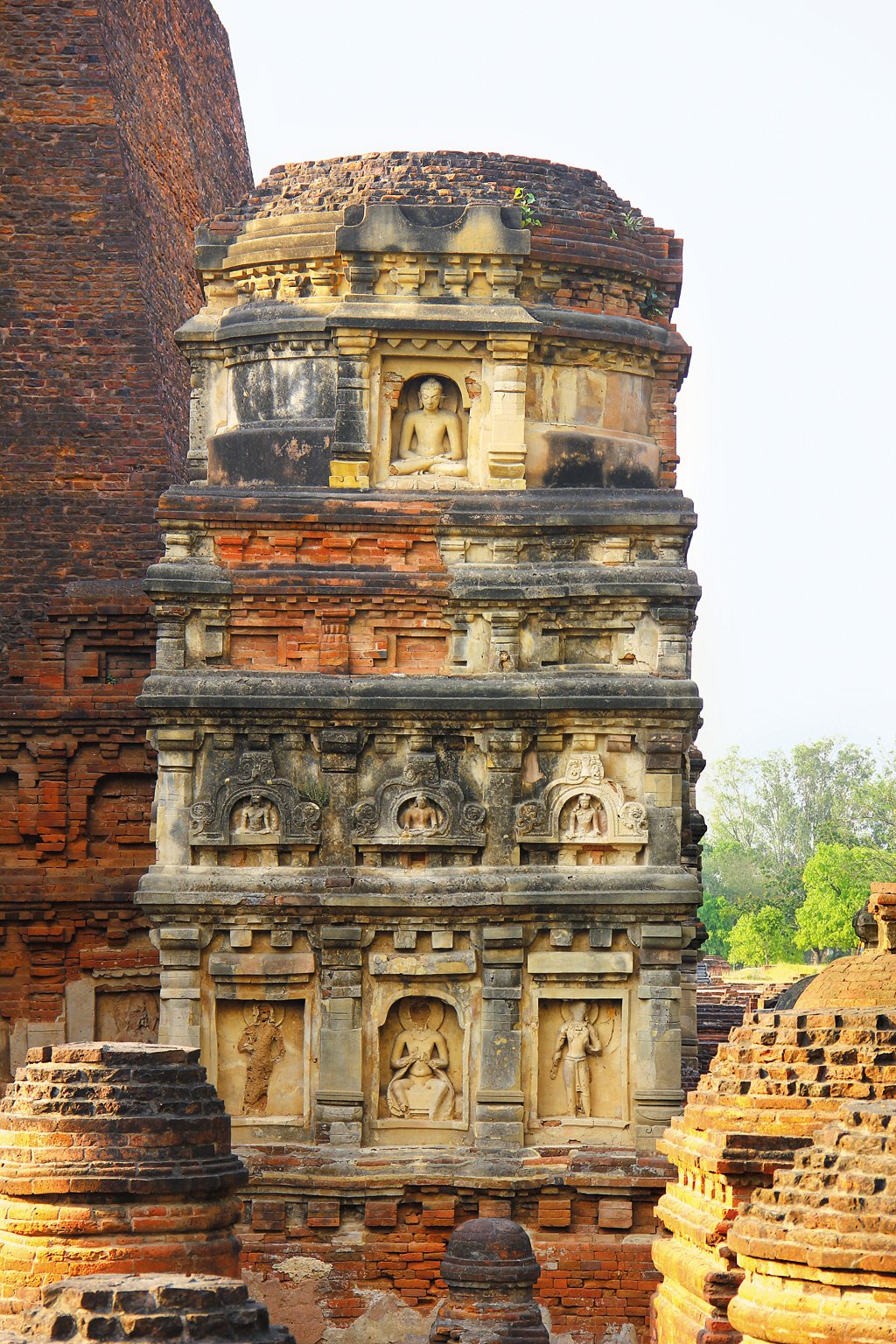

Originally built in the Pancharatna style befit to the Mahavihara of the stature of Nalanda


they would have looked as grand as surviving grand temples of present like Brihadeshwara/Puri.


These dormitories of Nalanda at one time housed ~3000 monks, students & teachers.


Students came not only from India but from entire East & Central Asia, Tibet & beyond.


Talented teachers were recruited from as far as Kashmir and Afghanistan...Truly a global university! 

This copper plate charter from the Nalanda recording the donations from the king of Sumatra (Indonesia). IT gives further idea about the widespread popularity that Nalanda enjoyed once upon a time! Patronage came not only from Buddhist but also Hindu elites.


In Its glorious history came to an abrupt end in 13th century with the Jihadi inavsion of Khilji. 


The last recorded lesson in history of Nalanda was on Sanskrit Grammar by an aged monk named Rahul Sribhadra & sponsored by a local Brahmin named Jayadeva.... 


Somapura Mahavihara.


Known as "Shri Somapure Shri Dharmapaladeva Mahavihariya arya bhiksu sangghasya",


It was originally established by Emperor Dharampala Doda of Pala Empire in 8thcentury.


It was further patronized by subsequent Pala Rulers of Bengal & Bihar.


Monumental nature of its central temple/stupa and entire campus is impressive


When fully functional and not in ruins it must have been an impressive sites to behold with! The Pala empire existed from the 8th century A.D. to 12th century A.D. Reigning supreme during the late classical period on the sub-continent, the ruling dynasty, at its peak covered major portions of present day India, Nepal, Pakistan and Bangladesh. This empire was named "Pala" after the name of the royal family in power, who had "Pala" as suffixes to the name. This word from the ancient language of Prakrit translates to "protector". The kingdom started with the election of Gopala as the emperor of Gauda in 750 A.D.

They were known to be amazing diplomats and geniuses in military tactics. They were also known for their all-powerful elephant cavalry. Primarily, followers of Buddhism, they promoted classical Indian philosophy, literature, painting and sculpture. They also went on to build grand monasteries and temples like the Somapura Mahavihara and supported the great universities of Nalanda and Vikramashila.

(Terracotta panels running through the platform of the temples gives a glimpse into the mind of a medieval ordinary artisans and day to day lives of the people)

It was during the reign of Devapala and Dharmpala that the practice of making a fool of a close friend came into practice. They brothers ruled their empire (it was at its peak then) with an efficiency that rivalled the Roman Empire. They were known to be very just and loved by the public. Having divided the kingdom into the northern and southern frontiers, they used similar governing techniques and visited each other on alternate months to share their knowledge and exchange gifts.

The story goes as such that, during one such visit, Devapala the elder brother, had promised his younger sibling the best of sweetmeats that the North had to offer.  Dharmapala was known to have a sweet tooth, so he waited with baited breath as the day of his brother's arrival approached. When Devapala finally arrived at his palace, Dharmapala at once demanded that he be given his present that was promised to him. Devapala laughed and after a little formality, brandished a golden box that had the family crest on the top, made up of precious stones of various sizes and colours. Being the ruler of one-half of such a vast empire, mere gold and jewels did not impress Dharmapala. But when he opened the box, he was rather happy. But that happiness was short-lived.

Dharmapala took the biggest piece he could find and stuffed it into his face. And instantly regretted the decision. He immediately spat out the pseudo-sweet much to the delight of his elder brother who was laughing uncontrollably. Turns out the sweetmeats were made entirely out of coloured salt. This didn't spark a feud, as they were very close, however, it did start a chain of pranks that the brothers would partake in during their visits to each other.

(Spacious Living quarters surrounded the main temple/stupa and housed monks/students and teachers.)

This trend slowly caught on with their courtiers and with the upper-class administration and then eventually spread across their kingdoms. To celebrate their bond with each other with a little bit of fire mixed in, they called for one day in the year to be dedicated to a little bit of harmless fun. शरारत दिन. A day of playful naughtiness is what they called it. It was a day in the Pala Empire when friends played harmless pranks on each other with they only intention being to strengthen their bonds of love.

However, this trend more or less died with their empire, when the Sena Dynasty came into power during the 12th century. India is a country that is known to be playful, having some of the most amazing festivals in the world and not to mention the most number of public holidays in a calendar year. With days like Holi, when we say "Bura Namano, Holi Hain!" while we attack unsuspecting people with colours and water-balloon canons, it's easy to picture people running around with mischievous grins during the rule of the Pala Empire, saying "Bura Namano, Shararat Din hain!". Well, they'd say in Prakrit or Sanskrit or whatever was the local language, of course.


Few pics below to show their grandeur


Isn't it amazing 


Graphical reconstruction of Somapura Mahavihara


Also compare it with Scenic temples of Bagan in neighbouring Myanmyar. They show strong influence of Pala architectural style from Eastern India.


Basically This is how Somapura and other Mahaviharas would have also looked like once upon a time.. before It was deserted in late 12th c. CE after repeated Islamic invasions. 


Vikramshila Mahavira

Named after the Pala king Dharmapala who bore an epithet of Vikramshila and established this Mahavihara. 

Religion

All Pala kings were zealous Buddhists. They were liberal with their support to numerous monastic communities and for the upkeep of monasteries with patronage of the learned teachers heading them. Dharmapala reformed the religion although over the years his successors moved towards the Tantric form of Buddhist worship. By the middle years of the Pala rule the practice of Buddhism in Bengal was far removed from the one propagated by its originator, the ‘Enlightened One’. It had moved to a completely different space, with no connection to the original concept. The original version relied on a rationalisation of the human condition and was based on the observance of a code of ethics, which was considered inviolate. The trappings associated with conventional religion, its rituals and deities, were anathema and completely ignored. This idealistic situation could not endure for long and over a period of time Buddhism succumbed to the practices of the orthodox religion from which it was trying to separate.

A vAyu from the ruins of the somapura temple  in Praharpur in E.Bengal.

By the time the Pala dynasty reached the zenith of its power, the Buddhist icons were indistinguishable from the Hindu idols. Buddhist religious practice had by now acquired all that was shunned by the Buddha himself and was far removed from the ‘Middle Way’ that he had preached. In Bengal it also came under Tantric influence. The Tantras originate from a collection of esoteric texts of unknown origin that elaborate and describe difficult practices, which provided the practitioner a chance to commune with divinity and to assume supernatural powers. Its rituals and disciplines are complex and secret. The practice of Tantric rites consist mainly of mantras (repetitive formulae); yantras (mystical designs); and mudras (finger postures).

The shift towards a Tantric-influenced worship in the Buddhist religion compromised whatever was appealing in the practice of that religion for the lay person. This proved to be counter-productive for the popularity of Buddhism in the long-term. Over a period of time it became difficult for the common man to differentiate between orthodox Hindu practices and that of the evolving Buddhism, directly contributing to the decline and eclipse of the religion in its last bastion in India.


Its institutional structure included Adhyaksha, 6 Dwarpanditas, Mahapandita, 108 Pandita, 160 Upadhyayas and >1000 Bhikshus/students

Just Like Somapura, beautiful terracotta panels surrounded the entire platform of central stupa/temple of Vikramshila


Tibetan sources mention that during their last days, 


In anticipation of Jihadi invasion Vikramshila along with Odantpuri was heavily fortified by the military of Sena rulers. It none the less failed to stop the Jihadi onslaught & ultimate destruction of those Mahaviharas.
For
Vikramshila museum being visited by then President of India (along with future president of India)


Nothing is hidden. Defaced and mutilated sculptures recovered from Vikramshila are staring us in the eyes. But well when one wears the glasses of secularism...

Jaggadala Mahavira

Other two great universities Jagaddala & Odantapuri are still mostly buried beneath the earth and waiting archaeological excavations. 


Jagaddala Mahavihara (fl. late 11th century - mid-12th century) was a Buddhist monastery and seat of learning in Varendra, a geographical unit in present north Bengal. It was founded by the later kings of the Pāla dynasty, probably Ramapala (c. 1077-1120), most likely at a site near the present village of Jagdal in Dhamoirhat Upazila in the north-west Bangladesh on the border with India, near Paharapur. Some texts also spell the name Jaggadala.

Odantapuri Mahavira

Together with nalanda these five great Mahaviharas/universities formed a circuit of educational institutes with high degree of coordination and state control and the far spread acclaim.


In 1027 CE the Muslim invaders sacked & destroyed Jagaddala.


Maluti 108 Ancient Pala Temples

Maluti, a small village located on the border of Jharkhand and Bengal, is famous for it 108 ancient temples. The temples, made of terracotta, have great historical and religious significance, and contain Pala structures that have helped date the site archaeologically. The Kings of the Pala dynasty were devotees of the goddess Mowlakshi, and there are also temples devoted to the gods Shiva, Durga, Kali, and Vishnu.Today, only 72 temples remain intact, but they offer a unique economic opportunity to the village of Maluti.


CHAUSATH YOGINI TEMPLE

According to an inscription,It was built by Emperor DevaPala of the Pala Empire of North India in 9th century.

Chausath Yogini Temple, Mitavli, one of the rarest of Hindu temples in India. Its plan is circular and it is dedicated to the Tantric sect of Chausath Yogini. Most of the Hindu temples are based on square or rectangular plan. Circular temples are very rare. It is said that the design of Indian Parliament is inspired by this temple in Morena. It is also a very rare temple as there are only about a half a dozen Chausath Yogini temples in India. A Yogini in Tantra means a practitioner of Yoga, who has controlled her desires and reached a higher stage. They are related to the Matrikas and are basically various manifestations of the Divine Durga. This association with various forms of Durga gave rise to the cult of Chausath (64) Yoginis over time. The Chausath Yogini temple of Morena has an outer circle of 64 subsidiary shrines of Shiva with a central shrine of the Yogini. 


The 'Hedges Vishnu' in the Ashmolean Museum, University of Oxford - acquired in 1686, it is the oldest (by date of accession) Indian art object in a Western collection.
Pala Empire, 800-1100CE.
The two female figures are Lakshmi & Saraswati & Avataras in the Prabha


They were not only the great centers of education but also centers of art and culture.


A terrific 900 yr old murthi of Goddess Chamunda belonging to Pala empire who ruled over Bengal & Bihar. Notice the Mundamala & the Scorpion on the torso. At the very base r depicted asuras Chanda & Munda in a decapitated form. 

Smuggled away at @ LACMA (Los Angeles county museum of Art)


Intricately carved stone sculptures adorned their walls and Temple.

On side note: Look at the Pancharatna Stupa/Temple model of Mahavihara type on the last sculpture. 

Their libraries were filled with beautifully painted hand written manuscripts written on diverse variety of subjects.

This Very rare 1200 years old superbly painted Pala Empire period manuscript, probably frm Nalanda itself which has survived in complete condition for 1000 of years! 

Close up of a portion of the wooden cover of same manuscript to give further idea about its rich painting style of Medieval Eastern India


According to colophon it was donated by the mother of some great Pandita Ashoka during the reign of Surapala (last part of 11th century). This richly illustrated manuscript survived bcz prob. somehow it escaped destruction of Nalanda & managed to reach a Tibetan monastery. It is one of the rare illustrated manuscript from Pala period which have survived till present without much damage. Rare it may be, it still provides ample glimpse into the great libraries of Nalanda & other centres that were once adorned with 1000s of such manuscripts.

Beautiful bronze murtis were subject of devotion of studious yet pious monks...

Unfortunately all of these vanished in Jihadi invasions. But all was not lost. With the barbaric destruction of those Mahaviharas monks fled to the safe places like Nepal, Tibet and East India and along with it brought Buddhism, Indian art and culture to those regions.

For eg look at this 17th century bronze from China and Compare it with one from Bihar from above pic. Such striking resemblance even after >500 years!

Via Nepal & Tibet Pala art reached all the way to Chinese imperial courts even though it vanished in its homeland!

Greater Hindustan is neglected in the secondary literature. They have not looked at it. Pataliputra under the Pala Empire (until 1070) must be examined. After them: the 12th cent Muslim invasions. By 1300 Delhi was the biggest city in the Islamic east, acc to the credible Ibn Battuta.


Civilization had fallen but it soul remained alive!
Past can't be revived but lets at least remember that glorious past and strive to reach to the same heights of excellence in future. Lets these ruins be inspirations for us and may we achieve same excellence in education again!


Conclusion—The Importance of the Palas


At the height of their power, the Palas controlled a wide realm and enjoyed extensive influence across entire North India. As the predominant dynasty of the time, they were able to assert the right to reorder the affairs of North India to their own advantage. Bengal was no more at the periphery of Indian polity, but the core of politico-economic and military strength. Throughout their rule they held Magadha and Mungir (almost the entire Bihar), although Magadha was annexed by the Gurjara-Pratihara king, Mahendrapala, for a few years. The century between 780-890, which coincides with the combined rule of Dharmapala and Devapala, can be correctly assumed to be the most prosperous and greatest years of the Pala rule. The century is known for its marked intellectual and artistic activities and achievements.


This period saw the flourishing of two artists—Dhiman and his son Bitpalo (also called Vitapala)—who were painters, sculptors and bronze-founders of great repute. Some of their work is still extant and they are studied as two separate schools of Indian art in today’s contemporary art scenario. During the same period, Bhavadeva an exponent of the Brahmavidya system of philosophy, practiced and taught in the capital. Also, Madhava a well-known physician, produced commentaries on the tomes of Charaka (a great physician who lived around 175 B.C) and Susruta (considered the greatest surgeon of ancient time, who lived around 6th century B.C.). Unfortunately no buildings of the Palas survive for posterity, although a number of great tanks that the dynasty built in different towns in the central districts of the kingdom bear testimony to the involvement of the kings in projects of public benefit.

The Palas remain one of the most remarkable dynasties to have ruled a large Empire in India being the only royal line other than the Chalukyas to have reigned for nearly five centuries. Irrespective of the fact that there were two minor interludes when the Kambojas invaded in the 10th century and thereafter when the Kaivarta’s usurped power in the 11th century for a limited period, the Palas were at one time the foremost imperial power of medieval India. Although these two episodes of brief loss of power and kingdom were of minor importance in their immediate aftermath, they diluted the strength of the dynasty and also demonstrated to the feudatories that the great Palas could be defeated. The perception of Pala invincibility, which was one of the pillars of their dynastic strength, was removed.
Like every other dynasty in Indian history, and even in world history, the Palas vanished from the scene not in a blaze of glory, but in a rather timid manner, gradually becoming irrelevant to the broader political developments, holding on to an ever-decreasing geographical territory, becoming targets of rising and ambitious kings in the neighbourhood, and finally becoming a memory amongst the people. The golden days are remembered in folklore and song as are the faults and foibles of the lesser capable kings. This is the eternal law of the world as it moves on inexorably.


Tuesday, March 20, 2018

RIDDLE OF THE LOST - IMMORTAL RAJPUTS


"He stood six feet six inches, and was bulky in proportion. His limbs rivalled those of the Hercules Farnese. His father was nearly seven feet, and died at the early age of twenty-two, in a vain attempt to keep down, by regimen and medicine, his enormous bulk."

The story starts with- Ambaji, who was this year nominated by Sindhia his viceroy in Hindustan, left Ganesh Pant as his lieutenant in Mewar, with whom acted the Rana’s officers, Sawai and Shirji Mehta; who applied themselves to make the most of their ephemeral power with so rapacious a spirit, that Ambaji was compelled to displace Ganesh Pant and appoint the celebrated Rae Chand. To him they would not yield, and each party formed a nucleus for disorder and misrule. It would be uninteresting and nauseating to the reader to carry him through all the scenes of villainy which gradually desolated this country; for whose spoil pilfering Mahrattas, savage Rohillas, and adventurous Franks were all let loose. The now humbled Chondawats, many of whose fiefs were confiscated, took to horse, and in conjunction with lawless Sindis scoured the country. Their estates were attacked, Kurabar was taken, and batteries were placed against Salumbar, whence the Sindis fled and found refuge in Deogarh. In this exigence, the Chondawats determined to send an envoy to Ambaji, who was then engaged in the siege of Datia; and Ajit Singh, since prominent in the intrigues of Mewar, was the organ of his clan on this occasion. For the sum of ten lakhs the avaricious Mahratta agreed to recall his deputy from Mewar, to renounce Sheodas and the Saktawats, and lend his support to the Chondawats. The Salumbar chief again took the lead at court, and with Agarji Mehta as minister, the Saktawats were attacked, the stipulated ten lakhs raised from their estates, and two fiefs of note, Hintha and Semari, confiscated.

Death of Mahādaji Sindhia, January 12, 1794.—The death of Mahadaji Sindhia, and the accession of his nephew Daulatrao, his murder of the Shenvi Brahmans, and his quarrels with the Bais (‘princesses,’ wives of the deceased Sindhia), all occurred at this time, and materially influenced the events in Mewar. The power of Ambaji as Subahdar of Hindustan was strengthened by the minority of Sindhia, although contested by Lakwa and the Bais, supported by the Khichi prince, Durjan Sal, and the Datia Raja, who fought and died for the princesses. Lakwa wrote to the Rana to throw off Ambaji’s yoke and expel his lieutenant; while Ambaji commanded his deputy to eject the Shenvi Brahmans, 525supporters of Lakwa, from all the lands in Mewar. To this end Ganesh Pant called on the Rana’s ministers and chiefs, who, consulting thereon, determined to play a deep game; and while they apparently acquiesced in the schemes of Ganesh, they wrote the Shenvis to advance from Jawad and attack him, promising them support. They met at Sawa; Nana was defeated with the loss of his guns, and retired on Chitor. With a feint of support, the Chondawats made him again call in his garrison and try another battle, which he also lost and fled to Hamirgarh; then, uniting with his enemies, they invested the place with 15,000 men. Nana bravely maintained himself, making many sallies, in one of which both the sons of Dhiraj Singh, the chief of Hamirgarh, were slain. Shortly after, Nana was relieved by some battalions of the new raised regulars sent by Ambaji under Gulab Rao Kadam, upon which he commenced his retreat on Ajmer. At Musamusi he was forced to action, and success had nearly crowned the efforts of the clans, when a horseman, endeavouring to secure a mare, calling out , "Bhagi! bhagi!" “She flies! she flies!” the word spread, while those who caught her, exclaiming "Milgayi! milgayi!" “She is taken!” but equally significant with ‘going over’ to the enemy, caused a general panic, and the Chondawats, on the verge of victory, disgraced themselves, broke and fled. Several were slain, among whom was the Sindi leader Chandan. Shahpura opened its gates to the fugitives led by the Goliath of the host, the chief of Deogarh.


 It was an occasion not to be lost by the bards of the rival clan, and many a ribald stanza records this day’s disgrace. Ambaji’s lieutenant, however, was so roughly handled that several chiefs redeemed their estates, and the Rana much of the fisc, from Mahratta control.

Saturday, March 17, 2018

BRAHMAGUPTA DISAPPROVING ARYABHATTA

Brahmagupta, great mathematician of his era was not merely a theorist rather his calculation was based on the observation with the help of instruments or nalikadi yantra which were available at that era. He was a proficient observer who use to observe, calculate and make correction on the basis of his observations. In his treatise Khandakhadyaka he has stressed the need of direct observation.


Brahmasphuta Siddhanta which means corrected treatise of Brahma contains lot of criticism on the work of other mathematicians especially ryabhata. He had many disagreements with Mathematician of that era and most of his chapters of Brahmasphuta Siddhanta deals with dodges in their treatise.

The Indian astronomy was a gift of Aryabhata work. He is said to be the teacher of two distinct astronomy system one is audayika and other one is ardharatrika system. In audayika the astronomical day begins with the sunrise at Lanka and in the ardharatrika it begins with midnight at Lanka. Brahmagupta had made use of astronomical constant of Aryabhata ardharatrika system for his calculation in the first part of Khandakhadyaka, but the methods involved in spherical geometry, calculation of eclipse etc. is just a reproduction of Brahmasphuta Siddhanta. So in short audayika and ardharatrika astronomical constants can be found in Aryabhat ya and may construed from Khandakhadyaka. In connection with this, some authorities had said that Brahmagupta tried to simplify the treatise of ryabhata i.e. Brahmagupta Khadakhadyaka is a simplified version of ryabhata’s ardharatrika and he was also successful in doing this. Brahmagupta in this relationship referred ryabhata in Khandakhadyaka in following ways:

After giving homage to lord Mahadeva, who is the great cause of this World formation, existence and devastation, I shall declare that Khandakhadyaka will yield the same results that of ryabhata treatise.

In Brahmasphuta Siddhanta Brahmagupta takes the astronomical day to begin with the sunrise at Lanka which was same that of ryabhata audayika system, He expresses his surprise as in one treatise ryabhata considers days begin with sunrise at Lanka and in other he considers day begin from midnight at Lanka which results in the difference of one-fourth of the motions. For calculations of days, months, years, yugas and kalpas he had taken first tithi of the month caitra i.e. caitra sukla pratipada and the first day considered is Sunday whereas ryabhata considers Guruvara i.e. Thursday as first day of Kalpa which is wrong according to Brahmagupta.

Brahmagupta differs in the calculation of length of the four yugas from ryabhata. According to Aryabhata all the yugas are of equal length i.e. 1,080,000 years and the caturyuga being of 4,320,000 years, whereas according to Brahmagupta all the four yugas of caturyuga or Mahayuga are not of same length: Kaliyuga is of 432,000 years, Dvapara is of 864,000 years i.e. twice of kali, Treta is of 1,296,000 years, i.e. thrice of kali and Krtayuga is of 1,728,000 years i.e. four times of kali, total comes to be 4,320,000 years but as per both the caturyuga had same length i.e. 4,320,000 years.

Brahmagupta had on one hand critizes Aryabhata works, on the other hand uses his works and expanded them further, which is confirmed by Iranian mathematician and astronomer Alberuni in his work in the early 11th century, Alberuni has defended Aryabhata and addresses Brahmagupta, He says that we shall not argue with Brahmagupta rather only whisper in his ear that why do you begin to calculate the diameter of moon to explain the eclipsing of sun and the diameter of the shadow of the earth to explain its eclipsing the moon after having spoken harsh words for them and why do you compute the above ecliptics on the basis of their theories and not according to them whom you think are proper to agree.

Brahmagupta has criticized Aryabhata in many places in some places without any proper justification, one such point is order of days. Planets motion decreases in following order: Chandra (Moon), Budha i.e. Mercury, Sukra (Venus), Surya (Sun), Kuja (Mars), Guru (Jupiter) and Sani (Saturn). ryabhata in one of his sutra says that starting with the Sun and continuing in increasing order every fourth is the lord of the day which gives the order as follows : Sun, Moon, Mars, Mercury, Venus and Saturn and thus the order of the day on this basis is Ravivara-Sunday, candravara-Monday, Mangalavara-Tuesday, Budhavara-Wednesday, Guruvara-Thursday, Sukravara-Friday and Sanivara-Saturday. In other word Aryabhata has given the same order as given by other Mathematicians of that era then why he was criticized by him was not understood.

Second such point is the Motion of the Earth. According to ryabhata Earth is in motion and the Bhaganas are stationary, where Brahmagupta objected that if Earth is in motion then birds would not be able to return to their nest, the roof and hills

would come down which basically contradicts the observation because of this Brahmagupta is not justified in some places in the criticism of Aryabhata.

Brahmagupta assigns the longitude of the sun apogee to be 80° where as in Uttara-Khandakhadyaka, which is basically a corrected version of Khandakhadyaka, he corrected this longitude to 77° where the Aryabhata value was 78° which is less correct as compare to the modern calculation. The astronomical constant given by Conn. Des Temps, the longitude of Sun opogee in 499 A.D was 77°19′19.44′′ and 76°40 22′′ on the basis of Newcomb’s equation, these two values are almost similar to the value given in Uttara-Khandakhadyaka by Brahmagupta i.e. 77° which means Brahmagupta is more correct than ryabhata.

Brahmagupta noticed that ryabhata had made the Moon’s apogee fast and nodes slow than they actually are and in both the case he made over correction. The length of the anomalistic month given by Brahmagupta = 
days = 27.55454641 and Aryabhata value is 27.554602 but according to Radau the value is 27.5545502, here again Brahmagupta is more accurate. Coming to the length of the sidereal period of the moon apogee the Brahmagupta value is
days = 3232.732048 and the value given by Aryabhata is 3231.987844 days but the modern value calculated is 3232.3754 days which tells that Brahmagupta value is much closer to modern value sidereal period of the Moon apogee as compare to ryabhata. According to Brahmasphuta Siddhanta the approximate period of the sidereal revolution of the moon node is
 
days = 6792.25396 days and in Khandakhadyaka the value corrected by Brahmagupta is 6794.75083 days. Thus Brahmagupta was successful in attempt to correct the node faster.

Brahmagupta states that the longitude of mars aphelion should be increased by 17° and Jupiter by 10° and here also he was more exact as compare to ryabhata values. The sutra which states this is stated below:

Sutra: 8.1. Uttara Khandakhadyaka: IX-10.


Translation: The apogee of Mars is increased by 17°, Jupiter by 10°. Subtract 74’ with the sughra of Venus, Saturn’s equation of apsis is decreased by one-fifth and the sighra equation of mercury is increased by one sixteenth.

Sutra from Khandakhadyaka i.e. II.6 stated below gives the degrees of longitude of apogees of the planets beginning with Mars which are 11, 22, 16, 8 and 24, where each is multiplied by 10.

Sutra: 8.2. Khandakhadyaka: II-6.


According to above sutra Mars aphelion point which had longitude of 110° and the longitude of Jupiter aphelion was 160° which was corrected by Brahmagupta in the sutra of Uttara Khandakhadyaka -IX.10 which states that the longitude of Mars aphelion point was 127° and the longitude of Jupiter aphelion was 170° in 499 A.D. Whereas ryabhata has given 118° as longitude of Mars aphelion and 180° as longitude of Jupiter’s aphelion.

Newcomb’s rule and Conn. des. Temps rule gives the longitude of Mars aphelion in 499 A.D. as 128°28′12′′ and 128°27′51′′ respectively which states Brahmagupta determination of Mars aphelion is quite satisfactory, again when the longitude of Jupiter is calculated with these two rules it was 170°25′ hence here too Brahmagupta was more accurate.

Figure: 8.1. The apogees of the orbits of planets longitude.

In one of the verses Brahmagupta points out the differences in his and Aryabhata calculations in the pherpheries of the sighra and manda epicycles of

Planets in odd and even quadrants. This differences is illustrated in the table given below:

Table: 8.1. Peripheries of the Epicycles of the Planets.


Aryabhata and Bhaskara have both given the sutra for finding the drkksepajyas of the Sun and the Moon, where drkksepajya is the Rsine of the zenith distance of that point of the ecliptic that is at the shortest distance from the zenith this point is also called central ecliptic point. The rule says: find the product of the Sun/Moon own mahyajya and udayajya then divide it by the radius, square the hence obtained result and subtract this result with the square of madhyajya. The square root of this difference is drkksepajya of the Sun/Moon.

i.e drkksepajya = 


The above rule given by Aryabhata was approximate and has been criticized by Brahmagupta.

Even for finding the Rsine of the agra of the Sun and the Rsine of the Sun prime vertical altitude, the rule which is given in Golapada- Aryabhata ya sutra 30-31was criticized by Brahmagupta.

Sutra: 8.3. Aryabhatta: V-30-31.

Rule says that: find the product of the Sun Rsine of the greatest declination by the Rsine of the Sun true longitude then divide the resultant product with the Rsine of the colatitude, the result thus obtained is the Rsine of the agra of Sun. Now when the agra of the Sun is less than the latitude and Sun is in the northern hemisphere multiply the Sun Rsine of agra with the Rsine of the colatitude the result thus obtained is the Sun’s prime vertical altitude. The error which was created by Aryabhata was that the sun’s agra should be less than the latitude was noticed by Brahmagupta, however Bhaskara corrected this error in his Laghu Bhaskariya according to which Sun’s agra should be not less than latitude rather the Rsine of the Sun northern declination is less than the latitude, this condition is necessary for the prime vertical shadow of the gnomon.

Brahmagupta has also criticized the calculation of determining lambana i.e. the difference of the parallaxes in longitude of Sun and the Moon and the rule for finding avanati or nati i.e. the differences in the parallaxes in latitude of the Sun and the Moon.

Lambana was obtained with the help of the five Rsine values i.e. madhyajya, udayajya, drkksepajya, drgjya and drggatijya.

◆Madhyajya-the Rsine of the zenith distance of meridian ecliptic point=Rsin(∅ +_ declination of meridian ecliptic point ) where ∅ is the place latitude and R is the radius of the celestial sphere.

◆Udayajya-the Rsine of the arc of the horizon intervening between the equator and the ecliptic=
where L is the longitude of the horizon east

ecliptic point, ∅ is the place latitude, R is the radius of the celestial sphere and H is the obliquity of the ecliptic.


Drgjya-the Rsine of the zenith distance of the Sun =

where R is the radius of the celestial sphere, L is the longitude of the horizon east ecliptic point and M is the longitude of the sun.
Drggatijya-the Rsine of the altitude of the central ecliptic point=

where R is the radius of the celestial sphere.

Lambana is the difference between the parallaxes in longitude of the Sun and the

Moon and is given by Aryabhata with the help of following expression:

Lambana = Moon’s lambana – Sun’s lambana.

Where Moon's lambana =


Sun’s lambana = 


Note: Lambana are in terms of minutes of the arc.

Lambana is also expressed in following ways:


Nati or the avanati both terms mean same, is the difference of the parallaxes in the latitude of the Sun and the Moon is given by ryabhata in following ways:

Nati=

  minutes. Aryabhata has given this expressions in the following sutra:

Sutra: 8.4. Aryabhatiya: IV-33-34.


Where Brahmagupta has used following expression for lambana and nati which inturn gives accurate values:

Lambana=ghatis, where R is the radius of celestial sphere, m is the longitudes of the meridian ecliptic and \ is the longitude of the Sun.

Nati=

 where R is the radius of celestial sphere and ∆ is the difference between the daily motions of the Sun and the Moon.

Brahmagupta had criticized the ryabhata system of calculation with respect to Lambana i.e. the differences of the parallaxes in longitude, of the Sun and the Moon, drkksena i.e. the Rsine of the zenith distance of the central ecliptic point, srngonnati i.e. elevation of Moon horns and many more points. He opposed ryabhata so intensely that in the end he declares in one of his sutra-Brahmasphuta Siddhanta XI.44 that it is beyond his capability to enumerate all the defects made by ryabhata. Only few of his defects were illustrated here and other defects can be easily traced by intelligent people. Sutra for the same is listed below:

Sutra: 8.5. Brahmasphuta: XI-44.


In one of the other sutra i.e. Brahmasphuta SiddhantaXI.43 Brahmagupta states that ryabhata is neither knowledgeable with the ganita (Mathematics) nor kala i.e. time calculation nor Gola i.e. spherical calculation. Further he adds that it is difficult to enumerate separately the mistakes committed by him in connection with the chapters of the ganitapada, kalakriyapada and golapada.

Sutra: 8.6. Brahmasphuta: XI-43.


ryabhata and Brahmagupta both are scholars of 5th and 6th century respectively have done in-depth works in the fields of Astrology, Astronomy and Math. Brahmagupta while completing his works had lots of disagreement with ryabhata works and has bought it out in his treatise.

Wednesday, March 7, 2018

HINDU SHAHI LAST KING PRINCE PURUJAYAPALA TRILOCHANPALDEVA - IMMORTAL RAJPUTS


Prince Trilochanpála, the son of Anandapala, ascended the imperial throne in about AD 1011. Inheriting a reduced kingdom, he immediately set about expanding his kingdom into the Sivalik Hills, the domain of the Rai of Sharwa. His kingdom now extended from the River Indus to the upper Ganges valley. According to Al-Biruni, Tirlochanpála "was well inclined towards the Muslims (Ghaznavids)" and was honourable in his loyalty to his father's peace treaty to the Ghaznavids. He eventually rebelled against Sultan Mahmud and was later assassinated by some of his own mutinous troops in AD 1021–22, an assassination which was believed to have been instigated by the Rai of Sharwa who became his arch-enemy due to Tirlochanpala's expansion into the Siwalik ranges. He was romanticised in Punjabi folklore as the Last Punjabi ruler of Punjab.

Trilochanapala ascended the Shahi throne after the death of his father Anandapala. Though more famous as the Kings of Lahore, the temple fort at Nandana, fourteen miles south-west of Choha Saidan Shah (near Katas Raj), situated on a remarkable dip of the outer salt range, had been a stronghold of the Vaid dynasty ruling Punjab. Lying midway between Lahore and Waihind, it must have served as the national capital of the Shahis after loss of Waihind. Ensconced in the mountain of Balanath, it had a strong fort and was strategically located not too far from the commercial town of Bhera and the river Jhelum.

Peace treaties between states are means of achieving national aims without resorting to war. Sultan Mahmud must have realised that the Shahis were not very pliable. He would not feel safe about his rear if he advanced deep into India beyond the territory controlled by the Shahis. So he decided to first attack the Shahi capital at Nandana and crush Trilochanapala. Mahmud collected a large army in the spring of 1014 and marched toward Nandana. When Trilochanapala became aware of the intentions of the Turk, he entrusted the defence of Nandana to his son Bhimapala – whom Utbi refers as Niddar Bhima (the fearless Bhima). The Shahis summoned their vassals and meanwhile Bhimapala advanced with his forces to take position behind the wings of a hill pass – probably Marigala Pass near Rawal Pindi. He positioned his elephants in the entrance of the narrow and precipitous pass while his forces occupied the hills on both sides. He thus waited in security while reinforcements kept arriving. Mahmud found himself outmanoeuvred and his spearmen failed to provoke the Hindus. “When his vassals had joined Bhimapala he left his entrenchments and came out into the plain, having the hills behind him and elephants drawn up on each wing. The battle raged furiously.” A general leading the Turkish vanguard was wounded grievously and Mahmud dispatched part of his own guards to extricate his commander. The conflict continued as before but the Turks were victorious at the end. Bhimapala survived the battle and escaped, entrusting the defence of their fort at Nandana to some of their devoted veterans. Mahmud advanced promptly to invest the fort. There was stiff resistance and Mahmud asked his sappers to lay mines under the walls, while the Turkish archers poured arrows into the fort. Finally the garrison surrendered. He next led is forces towards Kashmir to chase and destroy the Shahi King.

Meanwhile Trilochanapala had gone towards Kashmir along with some of his forces, to seek assistance from Sangramaraja, the ruler of Kashmir (1003–1028), who consented to help. Tunga, the commander of Kashmir forces, was sent at the head of a contingent consisting of several nobles, feudal chiefs and other ranks. From previous experience of battles with the Turks, Trilochanapala had devised a strategy quite similar to that followed by Bhimapala of blocking the advance of large Turkish army from behind a hill pass and later fighting on a restricted battlefield in the backdrop of these hills. He had advised Tunga accordingly. However, in his impetuosity Tunga came out in hasty moves. Mahmud found an opportunity to strike with full force and Tunga’s army dispersed. Trilochanapala tried to control the situation but was unsuccessful. Having routed the Hindu forces, Mahmud plundered the area, took many prisoners and converted much of the populace to Islam. Rajatarangini, a history of Kashmir, also gives a detailed account of this particular battle because forces of Kashmir state were involved in it.

This was a severe blow which almost destroyed the Shahis as a strong reigning power. But they were not yet completely wiped out. Mahmud was still not confident of advancing deep into India with the bruised and mauled Shahis in his rear. He organised some probing campaigns to test political waters.

Plunder of Thanesar

Mahmud had gathered information that Thanesar had an idol Jugsoma (Chakraswamin) and the place was as holy in the eyes of Hindus as Mecca to Muslims. It was another potential Nagarkot and Mahmud organised a quick foray. Thanesar was under the jurisdiction of the Delhi Kingdom. Ferishta states that the Shahi ruler tried to dissuade Mahmud from his resolution in exchange for an annual tribute but it did not work. The Shahi warned Bijayapala, the Towar Raja of Delhi, about the impending danger but the Hindus were too slow in organising a joint defence. A Raja named Ram, probably the ruler of Thanesar, came out to stop the Turkish force, but lost. Mahmud continued his march to Thanesar, plundered the city and destroyed a large number of idols. The chief idol was carried to Ghazni for defilement.

Unsuccessful siege of Lohkot

In an effort to destroy the Shahi vestige and enter Kashmir, Mahmud besieged the fort of Lohkot in 1015 CE. Lohkot was remarkable on account of its height and strength. Mahmud failed to subdue this fort or get past it and enter Kashmir. According to Ferishta, Mahmud returned to Ghazni with great difficulty “having failed in all the enterprises of this campaign.”

Expedition to Kannauj

With Punjab subdued, time was ripe for Sultan Mahmud to organise a campaign for plundering the famed riches of temples and kingdoms of mid-India. In 1018 CE he fitted a large army of 100,000 chosen horse and 20,000 foot and marched towards India. In a long journey he crossed all the rivers of Punjab and put his forces across the Yamuna by 2 December 1018. Trilochanapala who was still ruling eastern Punjab refused to pay allegiance and sheltered himself in the Parmar kingdom of Malwa.

Mahmud destroyed several big and small kingdoms: Baran (modern Bulandshahr), Mahaban, Mathura, Kannauj, Munj, Asi and Sharva. There was a varying degree of resistance or lack of it. For example, at Munj known as “the fort of Brahmanas” the garrison resisted the invader for 25 days and died fighting heroically literally to the last man and not a single soul survived in the fort. Kannauj, the Imperial capital of India was then ruled by Gurjara Prathara Rajyapala. After the outlying forts were reduced, Rajyapala left Kannauj to wait for another day. Mahmud’s share of the plunder from this campaign consisted of two crore dirhams of gold and silver bullion, 5300 captives, 350 elephants, besides jewels pearls and other precious effects. Nor was the spoil of the army less than which came into the public treasury.

The last Shahi effort to turn the tide

The Chandel of Kalanjar had formed a confederacy of some Hindu states and they killed Rajyapala of Kannauj for his cowardly submission to Mahmud. Still hoping to turn the tide and regain his kingdom, Trilochanapala Shahi had also joined the confederacy. The Chandella ruler had promised to bring an army to Punjab but procrastinated. So Trilochanapala marched with his forces to join the Chandella for a joint front against the Turks. In 1019 CE Mahmud set out from Ghazni “with an army greater than any which he had hitherto led into India” pre-empting moves regarding joining of the Shahi and Chandella forces. “Mahmud traversed stages after stages and overtook Purujayapala (Trilochanapala) and his forces on the 14th of Saban: between him and the Hindus was a deep river.” Trilochanapala determined to resist the passage of Sultan. Mahmud hesitated to attempt the crossing of the turbulent and muddy river. One night however eight Muslim officers, each followed by his troops, crossed the river apparently without the King’s knowledge. Entering the camp early morning by surprise, when Hindu soldiers were not yet through from their routine morning ablutions, they struck panic among the enemy ranks. The Shahi was worsted in this sudden encounter and escaped. “Two hundred and eighty eight gigantic elephants fell into the hands of the Mussalamans” among other booty. HTrilochanapala made another attempt to join up with Vidyadhar Chandella for the next decisive battle. But history has no record of him from this point. According to Tarikh ul-Kamil, Trilochanapala was wounded after fighting for greater part of the day. He may not have survived the forced march towards Kalanjar.

Confrontation with Chandelas

Vidyadhar Chandel had fielded 36,000 cavalry, 124,000 infantry and 640 elephants at the border of his kingdom. “Sultan reconnoitred the opposing army from an eminence and observing the vast numbers he regretted having come thither. Prostrating before God, he prayed for success and victory.” The engagement was probably indecisive and Vidyadhar retreated during the night possibly with the horses and elephants that could be retrieved. Sultan ordered the camp to be looted and did not advance further into Chandella territory. “Mahmud who was apprehensive of the disturbances in the Punjab, returned content with this victory to Ghazni.”

The exemplary resolve displayed by the Shahis was conspicuously absent amongst most of their fellow kings. (John Keay) One cannot but speculate what would have been the outcome of this engagement if the intrepid Trilochanapala, who had a steely determination and experience of battling the Turks, been in command of the ample forces of Vidyadhar Chandella on that fateful day. Al Beruni, who came to India in the train of Mahmud Ghaznavi and was a contemporary of these Hindu Shahis, paid a touching tribute:-
This Hindu Shahiya dynasty is now extinct, and of the whole there is no longer the slightest remnant in existence. We must say that in all their grandeur, they never slackened in the ardent desire of doing that which is good and right, that they were men of noble sentiment and noble bearing.

Never forget your Roots

Hindu temples at Kushab, Pakistan now called as Amba Sharif. These 6 story temples were last maintained by Hindu Shahi kings who ruled from Kabul. Still standing, after facing a 1000yrs of desecration. The temple is decorated with Kashmiri style motifs.


Indus river temples located in Dera Ismail Khan District, Khyber Pakhtunkhwa, near the cities of Mianwali and kundian in Punjab , Pakistan 


These temples are built by Great Hindu Sahis Rajputs, In local this place is called Kafirkot, 
There are actually two ruins called Kafirkot at a distance of around 50 kms from each other but similar locations , one is called the Bilot Kafirkot and the other Tilot Kafirkot.


Both the Temple Complexes are surrounded by ruins of Fortifications of what once would have been an impressive Fort watching over the Indus.


The temples of Bilot (and Tilot as well), among a chain of temples that stretch from Nandna on the eastern extremity of the Salt Range right though the hills to the Indus, 


are collectively known as the Hindu Shahi temples 


There are supposed to be 8 Temples Complexes built by the Hindu Shahi Rulers till the time the Dynasty fell in the 11th Century.


The remaining five are also damaged..


this temples tell the glorious history of Greatest of Greatest HinduSahi Rajputs.