Tuesday, April 28, 2020

BATTLE OF GIRI-SUMEL - IMMORTAL RAJPUTS

गिर्री तोरे गार में लंबी वधी खजूर ।
जैते कूंपे आखिया, स्वर्ग नेड़ो, घर दूर ।।


गिरी- सुमेल युद्ध के महान योद्धा , मारवाड़ की आन बान और शान राव कुंपा जी राठौर जी की जयंती पर उन्हें शत शत नमन

१ दिन में ४० हजार सैनिकों का सिर हुआ था कलम, मंजर देख हिल गया था शेरशाह सूरी।


राजस्थान में पाली जिले के गिरी समेल का नाम आते ही लोगों में एक नया जोश भर जाता है. हर जाति वर्ग का व्यक्ति अपने आप पर गर्व करता है कि इसी रणभूमि में उनके पूर्वज हिंदुत्व की रक्षार्थ काम आए थे. बात तब की है जब दिल्ली के शहंशाह शेरशाह सूरी ने षडयंत्र पूर्वक मारवाड़ पर आक्रमण किया था। उस समय जोधपुर के महाराजा मालदेव हुआ करते थे। मारवाड़ के सामंतों के पास मात्र ८ हजार की फौज थी और शहंशाह के पास भारी भरकम ३२ हाथियों के साथ अस्सी हजार की सेना थी, लेकिन इन सामंतों ने जीते जी हिंदुत्व पर आंच नहीं आने दी। अगली स्लाइड्स में पूरे मामले के साथ पढ़ें- क्या था बोला था शेरशाह सूरी?

बोल्यो सुरी बैन स्यू, गिरी घाट घमसान
मुठ्ठी खातर बाजरी, खो देतो हिंडवान..!!


आक्रमण के दौरान लड़ाई में एक दिन में ही चालीस हजार सैनिकों के सर कलम हुए थे और महिलाएं अपने सतीत्व को लेकर जौहर में कूद पड़ी थीं। भले ही धोखे से शेरशाह युद्ध जीत गया, लेकिन इस युद्ध में सामंतों की वीरता को देखकर शेरशाह सूरी ये कहना पड़ा थी कि 'मुट्ठी भर बाजरे के लिए मैं दिल्ली की सल्तनत खो बैठता'। ये वाक्य आज भी इतिहास के पन्नों में दर्ज है।


सुमेल के रण स्थल पर उन शहीद हुए सामंतों और छत्तीस कौम की छतरियां बनी हुई हैं। जो आज भी उनकी शहादत की गवाह हैं. यहीं पर महासतियों की छतरियां भी बनी हैं। हर वर्ष यहां पांच जनवरी को क्षत्रिय वर्ग के साथ हर जाति के लोग बलिदान दिवस मनाते हैं।


पांच जनवरी को बलिदान दिवस मनाया जाता है। इसमें लोग गांव-गांव, घर-घर जाकर लोगों को बलिदान दिवस पर आने के आमंत्रण रूप में पीले चावल बांट रहे हैं। इस युद्ध स्थल को लेकर पुरातत्व विभाग ने भी सर्वे करवाया और जल्द ही इसे पर्यटन स्थल के रूप में संवारने की भी योजना है।


गिरी सुमेल युद्ध -

बोल्यो सूरी बैन यूँ, गिरी घाट घमसाण,
मुठी खातर बाजरी, खो देतो हिंदवाण.

मैं मुट्ठी भर बाजरे के लिए दिल्ली की सल्तनत गवां देता - 
ये वाक्य शेरशाह सूरी ने आज ही के दिन आज से ४७६ वर्ष पूर्व कहे थे 
जब मुट्ठी भर रणबंका राठौडों ने दिल्ली सल्तनत को दहला दिया था।


एक ऐसा युद्ध जो सामाजिक मूल्यों और स्वाभिमान का प्रतीक है तथा विश्व इतिहास में स्वर्ण अक्षरों से अंकित यह युद्ध जोधपुर-मारवाड़ के सेनानायक राव जैता और राव कूँपा राठौड़ के नेतृत्व में मुट्ठी भर सैनिक और शेरशाह सूरी की ८० हजार की विशाल सेना के बीच सुमेल गिरी स्थान पर लड़ा गया था। शेरशाह मारवाड़ के शासक राव मालदेव पर आक्रमण करने आया था शेरशाह आया जरूर लेकिन यहां राजपूतों का शौर्य देखकर उसका विश्वास डगमगाने लगा और वह मालदेव पर आक्रमण की पहल करने का साहस नहीं कर सका।  फिर उसने छल एवं कपट से युद्ध जीतने की योजना बनाई। जिसके तहत मालदेव के प्रमुख सरदार और सेनानायकों के नाम झूठे फ़रमान लिखवाये गये। शेरशाह ने इससे पहले कई युद्ध चालाकी से जीते थे।


मालदेव जी ने उसे एक माह का समय दिया था वापस जाने को
शेरशाह ने इस एक माह में पहले तो अपनी स्थिति को मजबूत कर लिया उसके बाद उसने कूटनीति का सहारा लेते हुए चालाकी से मेड़ता के वीरमदेव द्वारा मालदेव के सरदार कूंपा और जैता जी को २०-२० हजार सिक्के दिए और वीरमदेव ने दोनों सरदारों को अपने लिए कुछ कम्बल और सिरोही की तलवारे खरीदने का आग्रह किया और दूसरी तरफ शेरशाह ने मालदेव के पास अपना गुप्तचर भेजा जो ऐसा लगे की वो मालदेव को शेरशाह- की रणनीति के बारे में बता रहा हो उस गुप्तचर ने मालदेव को बताया की शेरशाह ने उसके दोनों सरदारों जैता और कूंपा को पैसे देकर युद्ध में उसकी और से लड़ने का वादा लिया है और उधर शेरशाह ने कुछ जाली पत्र तैयार करवाये उसमे लिखवाया गया की आप चिंता ना करें हम मालदेव को युद्ध के समय पकड़ कर आपके सम्मुख ले आएंगे, इस प्रकार शेरशाह ने चालाकी से काम लिया और मालदेव के मन में संकोच पैदा कर दिया मालदेव को तब अपने ही सरदारों जैता और कुम्पा पर शक होने लगा। 

मालदेव क्रोधित व निराश हुए और वह रात के अँधेरे में अपनी मुख्य सेना लेकर वहा से पलायन करने का मन बना चुके थे इस पर सेना नायक वीर जैता, कूँपा तथा अन्य सरदारों ने मालदेव को समझाने का बहुत प्रयास किया ।
सभी ने अपनी स्वामीभक्ति अपनी मातृभूमि  की दुहाई भी दी लेकिन राव मालदेव ने अपनी सेना सहित वापसी का निर्णय ले लिया था और वो नहीं रुके और वापस लौट गए उसके बाद में वहा पर अपनी मुट्ठी भर सेना के साथ राव जैता और राव कूंपा जी रह गए। 
जैता और कूंपा राजपूत वीर थे उन्होने सोचा की जो विश्वासघात का आरोप उन पर लगा है उसे केवल शेरशाह से युद्ध करके ही गलत सिद्ध किया जा सकता है। 
इसलिए यह युद्ध स्वाभिमान का प्रतीक बना ।

कुछ प्रमुख सरदारों ने भी युद्ध भूमि में ही रुकने का निश्चय किया उनका कहना था,
‘‘उठा आगली धरती रावजी सपूत होय खाटी थी, तिण दिसा राव जी फुरमायों सु म्हैं कीयों। 
नै अठा आगली धरती रावले माइतें ने म्हारे माइते भेला हुये खाटी हुती। 
आ धरती छोड़ नै म्है नीसरण रा नहीं।’’

मारवाड़ रे परगना री विगत अनुसार इसका मतलब है कि -
 इससे आगे की धरती तो आपने अपने भुजबल से जीती है, किन्तु इससे पीछे की धरा जो हमारे और आपके पूर्वजो ने जीती है, इससे पीछे हम नहीं हट सकते। 
यह हमारी आन, बान और शान के साथ ही स्वाभिमान की प्रतीक है


किन्तु मालदेव ने अपना निर्णय नहीं बदला और वह जोधपुर लौट आया। 
नियति को कुछ और ही मंजूर था
 रण-क्षेत्र में उनके सेनानायक राव जैता और कूँपाजी अपने मुट्ठी भर वीरों के साथ अद्धितीय साहस और अपने शौर्य से अविस्मरणीय अमर गाथा लिखने को तैयार थे। 

वीर जैता और कूँपा ने रजपूती गौरव और मूल्यों की रक्षा के लिये, अपने ऊपर लगे कलंक को धोने के लिए युद्ध करने का निश्चय किया ।
 ४ जनवरी सन १५४४ की रात्रि को गिरी से, सुमेल के लिये रवाना हुये। उनके साथ लगभग ८६०० वीरों की सेना थी। दुर्भाग्य से बीच के पहाड़ी और जंगली क्षेत्र में अधिक अंधकार होने की वजह से वह रास्ता भटक गये । ५ जनवरी (पोष शुक्ला ११, वि.सं. १६००) को प्रातः लगभग ६ हज़ार घुड़सवार ही पठानपुरा के मोर्च पर पहुँच सके। 
ये जानते हुए भी कि शेरशाह की विशाल सेना से भिड़ना मौत को दावत देने जैसा था। फिर भी इन रणबांकुरो के स्वाभिमान को यह क़तई गवारा नहीं था कि उनके रहते हुए विदेशी हमलावर उनकी मातृभूमि पर कदम रखे।


जब इन वीरों ने शेरशाह की मज़बूत छावनी सुमेल नदी के तटपर पहुँच कर अपनी पूर्ण शक्ति से आक्रमण किया तो शत्रू सेना में खलबली मच गई । जोधपुर ख्यात के अनुसार शेरशाह ने इन वीर घुड़सवारों का सामना करने के लिये हाथियों पर सवार दस्ता भेजा।
शेरशाह की सेना के उस दस्ते के पीछे तीरंदाज़ थे और और उनके पीछे तोपख़ाना दल को रखा गया था फिर भी रणभूमि में राजपूत योद्धाओं के शौर्य के आगे शेरशाह के सब प्रयास निष्फल रहे । हालांकि संख्याबल के लिहाज से शेरशाह के लिये यह बेहद आसान युद्ध था फिर भी राजपूत वीरों की इस टुकड़ी ने बड़ी वीरता के साथ मुक़ाबला किया और विजय लगभग निश्चित सी हो गई थी, जैता और कूंपा ने शेरशाह की सेना पर जोरदार प्रहार किया शेरशाह ८० हजार की सेना मुट्ठी भर राजपूत योद्धाओं के सामने पहले हमले में टिक नहीं सकी और ७ मील पीछे गयी इस हमले से शेरशाह घबरा कर बीच युद्ध मैदान में ही नवाज अदा करने लगा शेरशाह को लगने लगा की अब वह ये युद्ध नहीं जीत सकता लेकिन शेरशाह की किस्मत अच्छी थी उसी समय उसका सेनानायक जलालखां जुलानी अपनी सेना लेकर युद्ध मैदान में आ गया और युद्ध का माहौल ही बदल गया राजपूत शेरशाह की ८० हजार सेना से लड़ते हुवे थक गए थे और शेरशाह के पास ये एक नई सेना थी जिसकी मदद से शेरशाह ने राजपूत सेना को हरा दिया ।

जैता कुंपा समेत कई मारवाड़ के सरदार वीरगति को प्राप्त हुए पूरी राजपूती सेना युद्ध क्षेत्र में वीरगति को प्राप्त हुई ,
  गिरी सुमेल का युद्ध १५४४ ई. में लड़ा गया था। इस युद्ध को अगर मालदेव अपनी पूरी सेना के साथ लड़ते तो आज का इतिहास ही कुछ और होता परन्तु राव मालदेव ने अपने सरदारों पर विश्वास नहीं करके बहुत बड़ी भूल की थी जिसका खामियाजा मारवाड़ को भुगतना पड़ा। इस युद्ध के बाद शेरशाह ने कहा था की में एक मुठी बाजरे के खातिर दिल्ली की सल्तनत खो देता। 

नमन है ऐसे रणबांकुरों को 
राव जैता जी , राव कुंपा जी , अखैराज सोनीगरा और अनगिनत राजपूत कौम के बलिदान का साक्षी सुमेल गिरी की माटी को शत शत नमन 

Sunday, April 26, 2020

THE LOST INNOCENT SHOT INTO THE DISTANT AZURE

Cerebrate this idlers! Who exploit 
As passion urges, Pen or voice
O gladly many would breakdown
All they ever said or croon,
To be as pure from blame and stain
As was this paper ere we formulate.


If we (or any) take pride that we are reading Gita or have read it,

We are reading Mahabharata or Puranas or Vedas or even Arthshastra; the question is do we practice the same in reality?

But we do consider ourselves above rest of the people just we have read the texts or maybe understood some of it and now you can claim to be a INTELLECTUAL human being,

The drop lets of pride are dripping from our face and from others,

The smirk in smile and the stiffness in the movements - now we and you have got all the authority to dictate the foolish around! to dictate the AGYAANIS,

To straighten the foolish and correct them. Oh! We also have gained the authority to humiliate any because we have read the words of Krishna or Rishis and we believe that we have reached him cz we have understood their teachings,

Debate us, why don'y you?

Shouldn't this be my responsibility to bring the foolish on the right path?

Narrate the sermons; teach the kings and trample the innocence; how come the innocence of some foolish peasants can question me?

Does they know more thn us?

We have read all and more than him, how dare they?

But than a knock happened in Buddhi that they are more wise than us because there actions speak greater than our knowledge we have gained from those TEXTS.

How come is that true?

But our pride til than evolved into arrogance, we rejected the knock and shamed the innocence, we are the greatest human being on this planet, we are the most gyaani and intelligent; how come a peasant who cannot even read properly has the audacity to question us?

We have read and understood the words of Sri Krishna the avatar of Vishnu himself, we have read everything hence we should be final voice in every manner; we should be worshiped because we have understood the Brahm. And here this innocence tries to question us?


The pride in us has become so meek that the eyes of innocence can penetrate it so easily, read all yet became so small?

In our false smile and by shutting down the buddhi we shamed the innocence infront us so hard that the lads arounds started to laugh, the tears on the face of innocence felt like victory. Oh! Brahm we have to obliterate the one who questioned us! We your biggest devotee who understood you how can anyone get beyond us? We know the truth of all realities. We have gained respect of masses, we have gained honour of kings; we have gained gold of bhaktas and no can go against our directions; have conquered 'em all yet one lice had the audacity?

We didn't know, you won't know but the gains we got through the Rajo Guna turned into Tamas while we was dreaming of Sattva, was in mirage that we have attained Sattva. My bhaav behind my actions were all BLACK/GRAY and we thought the colour of Ashes are white our Tamas was destroyed in the same birth, the glitter of our foolishness turned into ashes and it was all gray and black. Our bhaav turned OUR actions into SIN and than we received the destruction through Shiva. Brahma gave me the ability of gain through RajGuna  and in our PRIDE we turned the gains toward TAMAS and brought destruction towards myself.

We was thrown away by kings; masses shamed us while our gold was seized. We was pushed down to the feet of that innocence from the seat of glory; innocence was looking at us, Innocence smiled and walked away. Should we blame Shiva? No! the destruction of TAMAS is necessary at some point. So why didn't we reach Sattva? We read every text; we learned every shloka; we understood everything. We asked that innocence?

Innocence answered -"You didn't even try to apply that knowledge in your actions in your daily life", innocence answered as it walked away into the unknown and our foolishness laughed at us. To attain the Tattva of Brahm,

The Vishnu itself one need to go through Sattva into the reality where Chain of Tri Gunya Maya can't bind us. But Sattva is not the end but only the path to reach the other life. We read the knowledge and undersood it and that comes by Rajo Guna, now we have 2 paths - Sattva and Tamas. If we apply the knowledge into my actions we choose the Sattva and through it we will break the chains and but the easiest path is TAMAS where our pride will turn our bhaav BLACK such that our actions will start giving PAIN to people; our expression will turn them into PAAP while later through Karmic justice Shiva will  turn them into Ashes; those ashes are the result of my (your) foolishness. And we will learn, re-learn and understand our actions and may start walking towards Sattva and through it towards Brahm where we will know Vishnu/Brahm by Tattva and will see world in Samatva ..+..+ That's the description of MOKSHA or SALVATION all want (do we (IDK)). It's not the Vaikuntha or Swarga Loka where the final destination resides, it resides in that innocence or Brahm itself as part of the Brahm/Vishnu. So how many of we have walked this path and reached that path?


 How many of we the mortals broke the chains of Tri Gunya Maya? Few are well known and are worshiped as a form of Brahm. Such is the fruits of the breaking the chains but the reality is that those attained the final destination don't care of these fruits which are greater than any fruit a mortal will ever desired. The Karma said by Sri Krishna has 2 parts - one to walk through the path of Sattva to attain the final destination through the given knowledge in Gita, Vedas and other major philosophical text in sanatana, apply 'em in your life and you will be walking on the path of Sattva and shall get to understand through the actions the meaning of 'TATTVA' of Brahm but you won't understand the meaning of 'SAMATVA' as for that you need to do the Karma given to you or me by our chosen deeds.

The SAMATVA is understood by walking through the material life under the veil of our chosen MATERIALISTIC DEED but this concept of FRUITS of the accomplished DEED has a recoil which is that it can dislodge you from the path of SATTVA; it can corrupt you and thereby  destroying your efforts of your Adhyatam (which is to know the soul and that soul is TATTVA itself which is a part of Brahm) that is practicing the teachings of the texts in daily life will be corrupted while on another hand FRUITS will give you arrogance thereby corrupting the efforts you put in the chosen MATERIALISTIC DEED such that in future you will face trouble and laziness (Alasya) in completing the same and there you will corrupt your efforts to understand the SAMATVA along with TATTVA.

TATTVA is the end destination of your Karma done for Adhyatam while SAMATVA is the end destination of the Karma done for chosen MATERIALISTIC DEED. They both go through SATTVA GUNA. The end result is when you reach both and understand through Karma,

The chains of Tri Gunya Maya will break away and you will reach the eternal peace of mind and happiness in mortal life while breaking away the CHAINS of KARMIC RECOIL as well happens due to TAMOGUNA when Shiva destroys it and you fall down from cloud 9  while the concept and cycle of PAAP and PUNYA will seize to exist as by understanding TATTVA and SAMATVA through knowledge and actions your future actions can never go against DHARMA which is righteousness hence if they cannot go wrong than neither you gain PUNYA nor PAAP

PUNYA is the brother of PAAP like LIGHT is of DARKNESS and also comes from RAJO GUNA but behind PUNYA there is always hide a SWARTH (Selfishness). You do Punya Karma for your own selfishness; in swarth under Rajo Guna; the Bhaav behind Punya matters as if that goes black than the same Punya will turn into Paap but why do you need Punya? Because we want Good Karma and positive fruits but wanting that itself is Swaarth, it may give you positive results but Swarth itself is BLACK. DHARMA is neither PUNYA or PAAP cz through SAMATAV and TATTVA your actions becomes free of KARMIC CYCLE of whom PUNYA and PAAP are parts.

Your actions itself becomes the will of the Brahm/Vishnu and that's DHARMA which was told to Arjuna. While in DEATH you reach the Brahm and will become a part of Brahm/Vishnu. Thereby ending your need to take birth again and again. The need of birth arises cz one is still stuck in Karmic Cycle and the cycle of Punya and Paap. But in any birth if you can break the Chain of Tri Gunya Maya than your cycles stops rights there and you get moksha.

You also breaks away from the chains of KAAL (SAMAY) as Brahm is the only one who is beyond KAAL so PAST, PRESENT and FUTURE of all the UNIVERSE will become SAMATVA to you while you yourself becomes the TATTVA of Brahm which in the end gets merged in Brahm.

Though the question arises - will you or we loose the individuality by merging oneself into Brahm/Vishnu which is in layman term the Supreme Consciousness?

Well we have no answers to it as we still have 100s of questions, we still don't apply the tiny bit of knowledge they belive we have into our actions,

We are as fool and Agyanis like all those indulge in this...... therefore we can't answer every question hence the quest under curiosity of an AGNOSTIC continues to seek the Truth and ....... infront of our eyes and mind.


ॐ नमः शिवायः
🙏


Saturday, April 25, 2020

TO HAPPIER REALMS, SILENT IS THE BROKEN LUTE


From restless wishes springing upto relinquish life,Forms prospect these baffled rise my soul! And try a loftier voyage.Nothing beneath the celestial sphere can pander contentment,To him whose unquenchable thirst is perpetuity.


Thus on very auspicious occasion of Avtar Diwas of Bhagwan  Shri. Parshuram Ji - A warrior incarnation
Shri Vishnu assumed the sixth incarnation as Parshuram, the offspring of Maharshi Jamadagni and Renukamata. As His gotra is Bhargav, He is also called Bhargavram.
The purpose of the sixth incarnation of Bhagwan Vishnu is considered to relieve the earth's burden by exterminating the sinful, destructive & irreligious monarchs that pillaged its resources, & neglected their duties as kings.


“Bhagwan Shri Parshuram ji teaches us that Shastra and Shaastra, both are important in life and those who have the knowledge of both will always survive….


Parshuram Mahadev Temple is a cave Shiva temple located at border of Pali district and Rajsamand district of Rajasthan. It was built by Lord Parshuram himself by cutting the rock with his fence. To reach this cave temple, you have to travel 500 steps.


Inside this cave temple, there is a self-geographical location where Parshuram, the sixth incarnation of Vishnu, had performed rigorous penance for many years of Lord Shiva. On the basis of austerity, he had received Dhanush, Akshay Tumar and Divya Charias from Lord Shiva.


Parshurama is the sixth avatar of Lord Vishnu,son of Renuka and one of the saptarishi Sage Jamadagni.


Renuka Lake in 70s, Nahan, Himachal Pradesh. The Lake Is Named After Renuka, Mother of Lord Parshuram


He lived during the last Dvapara Yuga, and is one of the seven immortals or Chiranjivi.He received an axe and martial arts training after  a terrible penance to please Lord Shiva,


Bhagwan Shri Parshuram Ji Avtar Diwas  is also celebrated as Akshaya Tritiya’. The day marks the beginning of the Treta Yuga and is believed that good deeds done on the day are forever.


So our good deed today will be to share few knowledge which dharmics of neo gen. atleast should be aware of...

Memories of brutal killings of our Sadhus ( don't want to upload that video of such...)


These are few old videos of Kalpavriksh Giri ji maharaj, yes, the same 70plus year old Hindu Sadhu who was beaten to death by a violent mob in  Palghar Missionary Lynching, abandoned to a cruel death by the police. See how gently he speaks......


Mao, madarsa, Missionary is exactly the same proxy war as Pakistan's terrorism in Kashmir and drugs in Punjab against Bharatvarsh  .
Govt need to Just shut them down. They say all religions are equal then for what interest they are converting poor Hindus ? REST INDIA IS THE ONLY COUNTRY IN WORLD WHERE MINORITY IS AGAINST ANTI CONVERSION LAW tells the whole story


It's ongoing joint Conspiracy of  Missinories Mafia & UrbanNaxals to brainwash Scheduled Tribes & infill hatred in their mind against Hindus, Govt & Business industries across India. 
Unfortunately our Govt & Agencies have been doing very little against NGOs & Conversion racket


Top cop and former Mumbai police Commissioner one man army in parliament to have guts to introduce private member bill for hindus better future


As we all have been a little 'busy' and 'occupied' since we have learned to think...have we ever got some time to really think? Independently? 
When is the last time, we were actually thinking, independently?
'Learning' never inspires independent thinking. Unlearning does. Have you ever been free enough to Unlearn?
What's the real reason for population explosion during last century? 
Why is it still rising?


Even though hunger is also on the rise?
Why was this massive rise in population required? 
Who empowered the rise of mass breeders like Islam? 
Why?
Why is Islam now showing signs of change? Why even Saudis showing signs of accepting 'modernity'...???
What's coming?
Do study about the population, religion, consumption & industrialisation trends...
These are all bloody connected!


Who are we really fooling? State of sadhus in today's India is such that they don't evoke the kind of respect from Hindus as, say, a maulvi from his community, nor the police treat sadhus the way they treat, say, a priest

So many sadhus killed in UP in recent years, hardly anyone in sicular east india republication co. cared


Hope most of you remember thr brutally killing of 2 Hindu sadhus for opposing cow slaughter near temple in Auriya district, UP. Two years back


On 14/Aug/18:
Salman, Nadeem, Shahzas, Najeem & Jabbar on the night of 14th Aug attacked 3 sadhus in their sleep inside the temple, tied them to their cots and beaten them brutally.


And what will never forgive antonio Maino and the church who with the help Moists Brutally murdered Swami Laxmanananda Saraswati in 2008.
Same modus operandi in palghar, and in Nepal. Communists hired by church to kill inconvenient people. The assault on the kanchi swami was similar. It was tejovadham tho not physical murder.


What happened to the culprits? Sadhvi Pragya was targeted coz she raised her voice ferociously for this at that time. We know what happened to her.


Over d decades since pre-Independence era, Sadhus n Sannyasis who were involved in defending Dharma were brutally murdered, lynched. Swami Shraddhanand, involved in Shuddhi, was assassinated by Abdul Rashid.


Mahatma modi mother india father Gandhi wrote in Rashid's favor. Only one they consider a murderer is Godse. Nobody from the minority community is a murderer they are mislead! This is the pathetic secularism imposed in garb emergency we have in our country today.

https://youtu.be/V6vs5Z2qI5o

Rest Gandhi ji ki khilafat ki tameel ka sapna, sakar hote huwe in west punjab+sindh+🙃 ( watch above link )

Rest Sir This is being circulated on Social Media now..
You have the power and time to change this discourse thru your purusharth 🙏🏻
Don't let the winds change it course


6+ years. Unlimited Support. Blind Trust

Even after this, if you blame Congress and Congress Ecosystem for everything, it reflects badly on leadership.

If they come to power they can undo these 6 years in just 6 days.  Kamal Nath showed that in MP. Where Mama ji was there in M.P for 15 years. Even after 30 years, we will have same excuses, Shiv Sena was founded in 1966, carried hindutva till 2020. Sonia took merely 1 month to convert them into Sunni Sena. If they can undo 6 years in 6 days, then why can't present govt. undo 60 years in 6 years?


शेरों को गोली से मारा जाता है, विद्वान को भूक से, बकरों को छुरी से मारा जाता हैं और मूर्खों को सहमति से।

Monday, April 6, 2020

VALOUROUS RAO CHHATRASAL HADA AND RAJA RUP SINGH RATHORE AT THE BATTLE OF SAMUGARH

Dara Shikoh hunting nilgai antelope


Dara Shikoh vs Aurangzeb and Murad 

Fought more than a month after the Battle of Dharmat on the 29th of May 1658. The rebel princes Aurangzeb and Murad out-maneuvered the Mughal heir-apparent Dara Shikoh to reach the village of Samugarh on the outskirts of Agra.

Military Resources

Shah Jahan and Dara had received news of Jai Singh’s victory over Shuja near the city of Benares in February. Dara’s son Sulaiman was leading that army further east to hunt down his rebellious uncle but there was bad news from the south. Jaswant Singh had been defeated at Dharmat and his army had dissolved—this news reached Dara ten days after the battle had been fought.

Collecting a fresh army, the Mughal heir marched south to block the road to Agra. At Dholpur he built mud embankments, planting there his heavy artillery and posting his musketeers in the trenches. The road from Ujjain, after passing through Gwalior, crossed the Chambal at Dholpur but Dara Shikoh took the added precaution of sending patrols along the river to watch any other place of crossing.

In the meantime Aurangzeb and Murad were at Gwalior—the latter prince was now completely under the spell of his older brother. The losses they had suffered at the hands of the Rajputs in Dharmat were repaired by the adhesion of more imperial contingents joining them at every town and fort. Moreover, the local powers of Malwa province also came to salute the rising sun and sought some gain by joining the winning side.

Among these were Champat Rao Bundela and the Gokula Jat zamindar of Gohad (a village near Gwalior). One of them told Aurgangzeb of a little-used fort further east that was unknown to most travelers. Since the way passed through thick jungles and rocky pathways Aurangzeb’s army suffered losses but successfully crossed the Chambal on the 23rd of May. Now the rebel army was marching north to Agra, in the rear of Dara Shikoh’s force. ( Gohad later became one of the three leading Jat states along with Bharatpur and Dholpur. On the other hand, Champat Rao Bundela was killed by order of Aurangzeb only three years later and his famous son Chhatrasal led a campaign to free Bundelkhand from Aurangzeb’s oppression.)

Dara had to abandon all his elaborate defense works and rush back to bar the enemy’s path to Agra. In the process, he lost some of his heavy artillery. Dara entrenched at Samugarh and waited for the enemy.

Aurangzeb reached the place after a non-stop march; Dara immediately marched out to give battle ( a good move ). But some distance from his camp he halted and decided to wait and watch ( a bad move…the general who hesitates is lost ). Aurangzeb profited from this by resting his men and horses throughout the heat of the day while Dara foolishly kept his soldiers armed and his artillery deployed without advancing an inch, and then retired from the field at sunset! His younger sibling had gained a moral victory without firing a shot. It became clear to all that Dara feared Aurangzeb’s military capacity.

The Battle of Samugarh


29-May-1658

Dara Shukoh was utterly defeated by His brother Aurangzeb in the battle of Samugarh near Agra.
The next morning (29th May) the two armies deployed for the battle in the usual formations and began the contest with the futile discharge of artillery at long range. Dara had no real experience of pitched battles and had drawn up his artillery in a single line, while Aurangzeb followed the normal practice of assigning guns to each division separately. In his ignorance, Dara overestimated the effect of his cannonade and ordered his band (pipes, kettledrums, and brass drums) to play—the usual method of ordering a general advance on the enemy.

From Aurangzeb’s side Prince Murad, commanding the left wing, rashly advanced towards the opposing right wing of Dara’s army. This wing was under an imperial officer named Khalilullah Khan and his Uzbek clansmen who only made a show of fighting—Aurangzeb had already corrupted them to support his cause. The rest of Aurangzeb’s army rigidly kept its place and the various divisions directed their artillery fire at the advancing enemy.

From Dara’s left wing Rustam Khan and his charging Sayyid cavalry were stopped by the artillery shots of Aurangzeb’s right wing and veered towards the vanguard under Muhammad Sultan. Trapped between the vanguard, the advanced reserve that came up in support, and the charging right wing, Rustam Khan and his men died fighting in desperation.

However, a far greater crisis had developed for Aurangzeb on his left. Murad’s reckless advance blocked the line of sight of the artillery in the vanguard and gave a golden opportunity to Dara’s vanguard—commanded by Rao Chhatrasal Hada of the Rajput Kingdom of Bundi. Apart from the Hadas, there were Gaurs, Rathors, and Sesodias in the thousands, wielding swords and lances and mounted on spirited horses.


These Rajputs saw their chance and charged forward, throwing themselves on Murad’s contingent—the enemy artillery could not harm them without also killing Murad’s men. The Mughal prince was severely wounded and lost his chief officers; his army crumpled when some Afghan retainers of Dara came up in support of the Rajput charge.

The victorious Rajputs turned their horses against Aurangzeb himself in the center. By this time their momentum had been spent and a severe hand-to-hand fight raged. Rao Chhatrasal’s wounded elephant turned away but the battle-hardened Rajput jumped down and mounted a horse. One by one the Rajputs fell but no support came from their commander.

The inexperienced Dara had made his last and most fatal mistake. Excited by the charge of Rustam Khan and his Sayyids, Dara had advanced his center in support. This movement blocked his own artillery from harming the enemy—worse the gunners, foot-soldiers and camp followers promptly turned aside to loot the camp, which was their practice when no one was sternly watching over them.

While Dara’s guns fell silent the enemy artillery continued firing. As Rustam Khan’s force crumbled Dara lost his chance to take the attack to Aurangzeb in the center. Just then he learned that the Rajputs of his vanguard had defeated Murad and were then breaking through to attack Aurangzeb from the other side. The excited Dara once again goaded his elephant to swerve right and his men rode a long way across their entire front to support the Rajputs but it was too late. The vanguard had elicited a whiff of victory and ended its struggle with an act of desperate valour— Raja Rup Singh Rathore jumped off his horse and with his double-handed sword cut a way to Aurangzeb’s elephant.

With the same heavy sword, the Rajput chief slashed the legs of the elephant and cut the ropes holding Aurangzeb’s howdah. Aurangzeb cried out to his men to spare the life of such a hero but they had already surrounded and cut down the last hope of Dara’s side. The enemy’s right wing was behind them and the vanguard was advancing forward, while artillery fire carried off many men and beasts. Dara left his elephant for a horse to avoid being hit by a gun—seeing this the Uzbek right wing, which had stayed aloof from the battle took the pretext to flee and following their example the rest of the army broke up.

Dara’s center, which had first moved forward, then swerved right a long way and now was facing artillery fire, played no part in the battle except to exhaust itself in the heat. Aurangzeb’s band began playing the tune of victory—Dara’s men in the center either fled or surrendered to the enemy. The luckless prince, inexperienced in campaigning and ignorant of warfare to the very end, fled to his mansion in Agra but at least kept some honor by sending the following message to his dear father Shah Jahan:

“I don’t have the face to appear before your Majesty in my present plight…give up your wish to see my ashamed face…I only beg your Majesty to pronounce the fatiha on this confused and half-dead man in the long journey that he has before him.”

The fatiha is read for those who have passed away.

Conclusion

Dara’s ignorance of warfare was the result of the doting love showered on him by his father, Shah Jahan. Usually, the best and quietest provinces were assigned to Dara and he stayed constantly at his father’s side even after he had become a mature adult. Dara even lacked the basic fighting experience that could be gained by subduing the usual rebellions of the peasantry because his estates were orderly and well administered.

Dara’s lack of real military experience was compensated by his strategic vision, his secular ethos, and his polite behavior with the nobles. He had built around his person a group of loyal and dependable subordinates of different races and creeds. Unfortunately, he divided and weakened this force by sending separate armies against each of his brothers. And even his closest followers abandoned him when he refused to face Aurangzeb later in Punjab.

Aurangzeb, on the other hand, tackled one brother at a time. He first flattered Murad and brought his drunkard brother’s force under his own control; next, he fought and defeated Dara and gave him no rest by chasing him from one end of the empire to the other; once Dara was on the run Aurangzeb concentrated his forces against Shuja and defeated him.

All through the war of succession, Murad acted as a mere divisional commander to Aurangzeb. At Samugarh his army had suffered heavy losses at the hands of the Rajputs and Aurangzeb easily overpowered him after they had gained Agra.


This miniature painting depicts the closing stages of the Battle of Samugarh. On the left are the red tents of Dara Shikoh’s camp, on the right is the approaching army of Aurangzeb and Murad, while in the center Dara dismounts from his elephant, which is then shown fleeing away in the bottom of the painting.

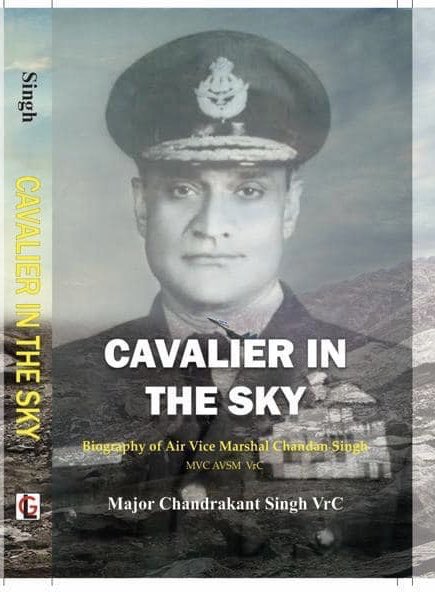
CAVALIER IN THE SKY - MAHAVIR AIR VICE MARSHAL CHANDAN SINGH RATHORE - IMMORTAL RAJPUTS

A Legend, he will always be!


 Air Vice Marshall Chandan Singh MVC, AVSM, VrC, VSM 

A Indian Air Force officer with 35 years of outstanding service.

Among the most highly decorated officers in the Indian Air Force.

Air Vice Marshall Chandan Singh Rathore showed exemplary courage during the wars of 1962 and 1971.

He undertook many operations that were thought to be impossible before him.

AVM Chandan Singh is no more. Landed AMX tanks in Chushul in 62 at the height of the Chinese Ops. Flew the first AN12 & showed the way.

The officer who was the brains behind all the helicopter and transport ops in '71:war in Bangladesh.

Most important was jointmanship with Lt Gen Sagat Singh.

Including setting up the fledgling Bangladesh  Air Force with one ARMED Chetak and an Otter. 

And the helilifts! He was also behind the Narsingdi helilift after the Ashuganj battle that opened the doors to Dacca.


Family Backgrond:

Born on 18th Aug 1925 in erstwhile Jodhpur State, to Col Bahadur Singh | OBI who commanded the famous Jodhpur Lancers

AVM Chandan Singh is married to Junu Kumari, daughter of Raja Bhom Singhji of Umaidnagar, who was one of the four hereditary Rajas of the Marwar(Jodhpur)Kingdom and brother in law of Late His Highness Maharaja Umaid Singhji. She has studied in Jodhpur and Ajmer. Their son, Sajjan Singh did his early schooling in convent schools and later in England. He is a post-graduate in English and American Literature from the University of Jodhpur. He is married to Mumal Kanwar, daughter of Thakur Ranvijay Singhji of Sohangadh (in Punjab), who is a graduate in Home Sciences. They have two sons, Harshveer and Divyveer, currently studying at the prestigious Mayo College, Ajmer.


Some of his Career Highlights: 


At a tender age of 17 Chandan Singh Rathore began his carrier in 1941 as a 2nd Lieutenant of the famous Jodhpur Lancers, which his Father Col.Bahadur Singhji OBI had commanded. The “Lancers” had earlier won world recognition for the last and successful Cavalry Charge at the Battle of Haifa.On independence, the “Lancers” were merged with The President’s Body Guard, 20 Lancers and 61ST Cavalry of the Indian Army.


The Air Vice-Marshal, then a Captain joined the Indian Air Force, in 1947. 


Then a Captain, Chandan Singh  was serving in the No.43 squadron IAF, when he was awarded with AVSM for "devising new procedures for training n selecting new safe routes"

1962 War

As a pilot of No.44 squadron, his gallantry earned him VIR CHAKRA.

Where he as a Sqn Ldr, flew in BRAVO Sqn 20 LANCERS to Chushul, in Oct 1962.
His AN-12 was punctured by Chinese bullets, he bashed on.

Citation For Vir Chakra:

On 20th October 1962, Squadron Leader Chandan Singh was detailed to carry out supply dropping in the Chip Chap area in Ladakh. On reaching the dropping zone, he noticed that the outposts were under heavy fire from the Chinese forces. He successfully dropped vital supplies to our garrison although his aircraft was hit 19 times by enemy ground fire, Squadron Leader Chandan Singh displayed courage and devotion to duty in carrying out the task in complete disregard of his personal safety. He was awarded Vir Chakra for this.


Captain Chandan Singh's bravery earned him the Vir Chakra, but it was not to be the last time the IAF would be witness to it.

Chandan Singh who was a Sq.Ldr during Sino Indian War if 1962 was promoted to rank of Group Captain in 1969

He took command of Jorhat Air Force Station n commanded the base through Indo-Pak War, 1971


Rathore's inspirational leadership during the India-Pakistan War, 1971: 

Ah! Meghna 1971 ..Two great Rathore Warriors..operating in perfect sync..often without official sanction..

Lt. Gen. Sagat Singh 
AVM Chandan Singh
The rest is history…
(RanBanka Rathore)

During the war of 1971, Group Captain Chandan Singh Rathore was commanding the Air Force Station in Jorhat. Under the leadership of Lieutenant General Sagat Singh Rathore, Chandan Singh successfully planned & executed the airlifting of 2 Army companies from the Sylhet area. In early December, when India conceived to conquer Dhaka, the capital, Singh oversaw the advancement of approximately 3,000 troops and40 tons of equipment (including heavy guns)via a strained helicopter arsenal.


The missions Group Captain Chandan Singh undertook required meticulous planning & forethought, and guided by LG Sagat Singh, Chandan Singh would personally carry out dangerous reconnaissance that consistently put his life in jeopardy, to identify where he could gainan advantage over the Pakistan forces. 


SYLHET AIR LIFT
 

On 7th December at this time of the night the 110 Helicopter Unit commanded by Sqn Ldr CS Sandhu VrC, his Flight Commander Sqn Ldr Pusph Vaid VrC under Gp Capt Chandan Singh MVC, VrC carried out the very first Special Heliborne Operation to Sylhet.

They dropped a depleted battalion of 4/5 Gorkha Rifle FF commanded by the brave Lt Col Arun Harolikar behind enemy lines.

It’s one of the most audacious helilifts carried out by a squadron of MI4 helicopters attached to Lt General Sagat Singh in 4 Corps for rescue and evacuation.


Group Captain Chandan Singh conducted eight helicopter airlift operations deep in enemy territory, believed to have been critical to the success of India's campaign. Following the events of 7 December, he went on to undertake additional 18 missions, Each time allowing India's ground forces to advance closer. On 26 Jan, 1972,  Group Captain Chandan Singh Rathore was awarded The Maha Vir Chakra, for his gallantry and leadership.


Brilliant, unconventional, fearless, Group Captain Chandan Singh, seniormost IAF officer to be awarded MVC


Citation For Mahavir Chakra :

During 1971 war Group Captain Chandan Singh, AVSM. VRC was the officer commanding of an Air Force Station in the East [Air Force Station, Jorhat]. During the war with Pakistan, he was at the forefront of the air operations conducted for the liberation of Bangla Desh. Group Captain Chandan Singh was also responsible for the planning and execution of the special helicopter operations to airlift two companies of troops of the Sylhet area. When it became necessary to overcome the obstacles in the advance of the army towards Dacca, he planned and executed the move of nearly 3,000 troops and 40 tons of equipment and heavy guns with the extremely limited helicopter force at his disposal. This operation entailed landing the troops and equipment near heavily defended areas by night. Prior to each mission he personally carried out reconnaissance in the face of heavy enemy fire. On the night of December 7/8 he flew eight missions, deep into enemy territory to supervise the progress of the helicopter airlift and to guide and inspire his pilots who were facing heavy opposition from ground tire. Later he undertook a further 18 missions in the same operation, always leading the landings at new places. On many occasions, his helicopter was hit by ground fire, but this did not deter him from further missions. The success of this major airborne operation contributed significantly to the fall of Dacca and the capitulation of the Pakistan armed forces, in Bangla Desh. He was awarded Mahavir Chakra for his gallant performance during the war where he For planned and executed air lift of Two companies of troops of the IV Corps..  


He was promoted as AIR COMMODORE in 1973 and to the rank of AIR VICE MARSHAL in 1977

He took over as SASO -Senior Air Staff Officer of the Central Command, Allahabad n retired in 1980.


He breathe his last at the age of 95, at his Residence in Jodhpur.We will forever be indebted by your services. 


We mourn on the sad demise of our great Warrior, Mahavir, FORMER VICE AIR MARSHALL Chandan Singh Rathore ji..

Om Shanti 🙏