
What is biggest shortcoming of Hindus in my view? That they forget. We have forgotten sack of Brahamanabad. Even name got erased from our collective memory. We have forgotten sack of Lamghan. And again name erased. We have forgotten tears of millions of our women and kids. They lamented while we dance on tunes of secularism. Their sacrifice remain without retribution and be very clear, justice can't be achieved without it. We have forsaken justice.
.....वंदन रुक नहीं सकता, }
[ जबतक खून में है हलचल😎
भगवा 🙏 झुक नहीं सकता ।
Shame on us if we can forget sack of Somnath. And can we forget what happened when Allauddin sacked Somnath. Thousands of women and kids captured, forced to March with army, weeping and lamenting, enduring tortures. They were meant to be sold all over the world.
But at that time earth was not completely devoid of Kshatriya spirit. One such example can be seen from the plunder of the historic Somnath temple by tyrant Alauddin Khilji in which two Rajput rulers, Hammir Dev Chauhan of Ranathambore and Kanhad Dev Sonigara of Jalore, joined together to retrieve the lingam and restored the broken lingam at several Shiva temples in their kingdoms. Sword of Kanhad Dev Songara striked and they were freed. But we don't even recognize these days such great son's and daughter's of maa Bharati ....

....Whie Reading, Kānhaḍade Prabandha of Padmanābha translated into English by V. S. Bhatnagar , This is published by Voice of India publications, established by Sita Ram Goel. The Prabandha was composed by Padmanabha, a Nagar Brahman, in 1455 CE. He was patronised by Akhairaja, a descendent of Kanhadade. The subject is the war between Kanhadade Chauhan, the ruler of Jalore and Alauddin Khilji. The language is old Rajasthani/Gujarati.

The last stand of Kanhadade took place in 1311 CE, so this would make the Prabandha 144 years after the event. But the story starts with the attack of Ulugh Khan, a general of Alauddin Khilji, on Gujarat in 1299 CE.

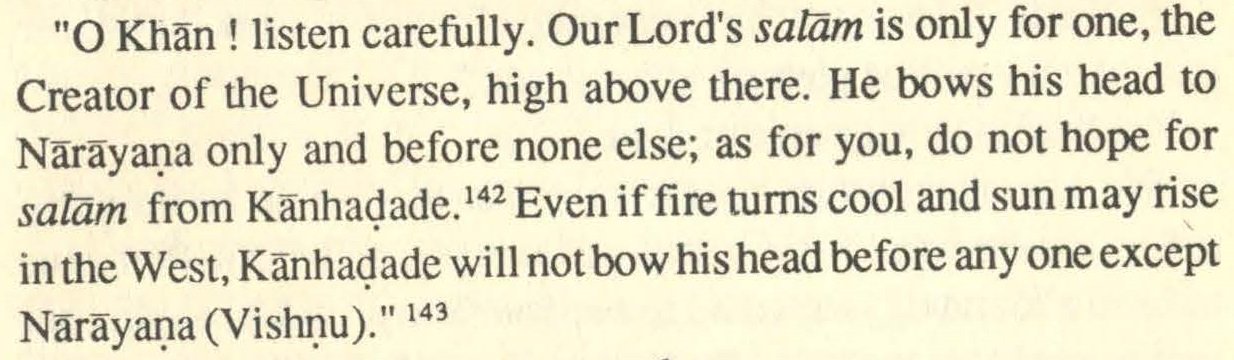
Alauddin, through messengers, asked Kanhadade(va) to let his army pass through Marwad to attack Gujarat in 1299 CE. But Kanhadadeva refused in these words from the Prabandha

Effects of the fall of Anahilapur Patan, the capital of Gujarat, to the army of Ulugh Khan, the general of Khilji.


Graphic account of the Ulugh Khan's attack on Somnath. Worth reading in full.

After the attack, Ulugh Khan ordered the Linga to be sent to Delhi, to be crushed and made into lime. Throughout the prabandha, The word Mūgala (मूगल) is used for Muslims among the others. There were many converted Mongols in the Delhi army. The word predates the Mughals of the Babur line. Also Muslims are called Asuras throughout the prabandha.

Account of people captured for slavery

On his return journey to Delhi, Ulugh Khan decided to pass through Kanhadadeva's territory in Marwad and challenge him. He was carrying the Linga from Somnath. Kanhadadeva is mentioned as having a dream about Ganga and Gauri, asking him to free the Linga.
Kanhadadeva's messengers were sent to the camp of Ulugh Khan. They conveyed Kanhadadeva's message to him.

The messengers also saw the condition of the people captured from Gujarat who were being transported to Delhi.

Kanhadadeva's Rajputs made a night attack on the Muslim camp to free the captives and get back the Somnath linga.

Further description of the attack. (The word Rāut is used more frequently than the word Rajput, throughout the Prabandh.)

Ulugh Khan escaped after many of his men were slaughtered.

All the captives were set free. Five idols (मूरति in the original text) were made out of the Somnath Linga and were installed at five places. This probably indicates that the Linga was damaged and not intact. The next episode is the siege of Siwana fort, north of Jalore, ruled by Kanhadadeva's nephew Sātala. This siege was ordered after Kanhadadeva's successful routing of Ulugh Khan.

The siege of Siwana fort is shown as lasting for 7 years with Rajputs putting up a strong fight. There is a mention of rockets (हवाई), shot from the fort on the besieging Delhi army. The mentions of stone throwing machines (ढीकुली) are frequent.

Some other weapons used by the Rajputs from the fort, on the enemy.

Finally, the Turks contaminated the source of water in the fort by throwing a cow carcass in the pond.

The reaction of the queens of Sātala is mentioned in a brief dialogue and the message they sent to Jalore.

The word Jamahara (जमहर) is used for Jauhar everywhere in the Prabandha. There is a theory that it comes from Yamaghara (यमघर). Entering Jauhar/jamahara, meaning entering the abode of Yama.

After the Jauhar of the women, Sātala and his men rode out to fight till the last.

Next, the Turks started ravaging Marwad to pressure Kanhadadeva. They attacked Bhinmal, a seat of learning. The prabandha mentions that there were 45,000 Brahmans in Bhinmal.

Kanhadadeva's response to the sack of Bhinmal

Kanhadadeva's men attacked the Turks' camp and freed the captives from Bhinmal. Notice the word Asura, for Turks, which is used frequently.

There is a subplot about entirely one sided love of the sultan's daughter Piroja (Furuzan/Firoza) for Viramadeva, son of Kanhadadeva. She believes that she and Virama were married in many previous births.

The sultan sent an envoy to Jalore with the offer of marriage of his daughter with Viramadeva.

Viramadeva's response:

The Delhi army now besieged Jalore. There were many attacks and counterattacks. Eventually Rajputs managed to capture Samas Khan, the husband of Piroja's sister and his entire harem.

The sultan's daughter asked him to let her go to Jalore and mediate the release of Samas Khan, his wife and other captives.

She went to Jalore for negotiations and met Viramadeva and told him about her previous births. They talked with a curtain between them, not face to face. His reply:

After the marriage being denied, she asked for the release of the prisoners and a promise not to do night attacks on the Sultan's army.

Viramadeva agreed to her demands if the Turks won't violate temples, Brahmans and cows. Piroja agreed to this on behalf of Sultan. The prisoners were released and sent out with the princess. The siege was lifted and the Sultan returned to Delhi.

The last Khaṇḍa opens with a description of Jalore. It mentions that a gong was sounded after every ghaḍi to let people know the hour. Ghaḍiyāla is still the word for clock in Gujarati. The sultan prepared for the second siege of Jalore. He gathered enormous resources for the siege to be successful. His daughter had prophesied that the fort won't fall for seven years but it will fall in the 8th year.

The princess had given instructions about Viramadeva:

Kanhadadeva prepared for the war and sent messages to the Rajputs to gather at Jalore. Rajputs gave tough fight to the Turks and four years went by. The sultan's general sent a message to him. The sultan's reply is interesting as it shows the fundamental imbalance of resources.

The Habshi (हबसी in the original text) soldiers are mentioned many times in the work.

There is an episode about the Mahajans coming to the aid of Kanhadadeva, when the provisions were getting low in the fort, reminiscent of the Maharana Pratap and Bhamashah episode.

Ultimately, at the end of the 8th yr of siege, the Turks managed to bribe an insider with the promise of making him in charge of the fort, if he let them in. The Turks started to pour inside the fort. However, the man was killed by his wife when she got to know of his treachery.

The men, sent by Kanhadadeva against the enemy, died fighting after killing many Turks. The women began the preparations for Jauhar.

Valuables were disposed of.

The coronation of Viramadeva was performed, as Kanhadadeva was about to go out to fight till the end. Viramadeva's mother, after giving her blessings, entered the jauhar fire with the other queens.

"Fifteen hundred and eighty-four Jauhar fires were lit that day in the Jālor fort!"

The king's Purohita, Somachanda Vyāsa, also chose to die fighting.

The king and his men set out to fight till the last.

Kanhadadeva and his men gave a good fight. (Sonagiri is the hill on which the Jalore fort is built, also used as a name for the fort.)

The battlefield is called Dhārātīrtha (धारातीरथ in the original text), more than once in the Prabandha. Derived from the edge of the sword (dhāra).

Finally, Kanhadadeva, along with many of his men, died fighting.

After Kanhadadeva, Viramadeva prepared for his last stand. He ruled only for three and half days.

Viramadeva, like his father, gave a fierce fight and fell after killing a large number of Mlechchhas.

Viramadeva's head was sent to the sultan's daughter as she had ordered. But, the head turned away when she came in front of it, as Viramadeva had vowed not to look at her face.

She went to the bank of Yamuna, performed the last rites by consigning Viramadeva's head into fire and then jumped into the waters of Yamuna.

Credits - Senior Chandrapida Sir
Padmanabha ends the Prabandha with the words that whoever recites or listens to this Prabandha would earn great Puṇya.
×-×-×-×-×-×
जालौर के वीर शासक कान्हड़देव का नाम आते ही लेखकों की कलमें ठहर जाती है तो पढ़ने वालों के कलेजे सिंहर उठते हैं। कारण यह नहीं कि उसने अपने से कई गुना शक्तिशाली दुश्मन को मात दी और अंत में बलिदान दिया। यह तो राजस्थान की उस समय की पहचान थी। कलम के ठहरने और कलेजों के कांपने का कारण यह था कि कान्हड़देव जैसे साहसी एवं पराक्रमी शासक का अंत ऐसा क्यों हुआ ? क्यों नहीं अन्य शासक उसके साथ हुए, क्यों नहीं सोचा कि कान्हड़देव की पराजय के बाद अन्य शासकों का क्या होगा। शायद डॉ. के.एस. लाल ने अपने इतिहास ग्रंथ 'खलजी वंश का इतिहास' में सही लिखा है कि'पराधीनता से घृणा करने वाले राजपूतों के पास शौर्य था, किंतु एकता की भावना नहीं थी। कुछेक ने प्रबल प्रतिरोध किया, किंतु उनमें से कोई भी अकेला दिल्ली के सुल्तान के सम्मुख नगण्य था। यदि दो या तीन राजपूत राजा भी सुल्तान के विरुद्ध एक हो जाते तो वे उसे पराजित करने में सफल होते।'
डॉ. के.एस. लाल की उक्त टिप्पणी बहुत ही सटीक है। कान्हड़देव की वंश परम्परा के सम्बन्ध में ही उदयपुर के ख्यातिनाम लेखक एवं इतिहासवेता डॉ. शक्तिकुमार शर्मा 'शकुन्त' ने लिखा है कि- 'चाहमान (चौहान) के वंशजों ने यायव्य कोण से आने वाले विदेशियों के आक्रमणों का न केवल तीव्र प्रतिरोध किया अपितु 300 वर्षों तक उनको जमने नहीं दिया। फिर चाहे वह मुहम्मद गजनी हो, गौरी हो अथवा अलाउद्दीन खिलजी हो, चौहानों के प्रधान पुरुषों ने उन्हें चुनौती दी, उनके अत्याचारों के रथ को रोके रखा तथा अन्त में आत्मबलिदान देकर भी देश और धर्म की रक्षा अन्तिम क्षण तक करते रहे।
बस, यही सब कुछ हुआ था इस चौहान वंश के यशस्वी वीर प्रधान पुरुष जालौर के राजा कान्हड़देव के साथ भी। पृथ्वीराज चौहान की मृत्यु के बाद चौहानों की एक शाखा रणथंभौर चली गई तो दूसरी शाखा नाडौल और नाडौल से एक शाखा जालौर में स्थापित हो गई। कीर्तिपाल से प्रारम्भ हुई यह शाखा समरसिंह, उदयसिंह, चा चकदेव, सामन्तसिंह से होती हुई कान्हड़देव तक पहुँची। किशोरावस्था से अपने पिता का हाथ बांटने के निमित्त कान्हड़देव शासन र्यों में रुचि लेना शुरूकर दिया था। संवत 1355 में दिली के सुल्तान अलाउद्दीन खिलजी ने गुजरात जाने के लिए मारवाड़ का रास्ता चुना। कान्हड़देव को इस समय तक अलाउद्दीन के मनसूबे का पता लग चुका था। वह अपने इस अभिमान के तहत सोमनाथ के मन्दिर को तोड़ना चाहता था। उसने कान्हड़देव को खिलअत से सुशोभित करने का लालच भी दिया मगर वह किसी भी तरह तैयार नहीं हुआ और सुल्तान के पत्र के जवाब में पत्र लिखकर साफ-साफ लिख भेजा-'तुम्हारी सेना अपने प्रयाण के रास्ते में आग लगा देती है, उसके साथ विष देने वाले व्यक्ति होते हैं, वह महिलाओं के साथ अभद्र व्यवहार करती है, ब्राह्मणों का दमन करती है और गायों का वध करती है, यह सब कुछ हमारे धर्म के अनुकूल नहीं है, अत: हम तुम्हें यह मार्ग नहीं दे सकते हैं।”

कान्हड़देव के इस उत्तर से अलाउद्दीन खिलजी का क्रोधित होना स्वाभाविक था। उसने समूचे मारवाड़ से निपटने का मन बना लिया। गुजरात अभियान तो उसने और रास्ते से पूरा कर लिया लेकिन वह कान्हड़देव से निपटने की तैयारी में जुट गया और अपने सेनापति उलुग खां को गुजरात से वापसी पर जालौर पर आक्रमण का आदेश दिया।उलुगखां अपने सुल्तान के आदेशानुसार मारवाड़ की और बढ़ा ओर सर्वप्रथम सकराणा दुर्ग पर आक्रमण किया। सकाराणा उस समय कान्हड़देव के प्रधान जेता के जिम्मे था। द्वार बन्द था। मुस्लिम सेनाओं ने दुर्ग के बाहर जमकर लूटपाट मचाई, लेकिन यह अधिक देर नहीं चली और जेता ने दुर्ग से बाहर निकलकर ऐसा हमला बोला जो उलुगखां की कल्पना से बाहर था, उसके पैर उखड़ गये और भाग खड़ा हुआ। जेता मुस्लिम सेना से सोमनाथ के मन्दिर से लाई पांच मूर्तियां प्राप्त करने में सफल रहा। इतिहास में अब तक इस युद्ध पर अधिक प्रकाश नहीं डाला गया है लेकिन गुजरात लूटनेवाली सुल्तान की सेना को पराजित करना आसान काम नहीं हो सकता था, अत: निश्चित ही जालौर विजय से पूर्व यह युद्ध कम नहीं रहा होगा। स्मरण रहे कि इस युद्ध में सुल्तान का भतीजा मलिक एजुद्दीन और नुसरत खां के भाई के मरने का भी उल्लेख है।
इस पराजय के बाद 1308 ई. में. अलाउद्दीन ने कान्हड़देव को अपने विश्वस्त सेनानायक व कुशल राजनीतिज्ञ के द्वारा दरबार में बुलाया, वे बातों में आ गये और वहां चले भी गये। जब पूरा दरबार लगा था, अलाउद्दीन ने अपने आपको दूसरा सिकन्दर घोषित करते हुए कहा कि भारत में कोई भी हिन्दू राजा नहीं है जो उसके सामने किंचित् भी टिक सके। कान्हड़देव को यह बात खटक गई, उसका स्वाभिमान जग उठा, उसने तलवार निकाल ली और बोल पड़ा-"आप ऐसा न कहें, मैं हूँ, यदि आपको जीत नहीं सका तो युद्ध करके मर तो सकता हूँ, राजपूत अपनी इस मृत्यु को मंगल-मृत्यु मानता है।'जालौर के वीर शासक कान्हड़देव का नाम आते ही लेखकों की कलमें ठहर जाती है तो पढ़ने वालों के कलेजे सिंहर उठते हैं। कारण यह नहीं कि उसने अपने से कई गुना शक्तिशाली दुश्मन को मात दी और अंत में बलिदान दिया। यह तो राजस्थान की उस समय की पहचान थी। कलम के ठहरने और कलेजों के कांपने का कारण यह था कि कान्हड़देव जैसे साहसी एवं पराक्रमी शासक का अंत ऐसा क्यों हुआ ? क्यों नहीं अन्य शासक उसके साथ हुए, क्यों नहीं सोचा कि कान्हड़देव की पराजय के बाद अन्य शासकों का क्या होगा। शायद डॉ. के.एस. लाल ने अपने इतिहास ग्रंथ 'खलजी वंश का इतिहास' में सही लिखा है कि'पराधीनता से घृणा करने वाले राजपूतों के पास शौर्य था, किंतु एकता की भावना नहीं थी। कुछेक ने प्रबल प्रतिरोध किया, किंतु उनमें से कोई भी अकेला दिल्ली के सुल्तान के सम्मुख नगण्य था। यदि दो या तीन राजपूत राजा भी सुल्तान के विरुद्ध एक हो जाते तो वे उसे पराजित करने में सफल होते।'
डॉ. के.एस. लाल की उक्त टिप्पणी बहुत ही सटीक है। कान्हड़देव की वंश परम्परा के सम्बन्ध में ही उदयपुर के ख्यातिनाम लेखक एवं इतिहासवेता डॉ. शक्तिकुमार शर्मा 'शकुन्त' ने लिखा है कि- 'चाहमान (चौहान) के वंशजों ने यायव्य कोण से आने वाले विदेशियों के आक्रमणों का न केवल तीव्र प्रतिरोध किया अपितु 300 वर्षों तक उनको जमने नहीं दिया। फिर चाहे वह मुहम्मद गजनी हो, गौरी हो अथवा अलाउद्दीन खिलजी हो, चौहानों के प्रधान पुरुषों ने उन्हें चुनौती दी, उनके अत्याचारों के रथ को रोके रखा तथा अन्त में आत्मबलिदान देकर भी देश और धर्म की रक्षा अन्तिम क्षण तक करते रहे।
बस, यही सब कुछ हुआ था इस चौहान वंश के यशस्वी वीर प्रधान पुरुष जालौर के राजा कान्हड़देव के साथ भी। पृथ्वीराज चौहान की मृत्यु के बाद चौहानों की एक शाखा रणथंभौर चली गई तो दूसरी शाखा नाडौल और नाडौल से एक शाखा जालौर में स्थापित हो गई। कीर्तिपाल से प्रारम्भ हुई यह शाखा समरसिंह, उदयसिंह, चा चकदेव, सामन्तसिंह से होती हुई कान्हड़देव तक पहुँची। किशोरावस्था से अपने पिता का हाथ बांटने के निमित्त कान्हड़देव शासन र्यों में रुचि लेना शुरूकर दिया था। संवत 1355 में दिली के सुल्तान अलाउद्दीन खिलजी ने गुजरात जाने के लिए मारवाड़ का रास्ता चुना। कान्हड़देव को इस समय तक अलाउद्दीन के मनसूबे का पता लग चुका था। वह अपने इस अभिमान के तहत सोमनाथ के मन्दिर को तोड़ना चाहता था। उसने कान्हड़देव को खिलअत से सुशोभित करने का लालच भी दिया मगर वह किसी भी तरह तैयार नहीं हुआ और सुल्तान के पत्र के जवाब में पत्र लिखकर साफ-साफ लिख भेजा-'तुम्हारी सेना अपने प्रयाण के रास्ते में आग लगा देती है, उसके साथ विष देने वाले व्यक्ति होते हैं, वह महिलाओं के साथ अभद्र व्यवहार करती है, ब्राह्मणों का दमन करती है और गायों का वध करती है, यह सब कुछ हमारे धर्म के अनुकूल नहीं है, अत: हम तुम्हें यह मार्ग नहीं दे सकते हैं।”
कान्हड़देव के इस उत्तर से अलाउद्दीन खिलजी का क्रोधित होना स्वाभाविक था। उसने समूचे मारवाड़ से निपटने का मन बना लिया। गुजरात अभियान तो उसने और रास्ते से पूरा कर लिया लेकिन वह कान्हड़देव से निपटने की तैयारी में जुट गया और अपने सेनापति उलुग खां को गुजरात से वापसी पर जालौर पर आक्रमण का आदेश दिया।उलुगखां अपने सुल्तान के आदेशानुसार मारवाड़ की और बढ़ा ओर सर्वप्रथम सकराणा दुर्ग पर आक्रमण किया। सकाराणा उस समय कान्हड़देव के प्रधान जेता के जिम्मे था। द्वार बन्द था। मुस्लिम सेनाओं ने दुर्ग के बाहर जमकर लूटपाट मचाई, लेकिन यह अधिक देर नहीं चली और जेता ने दुर्ग से बाहर निकलकर ऐसा हमला बोला जो उलुगखां की कल्पना से बाहर था, उसके पैर उखड़ गये और भाग खड़ा हुआ। जेता मुस्लिम सेना से सोमनाथ के मन्दिर से लाई पांच मूर्तियां प्राप्त करने में सफल रहा। इतिहास में अब तक इस युद्ध पर अधिक प्रकाश नहीं डाला गया है लेकिन गुजरात लूटनेवाली सुल्तान की सेना को पराजित करना आसान काम नहीं हो सकता था, अत: निश्चित ही जालौर विजय से पूर्व यह युद्ध कम नहीं रहा होगा। स्मरण रहे कि इस युद्ध में सुल्तान का भतीजा मलिक एजुद्दीन और नुसरत खां के भाई के मरने का भी उल्लेख है।
इस पराजय के बाद 1308 ई. में. अलाउद्दीन ने कान्हड़देव को अपने विश्वस्त सेनानायक व कुशल राजनीतिज्ञ के द्वारा दरबार में बुलाया, बातों में आ गया और वह चला भी गया। जब पूरा दरबार लगा था, अलाउद्दीन ने अपने आपको दूसरा सिकन्दर घोषित करते हुए कहा कि भारत में कोई भी हिन्दू या राजपूत राजा नहीं है जो उसके सामने किंचित् भी टिक सके। कान्हड़देव को यह बात खटक गई, उसका स्वाभिमान जग उठा, उसने तलवार निकाल ली और बोल पड़ा-"आप ऐसा न कहें, मैं हूँ, यदि आपको जीत नहीं सका तो युद्ध करके मर तो सकता हूँ, राजपूत अपनी इस मृत्यु को मंगल-मृत्यु मानता है।'
यह कह कान्हड़देव अलाउद्दीन खिलजी का दरबार छोड़कर वहाँ से चल पड़ा और जालौर आ गया। सुल्तान ने कान्हड़देव के इस व्यवहार को बहुत ही बुरा माना और 1311 ई. में तुरन्त दंड देने के लिए जालौर की ओर अपनी सेना भेजी। डॉ. के.एस. लाल का कहना है कि राजपूतों ने शाही पक्षों को अनेक मुठभेड़ों में पराजित किया और उन्हें अनेकबार पीछे धकेल दिया। उन्होंने यह भी माना कि जालौर का युद्ध भयानक था और संभवत: दीर्घकालीन भी। गुजराती महाकाव्य 'कान्हड़दे प्रबन्ध' के अनुसार संघर्ष कुछ वर्षों तक चला और शाही सेनाओं को अनेक बार मुँह की खानी पड़ी। इन अपमान जनक पराजयों के समाचारों ने सुल्तान को उतेजित कर दिया और उसने अनुभवी मलिक कमालुद्दीन गुर्ग के नेतृत्व में एक शक्तिशाली सेना भेजी। सुल्तान की सेना का जालौर से पूर्व ही सिवाणा के सामंत सीतलदेव ने सामना किया। दोनों के बीच ऐसा युद्ध हुआ जिसकी कलपना संभवत: सुल्तानी सेना नायकों के मस्तिष्क में थी भी नहीं। यही कारण था कि एक बार पुन: पराजय झेलनी पड़ी और वहाँ से दूर तक भागना पड़ा। सुल्तान को ज्यों ही पुन: पराजय का समाचार मिला, कहते हैं कि वह स्वयं इस बार पूरी शक्ति के साथ जालौर पर चढ़ आया।
अब तक सुल्तान को यह आभास अच्छी तरह हो गया था कि युद्ध में रणबांकुरे राजपूतों को पराजित करना कठिन ही नहीं असम्भव है। परिणाम स्वरूप अब सुल्तान की ओर से कूटनीतिक दांव-पेच शुरू हो गये और दुर्ग के ही एक प्रमुख भापला नामक व्यक्ति को प्रचूर धन का लालच देकर अपनी ओर मिला लिया। भापला ने दुर्ग के द्वार खोल दिये और मुस्लिम सेना ने दुर्ग में प्रवेश कर लिया। दुर्ग में तैयारियां पूर्ण थी। ज्यों ही सुल्तान की सेना का प्रवेश हुआ, अन्दर राजपूतों महिलाएं जौहर करने के लिए आगे बढ़ी तो पुरुष भूखे शेरों की तहर टूट पड़े। घमासान छिड़ गया। संख्या में राजपूत कम अवश्य थे लेकिन युद्ध को देखकर ऐसा लग रहा था मानो हजारों की सेना आपस में भिड़ रही हों। यहाँ यदि यह कहा जाए तो अतिश्योति नहीं होगी कि मुट्ठीभर राजपूतों ने पुन: यह बता दिया कि वे मर सकते हैं लेकिन हारते नहीं। देखते ही देखते जालौर के दुर्ग में मरघट की शान्ति पसर गई। 18 वर्ष का संघर्ष समाप्त हो गया। कान्हड़देव का क्या हुआ, इतिहास के स्रोत मौन है लेकिन जालौर का पतन हो गया और साथ ही उस शौर्य गाथा को भी विराम मिल गया जिसका प्रारम्भ चौहान वंशीय वीर-पुत्र कान्हड़देव ने किया था।
अलाउद्दीन को जालौर-विजय की खुशी अवश्य थी, लेकिन उसने यह समझने में किंचित् भी भूल नहीं की कि राजपूताने को जीतना कठिन है। यही कारण है कि इस विजय के उपरांत उसने यहाँ के राजपूत शासकों के संग मिलकर चलने में ही अपनी भलाई समझी और फिर कोई बड़ा अभियान नहीं चलाया। स्वयं डॉ. के.एस. लाल ने अपनी पुस्तक 'खलजी वंश का इतिहास' के पृष्ठ 114 पर लिखा है.राजपूताना पर पूर्ण आधिपत्य असंभव था और वहाँ अलाउद्दीन की सफलता संदिग्ध थी।" अपनी इस बात को स्पष्ट करते हुए डॉ. लाल लिखते हैं कि-'राजपूताना में सुल्तान की विजय स्वल्पकालीन रही, देशप्रेम और सम्मान के लिए मर मिटनेवाले राजपूतों ने कभी भी अलाउद्दीन के प्रांतपतियों के सम्मुख समर्पण नहीं किया। यदि उनकी पूर्ण पराजय हो जाती तो वे अच्छी तरह जानते थे कि किसी प्रकार अपमानकारी आक्रमण से स्वयं को और अपने परिवार को मुक्त करना चाहिए, जैसे ही आक्रमण का ज्वार उतर जाता वे अपने प्रदेशों पर पुन: अपना अधिकार जमा लेते। परिणाम यह रहा कि राजपूताना पर अलाउद्दीन का अधिकार सदैव संदिग्ध ही रहा। रणथम्भौर, चित्तौड़ उसके जीवनकाल में ही अधिपत्य से बाहर हो गये। जालौर भी विजय के शीघ्र बाद ही स्वतन्त्र हो गया। कारण स्पष्ट था, यहाँ के जन्मजात राजपूत योद्धाओं की इस वीर भूमि की एक न एक रियासत दिल्ली सल्तनत की शक्ति का विरोध हमेशा करती रही, चाहे बाद में विश्व का सर्वशक्तिमान सम्राट अकबर ही क्यों न हो, प्रताप ने उसे भी ललकारा था और अनवरत संघर्ष किया था।


