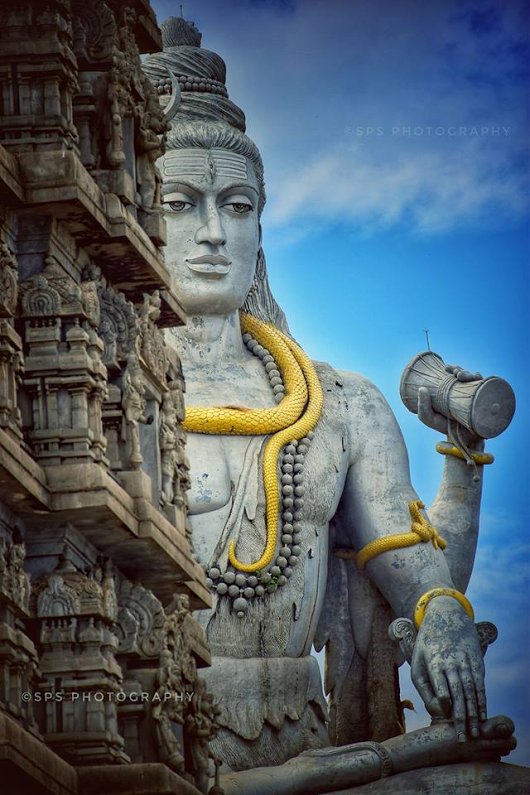
औरन सों खेले धमार श्याम मोंसों मुख हू न बोले।
नंदमहर को लाडिलो मोसो ऐंठ्यो ही डोले॥१॥
राधा जू पनिया निकसी वाको घूंघट खोले।
’सूरदास’ प्रभु सांवरो हियरा बिच डोले॥२॥

HINDU FESTIVAL OF COLOURS
One of the most colorful and joyful of Hindu festivals – Holi is celebrated every year to say farewell to the winters and welcome spring by playing with colors. It is a festival of great significance celebrated on the full moon day in the month of Phalgun which is the month of March as per the Gregorian calendar.
Adding to the smearing of colors on each others’ faces, splashing people with water by throwing water balloons at them and heartily indulging in sweet delicacies that are made especially for the occasion, the observers of the festival also have a beautiful history from the time immemorial to boast of.
HOLI
One of the most ancient festivals of India, Holi was also known as “Holika”. Since time immemorial, the festival finds colour in numerous scriptures, such as in works like Jaimini's Purvamimamsa-Sutras and Kathaka-Grhya-Sutras with even detailed descriptions in ancient texts like the Narad Purana and Bhavishyad Purana. The festival of “holikotsav” was also mentioned in the 7th century work, Ratnavali, by King Harsha.
Holi is the most entertaining and joyful festival of the country. The Holi festival is the festival of colors. In this festival, every place looks colorful. Many of the colors we use on this day for play the Holi.
In many states of the India, it celebrated with much fun. It has the lots of joys and happiness by the playing with colors. This festival comes in the spring season, which is the great season of the year.
FESTIVAL OF COLOURS

On the Holi festival, people enjoy the day by using of colors on each other with the water and also without the water, i.e., Abeer. It feels great happiness and enthusiastic in the every people mind.
Different type of colors makes us attractive for playing the Holi with joy. Ou India looks stunning with the variety of colors in this festival.
In this festival, children make much enjoyment and happiness by playing with colors and they also use the water gun for playing with colors.
FESTIVAL OF LOVE AND JOY

It is mostly referred as for everyone, who loves each other to forget the all enemies. People play the holi with so happy mood. Celebration of the holi is really joyful, when the families comes together and make it very happy festival. It becomes much joyful with the family.
On this day, we meet each other by doing handshake and hug and apply abeer on the forehead. We take blessings of our elders in the morning and apply on their forehead. We wish to each happy holi, those people come in the home as a guest. We offer them a sweets and snacks.
ORIGIN OF HOLI -THE HINDU FESTIVAL OF COLOURS

Also known by the name Fagu Purnima around the world, a global festival it is indeed, for the powder that revelers throw on each other, leaving festival-goers coated in color by the end of the day, the Hindu spring festival is rightly called the Festival of Colors. Observed much pomp and splendor, it lasts in most regions for a night and a day, starting on the evening of Purnima, the full moon day of the Month Phalguna, in the Georgian calendar which falls somewhere between the end of February and middle of March. The festival of colors has two famous stories how it started to be celebrated, i.e. origin of Holi.
However, colors and rich traditional cuisine isn’t all to the festival, it, in fact, has a deeply-rooted historical significance, the triumph of good over evil; the day officially marks the arrival of the much-awaited spring bringing the gloomy days of the winter to an end, and for farmers, they celebrate it as the thanksgiving for good harvest. We will here travel back in time and speculate on the historical events that led to the origin of Holi and its celebration.

SHRI KRISHNA AND RADHA
In the Braj region of India, also known as Brij or Brijbhoomi, particularly in the two cities of Vrindavan and Mathura, where the Hindu deity Krishna is closely associated with, the festival is celebrated in commemoration of the divine love of Radha for Krishna. The spring festival has a symbolic myth behind commemorating Krishna as well.
As a baby, Krishna developed his characteristic dark blue skin color because the she-demon Putana poisoned him with her breast milk. The Hindu deity despaired by his dark-blue skin whined to his mother whether the fair-skinned Radha and other girls would like him despite him being so dark. His mother, tired of the desperation, advised him to approach Radha and color her face in any color he wanted. This he does, and ever since, the playful coloring of Radha’s face has been commemorated as Holi.

-×-×-×-×-×-×-×-×-×-
HOLIKA, HIRANYAKASHYAPU AND PRAHLAD

( Prahlad In Aunt Holika's Lap , 12th Century A.D , Chennakesava Temple . Lord Vishnu Saved His Devotee Prahlad and Hiranyakashyap's Sister Holika Died In Fire )
Origin of Holi traces to the time immemorial, the ancient festival of colors finds its mention in numerous scriptures, Jaimini’s Purvamimamsa-Sutras and Kathaka-Grhya-Sutras with have detailed descriptions of the celebration of the festival. It has been also mentioned in much-revered texts such as the Narad Purana and Bhavishyad Purana. The widely circulated legend about the origin of the festival is the burning of Holika ashes, somebody but Holika who was said to have an immunity to fire and the eventual defeat of the demon – Lord Hiranyakashyapu.
As the tales have it after Lord Vishnu assassinated the younger brother of the demon lord, Hiranyakashipu. Apart from avenging his brother’s death, and also because he had been granted a boon that earned him five special powers: he could be killed by neither a human being nor an animal, neither indoors nor outdoors, neither at day nor at night, neither by Astra, projectile weapons, nor by any Shastra, handheld weapons, and neither on land nor in water or air, the demon king had the ulterior motive of ruling the heaven, the earth, and the underworld by defeating Vishnu. His boosted ego made the demon Lord feel invincible, on his orders, his whole state started praying him, dismissing the gods, he aimed to establish himself as the principal deity and of all.

On the other hand, his son Prahalad, maintained his deity to be none but Lord Vishnu. Angered, the tyrant king decided to kill Prahalad with the help of Holika, Hiranyakashipu’s sister, who was immune to fire. A pyre was lit and Holika sat on it, clutching Prahalad. But leaving many including the demon Lord astounded, Prahalad emerged out of the fire unscathed, whereas Holika burned to ashes. Hiranyakashipu, too, was eventually killed by Vishnu, taking the avatar of Narashima. Even today, the story of Holika is re-enacted by actors on Holi. Bonfires across the country are lit up to celebrate the burning away of the evil spirits and the triumph of good over evil. This is the most famous event believed by the Hindus to be the key reason for the origin of Holi.
LEGENDS
The festival has various legends associated with it. The foremost is the legend of Asura King Hiranyakashyap who demanded everybody in his kingdom to worship him but his pious son, Prahlad became a devotee of Lord Vishnu. Hiranyakashyap wanted his son to be killed. He asked his sister Holika to enter a blazing fire with Prahlad in her lap as Holika had a boon which made he immune to fire. The story goes that Prahlad was saved by the Lord himself for his extreme devotion and evil-minded Holika was burnt to ashes, for her boon worked only when she entered the fire alone.
Since that time, people light a bonfire, called Holika on the eve of Holi festival and celebrate the victory of good over evil and also the triumph of devotion to god. Children take special delight in the tradition and this has another legend attached to it. It says that there was once an ogress Dhundhi who used to trouble children in the kingdom of Prithu. She was chased away by children on the day of Holi. Therefore, children are allowed to play pranks at the time of ‘Holika Dahan‘

It is said that the naughty and mischievous Lord Krishna started the trend of playing colors. He applied color on her beloved Radha to make her one like him. The trend soon gained popularity amongst the masses. No wonder, there is no match to the Holi of Mathura, Vrindavan, and Barsana – the places associated with the birth and childhood of Radha and Krishna.

Another story goes that when Sati immolated herself in her father’s sacrificial fire, Shiva got very upset. After having wrecked the whole yagna area and more, he ultimately calmed down but decided to stay away from all worldly affairs and went into deep meditation. Sati was reborn in the house of Himalaya as Parvati. A Shiva devotee from childhood itself, she devoted herself to serving the Lord. He was, however, oblivious to her and the Gods were worried as the balance of the world was swaying precariously, and the only solution was a union between Shiva and Parvati. It was then that Indra ordered his friend, Kamdev, the God of love and passion, to help her win over Shiva.

Knowing fully well the extent of Shiva’s anger, Kamdev still decided to take the risk and created an illusion of spring so strong that all living creatures were affected by it. He then shot a love arrow at Shiva’s heart with the intention of making him fall in love with Parvati. Shiva did awaken, but it was his third eye that first looked at Kamdev and burnt him to ashes with his anger. Later, of course, he realized his mistake and on Parvati’s insistence, gave Kamdev immortality in the invisible form. Many consider this a huge sacrifice by Kamdev and burn a bonfire a day before Holi to commemorate his incineration at Shiva’s hands. People offer the cooling paste of sandalwood to Kamdev on Holi to reduce the sting from his burns. Mango blossoms are also offered as he is said to be very fond of their intoxicating fragrance. Songs dedicated to his wife Rati’s sorrow and her pain of separation are sung in front of the bonfire.
HOLI RITUALS AND CUSTOMS
Holi is spread out over two days. On the evening of the first day of Holi, a public bonfire is held, commemorating the burning of Holika. Traditionally, Hindu boys spend the weeks prior to Holi combing the neighborhood for any waste wood they can find for the bonfire. The fire is lit sometime between 10 PM and midnight (at the rising of the moon), not generally in an orderly fashion. Everyone gathers in the street for the event, and the air rings with shouts, catcalls, curses and general mayhem.

Holi also commemorates various events in Hindu mythology, but for most Hindus, it provides a temporary opportunity for Hindus to disregard social norms, indulge in merrymaking and generally “let loose.”
ECSTASY OF BHANG

There is also a tradition of consuming the very intoxicating bhang on this day to further enhance the spirit of Holi. It is so much fun to watch the otherwise sober people making a clown of themselves in full public display. Some, however, take bhang in excess and spoil the spirit. Caution should, therefore, be taken while consuming bhang delicacies.
SOBER EVENING
After a fun filled and exciting day, the evenings the spent in sobriety when people meet friends and relatives and exchange sweets and festive greetings.
Also Read : Best Examples of Hindu Muslim Unity That Define The Idea Of India
Holi is supposed to be played with scented and harmless colors, flowers etc.
It is supposed to reduce the differences between people—irrespective of their gender roles, caste, status etc. and bring them all together in the celebrations.
It is supposed to let you break all barriers and have fun… sheer fun.

MYSTICAL JOY
On this festival, we make so much fun to play the music. Many of the music instruments like Dholak, Kirtal are plays in holi. We plays the holi songs and also holi religiou songs. We makes so much and dance on this day.
VARIETY OF FOODS IN THE HOLI
On this special festival, we eat variety of the foods, which is very tasty and yummy. The most important sweet of this festival is Gujiya after that comes many of the sweets and chips, papad, halwa, Pani-puri, Dahi-bade, etc.
HOLIKA DAHAN
There are many legends given as the reasons for celebrating holi. Long ago there was a king named Hiranyakashyapu, he had a son, Prahlad – a holy spirit and highly devoted to God. But Prahlad’s devotion enraged Hiranyakashyapu and he planned to kill his own son. He asked her sister Holika, who was immune to fire, to sit in fire taking Prahlad in her lap. Fortunately Prahlad, who was blessed by Lord, was saved and Holika was burnt to ashes. This gave birth to the festival of holi

Before the colors day, the holika dahan has celebrated in India. People may collect many of the woods and unnecessary things for fire. The holika Dahan inspires us for evilness destroys by goodness and it wins from evilness. On the next day Holi is celebrates.
WHY DO WE CELEBRATE HOLI
We celebrates the holi festival with the triumph of good over evil and it stems from the Ancient Indian mythology.
Its really important thing is that it comes in the spring season, which is favourite of everyone. It is the time of harvesting and bring energy days for us.
Holi s mainly comes for the love and compassion with each other. It is main object of this festival.
We should passed away that all things, which gives us only pain to our heart and bring happiness and lots of joy on this season and be pleasant with everyone, those wants only our happiness.
IMPORTANCE OF HOLI
Holi is very important festival because in this festival people forgets all sorrow and comes together for celebration of the Holi.
Holi is the festivity of joy and happiness and it give us the great message to being in always friendship with each other.
Holi festival plays very important role to bring dignity and equality amongst the people.
We can never suffer from sorrow, if we will be friendly with each other. It seems our goodwill and friendship manner.
Our family are becomes really supportive to forget the sorrow and quarrels of the life. They plays most important role in life. In every moment of life people need their family, especially in holi they should be with together.
If we will show our happiness to our parents, then they will be also happy to see us, at least not for us, but for parents it should be. On this great day, at least we all have to celebrate without any social distinction.
The most important thing is that people should not involve that matter, which is very bad for the country such as caste system should not involve in any festival. Everyone should celebrate the festival by making the unity.
It is also much important that every people have to celebrate with happiness, whether they are rich people or poor people. There should not be any distinction between them. The poor people want to celebrate this festival with much fun and joy with each other.
The holi is that occasion, when we forgets cares and anxieties of us and celebrate with great joy.

THE SCIENTIFIC BENEFITS OF CELEBRATING HOLI
The colorful festival Holi is popular in different states of India, all across Nepal, and other places where Hindus have taken their stance. It is celebrated on the full-moon day in the month of Falgun (which falls in the month of March according to the Gregorian calendar). You might have already read the story behind Holi.
To understand it deeply, you can read this: Everything you need to Know About The Hindu festival Holi
But we are here to learn the science behind the Holi festival, so let’s get back to it.
The heat during Holika Dahan kills bacteria in your body
scientific reason behind holi
It’s the festival that lies between the end of winter and start of summer. During this period, bacteria grow in the atmosphere, as well as in our body. As you might already know, Holi is celebrated with a bonfire the night before the day, and people take a round (parikrama) around the fire. When Holika is burnt, the temperature in the surrounding rises to 50/60 degree Celsius. The heat from bonfire kills bacteria in the body and cleanses it.
PROMOTES GOOD HEALTH
The remaining ashes of the bonfire or the Holika Dahan (burning of Holika) are swiped across the forehead in some parts of India. People in these parts also mix it with Chandan (paste of sandalwood), young leaves and flowers of Mango tree. This is going to promote good health.
DEALING WITH THE TARDINESS OF SEASON CHANGE
Since season changes from winter to summer during this period, most of the people feel tardiness and laziness. So, the culture of playing songs with Dhol, Manjira, and other traditional instruments. The merry environment demands a lot of physical movement and helps in reinvigorating the human body during the time.
NATURAL COLOURS HAVE SCIENTIFIC GAINS TOO
Natural colors used in Holi keep the body fit. If there is any kind of deficiency of color, it can cause ailment. To cure it, food or medicine containing the color element is provided by Vaidyas and Ayurvedic doctors. When the culture of playing Holi started, people used colors of natural sources like turmeric, neem, Tulasi, Tesu, Katha, and so on. These natural colors had positive effects on human body, and can also strengthen the ions in the body to promote good health and beauty.

However, people today are using synthetic colors since herbal colors are not available in adequate amount, and synthetic colors are much cheaper. That way, the colors can only have negative effects on human body. They comprise of toxic substances such as lead oxide, chromium iodine, diesel, copper sulphate, and can cause rashes on the skin, allergies, eye irritation, frizzy hair, and pigmentation. It can go as worse as skin diseases and clogging of hair cuticles.
STAY AWARE OF THIS AND ENJOY YOUR HOLI.

Some more interesting information for you. These are the plants used for producing natural colors
Green: Mehendi and dried leaves of Gulmohur tree, leaves of spring crops and herbs, Spinach leaves, rhododendron leaves and pine needles
Yellow: Turmeric (Haldi) powder, Bael fruit, amaltas, species of chrysanthemums, and species of marigold, dandelions, sunflowers, marigolds, daffodils and dahlias, gram flour
Red: Rose or the bark of crab apple trees, Red Sandalwood Powder, feels of Red Pomegranate, flowers of Tesu tree (Palash), fragrant red sandalwood, dried hibiscus flowers, madder tree, radish, and pomegranate
Saffron: flowers of Tesu tree (Palash), Mixing lime with turmeric powder creates an alternate source of orange powder, barberry
Blue: Indigo, Indian berries, species of grapes, blue hibiscus and jacaranda flowers
Purple: Beetroot
Brown: Dried Tea leaves, red maple trees, Katha
Black: Some species of grapes, fruit of Gooseberry (Amla)
MODERNIZATION OF THE FESTIVAL
Today also we get excited as Holi approaches. In metro towns now there is a unique trend that is catching up. People are going to “Holi parties” with their family and friends and celebrate with many people. They get to meet new people, make new friends and a very beautiful twist is given to the festival

Holi, of late, has become an exotica. Though many of the millennials may not have the faintest of knowledge behind the commencement of the legendary festival and the tales of valor or the triumph of good over evil, they surely have profound memories as revelers sprinkling colors upon passer-bys and among each other, leaving the festival-goers coated in sundry-colors, the green, purple and red, at the end of the day.
The spring-festival, in the contemporary setting, has become synonymous with bright shimmering colors, water balloons or Pichkaris, and Sweet-delicacies, it personally leaves a food-enthusiast such as me the most amazed, the exotic spring festival from the historical world-view has more to offer. We will here closely analyze the evolution of Holi, as the Happy festival now celebrated with pomp and grandeur ubiquitously.

Though rendered to a mere two day celebration from the pompous at least a week-long celebration even just a few decades ago, let alone the historic times; the first evening known as Holika Dahan or Choti Holi and the latter day that follows being referred to as Rangwali Holi or Phagwah, the traditional way of celebration, rejoicing by singing Holi songs and lighting a pyre as to the traditional belief that it helps scare away the evil spirits are still observed in plentitude.

Holi thus once stood for the victory of good over evil, but now is slowly shifting its paradigms. Though still a wonderful medium of putting aside all the inhibitions of religion, caste, creed, and dialect bringing all together, even those at the bottom of the ladder at least for a day, but certainly in a manner less prodigious than in historical times, the festival with holy roots is starting to lose its value because of unholy practices. The festivity of color, exuberance, and merrymaking, has slowly been turning to boisterous mischief-making, causing both social and ecological problems.
Legend has it that when Lord Krishna despaired by his blue-skin whined to his mother whether the fair-skinned Radha and other girls would not like him, his mother’s ‘word of wisdom’ was to apply sundry colors on Radha’s face, so as the inhibit the differences of individual, embracing each and every one them whole-heartedly.

The festival in the historic times was about disbanding the strata of the society upon which discrimination in abundance was based upon. But as the modern day Holi approaches, the festival has become synonymous with incidences of eve-teasing. Boys and men gather on their junctions around schools and colleges, on top of their terraces, and target girls and women with water pouches, and sometimes even buckets full of water which isn’t necessarily clean. It certainly is a deviance, and for worse, from the proud culture, we have inherited from the time immemorial.

But a happy festival it is, the frivolous day in the spring when lively people swarm the streets, sprinkling colored water and sprinklers, or the dyes on each other, which when enthusiastically observed will build trust, inspire respect and build long lasting relationship inhibiting the individual differences and strata of the society.